In the lab, a third quantum dot lifts spin-qubit fidelity to 99.56%
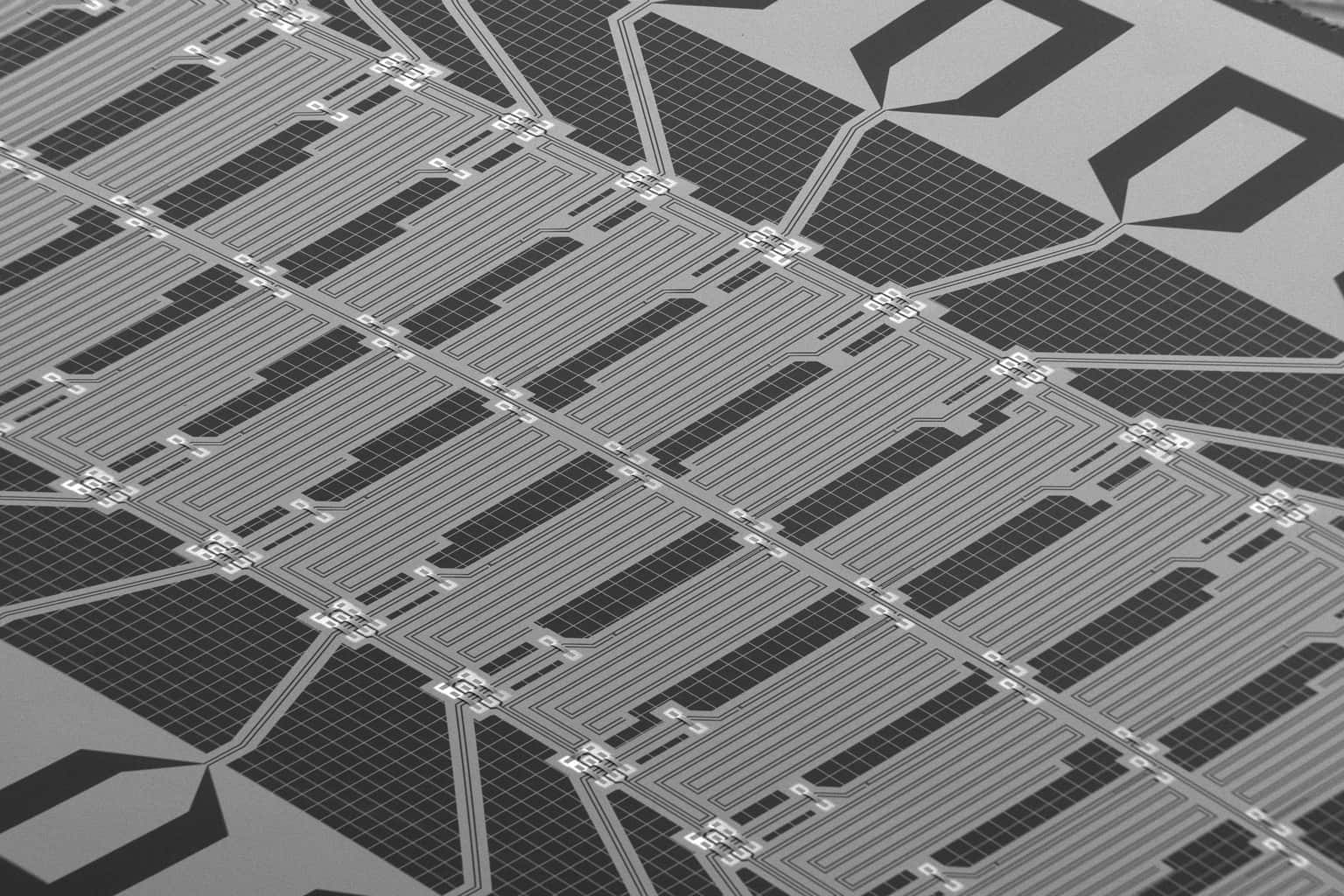
Making a qubit faster has long meant making it more fragile. A qubit, the basic unit of a quantum computer, must be steered quickly and stay stable, and in semiconductor spin qubits those two demands pull against each other: the conditions that speed up electrical control also make the device more sensitive to small voltage fluctuations. At the University of Osaka, a team including Yuta Matsumoto and Takafumi Fujita has found a way to loosen that constraint, and it does so by adding a component rather than redesigning the whole device.
Quantum dots are tiny regions in a semiconductor that can hold a single electron. In the conventional design, called flopping-mode, two dots are used to shuttle an electron between two locations, which allows its spin to be controlled electrically and quickly. The researchers added a third, auxiliary dot whose energy can be adjusted electrically. By tuning it, they reshaped the electron's orbital energy structure, a strategy they call orbital band engineering. This opened a broader operating region that is less sensitive to voltage noise, while keeping the strong coupling needed for fast spin control. The team reached operating frequencies above 100 MHz, and 271 ± 20 MHz under another tuning condition.
Speed alone does not make a qubit useful, so the team combined the new design with machine-learning feedback that continuously corrects slow shifts in the qubit's frequency. The feedback extended the estimated dephasing time, the length of time a qubit keeps its quantum state before noise erodes it, from about 52 nanoseconds to 580 nanoseconds. Randomized benchmarking, a standard method for measuring how faithfully operations are carried out, gave a fidelity of 99.56% for a 4-nanosecond gate with feedback, rising to 99.72% with additional pulse optimization. "In GaAs quantum dots, magnetic noise makes fast electrical control particularly important, while electrical control also makes voltage noise relevant," says Takafumi Fujita. "By adding an auxiliary quantum dot, we introduced an extra degree of freedom for tuning the qubit frequency." These figures come from a laboratory experiment in gallium arsenide.
For anyone building a quantum computer out of semiconductor qubits, the practical gain lies in manufacturing. Each device comes out of fabrication slightly different, and scaling to very large numbers of qubits depends on compensating for those differences. Because the extra dot can be tuned electrically after the device is made, the same design principle could correct those variations once the chip exists, instead of demanding that every device be identical. The researchers expect the concept could also apply to silicon- and germanium-based spin qubits.
Sources — read the originals(Paris time)
Read next
Comments
Loading the thread…
Sign in to leave a comment. Sign in