Quantum bit read 99% accurately without disturbing it
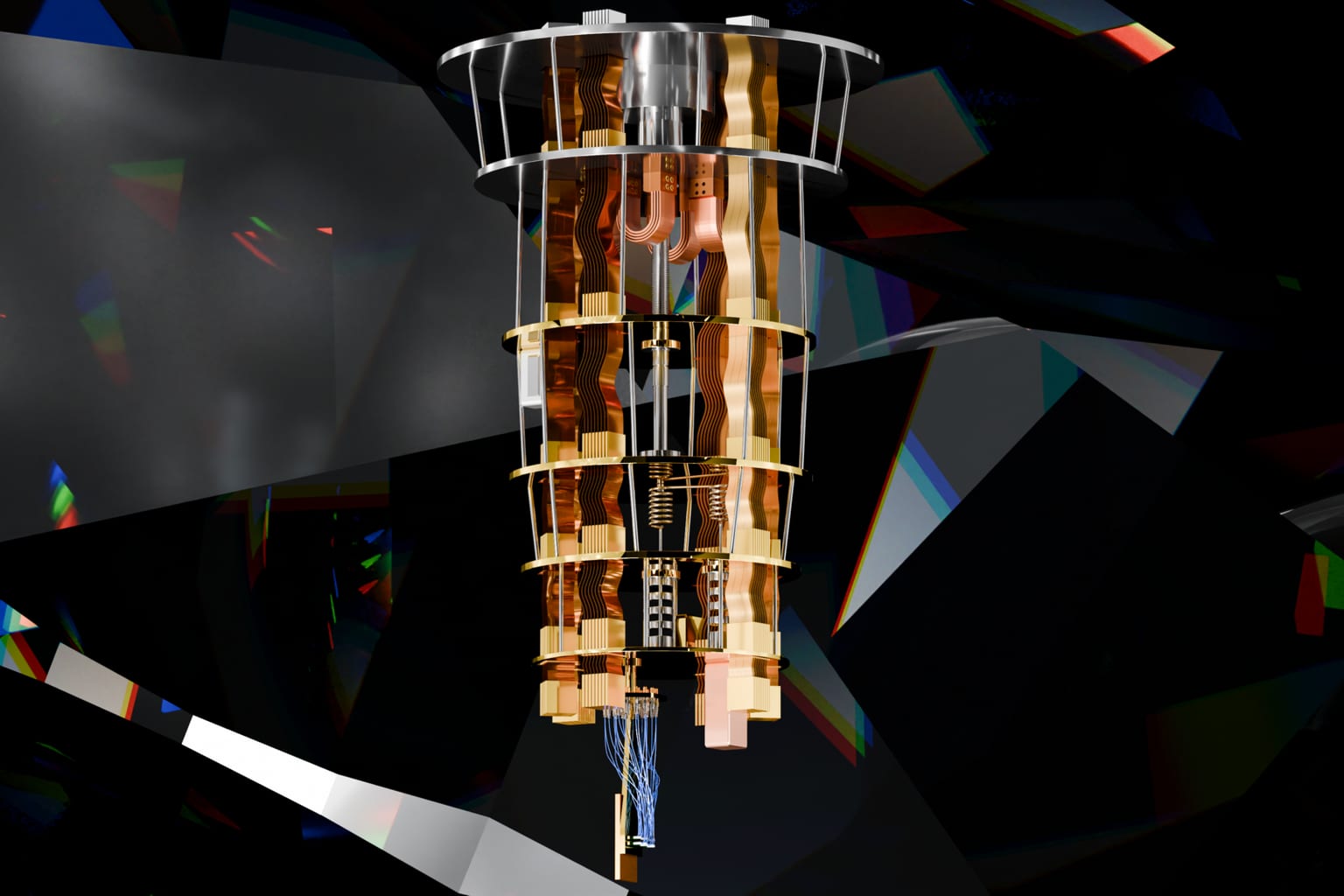
Reading a quantum bit can wreck it. In superconducting quantum computers, the most widely used kind, the act of checking a qubit's state often pushes it out of the state it was in. In a laboratory in Boulder, Colorado, Akash V. Dixit and colleagues at the U.S. National Institute of Standards and Technology, with a team member from Canada, have built a readout device that reads a qubit with 99.2% fidelity, meaning 99.2% of readings return the true state, and without changing that state. The paper appeared on 30 October 2026 in Physical Review Letters.
A qubit is read through a readout resonator, a metal cavity that traps microwaves. Its resonant frequency shifts depending on whether the qubit is in its ground state or its excited state, so measuring the cavity reveals the qubit. Conventional transmons, the most widely used type, run at 3 to 6 GHz, with readout resonators at 6 to 10 GHz. The team did the reverse: it kept a transmon at 3.083 GHz and coupled it to a 34.670 GHz aluminum cavity, a readout-to-qubit frequency ratio above 10.
The reason this helps lies in the drive. Floquet simulations, a method for systems hit by regular pulses, indicate that at millimeter-scale frequencies the cavity drive mostly avoids pushing the qubit between states in its energy well. The team reports 780 nanoseconds per readout, with 109 readout photons, and no resonant state transitions when driving with more than 100 photons. A preprint of the work on arXiv reports no resonant transitions up to 1,000 drive photons.
What changes is the reliability of the measurement step, which every superconducting quantum computer depends on. For builders of that type of machine, a readout that leaves the qubit in place opens a route that the conventional frequencies do not offer. The authors say the same approach keeps the transmon's properties needed for fast operations, and they say it “paves the way for further advancements” in coupling millimeter waves to qubits. The paper describes a laboratory device measuring one transmon. It gives no product and no timeline beyond the lab.
Sources — read the originals(Paris time)
Pages consulted while writing
Read next
Comments
Loading the thread…
Sign in to leave a comment. Sign in