In the lab, light pulses steer magnetism without relying on heat
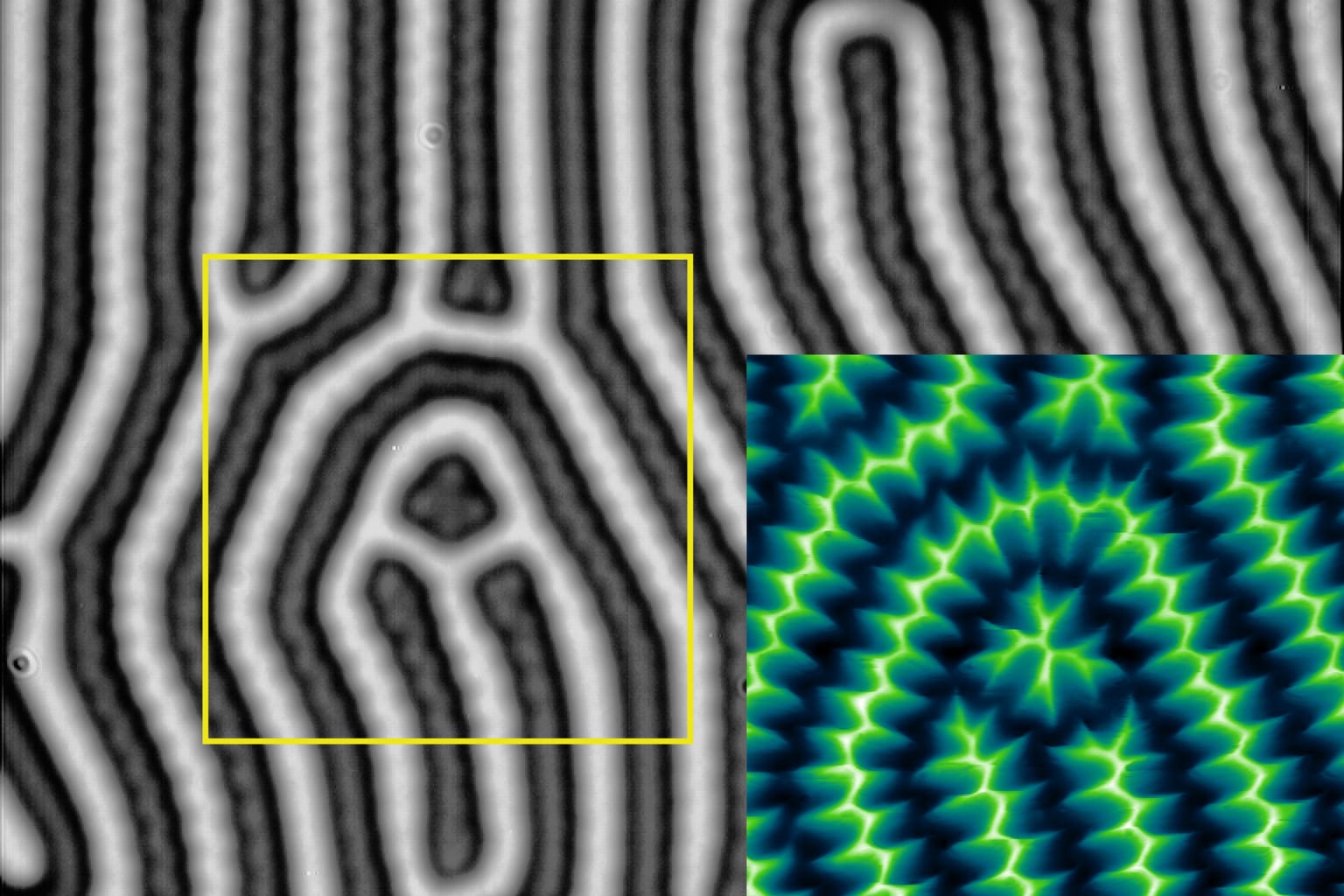
A bit on a hard drive is a patch of magnetization, and flipping it means turning a tiny compass needle. Now a team at the University of Illinois has shown that laser pulses can steer that magnetization in trillionths of a second, in a ferromagnetic semiconductor called chromium germanium telluride, or CGT.
Changing a material's magnetization has usually meant applying an external magnetic field, which reorients the magnetic dipoles much as Earth's field swings a compass. Former Illinois graduate student Yinchuan Lv, now a postdoctoral research associate at SLAC National Accelerator Laboratory, says those methods face practical limits in switching speed. Light looks like the obvious alternative, but professor Fahad Mahmood notes that many optical techniques rely on heating the material or need specific conditions, such as circularly polarized light.
Light's electric field mostly acts on electrons through their electric charge, not directly on magnetization. In CGT, spin-orbit interactions link each electron's spin to its orbital motion, which gives light a pathway into the magnetic order. The catch is that CGT is centrosymmetric: its atoms are arranged symmetrically around a central point, which forbids the simplest coupling between light and magnetization. The team therefore expected a weak response.
The researchers used emission spectroscopy, a method that blasts a material with laser pulses and then records the light it gives back. With linearly polarized near-infrared pulses, the CGT sample emitted terahertz light, a frequency range between microwaves and infrared. When the light hit head-on, the emission traced a four-petal pattern as the polarization angle changed, and two petals when the beam came in at a tilt. Most striking, the signal rose as the sample temperature went up, the reverse of what a magnetic signal would normally do. Mahmood's team concludes that CGT's magnetization is very likely the source of the emission.
For now, the change is for researchers. The study gives no device, no timeline and no cost, and it reports a laboratory measurement that still needs to be reproduced under other conditions. What it offers is an open path: a magnetic response that does not depend on heating, in a material that was not expected to show one. For data storage, that is the question the field will have to answer next.
Comments
Loading the thread…
Sign in to leave a comment. Sign in