Lab X-rays reveal long-lived spin waves in copper oxide
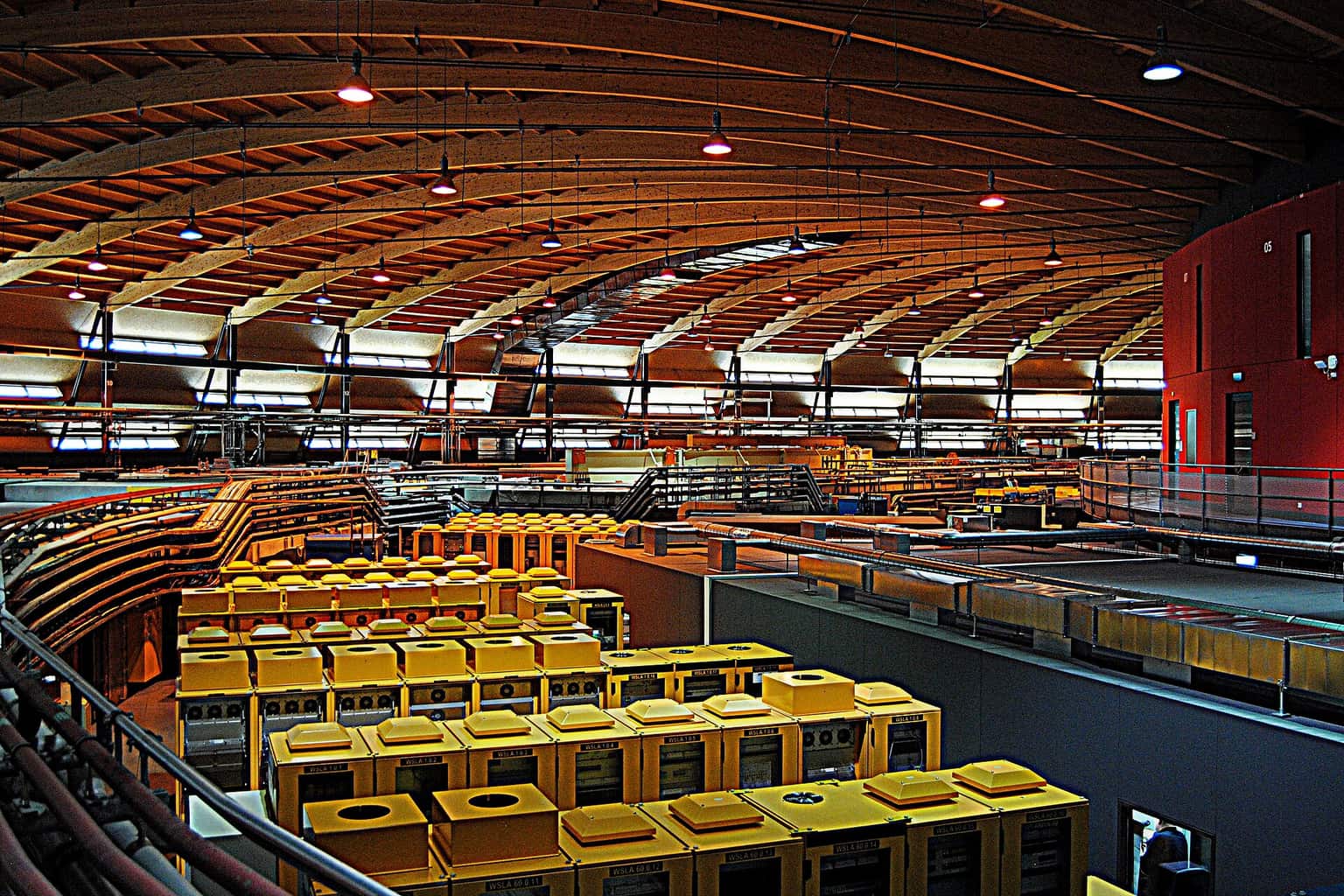
A laser pulse lasts only femtoseconds, quadrillionths of a second, and in that flash it sets the spins of a copper oxide crystal flipping in rows. At the Paul Scherrer Institute (PSI) in Switzerland, Hiroki Ueda's team then hit the same sample with a second flash, a highly brilliant X-ray pulse from a free-electron laser at the SwissFEL facility. What they recorded is how long the resulting waves last.
The reason to care is the limit of today's computers. Chips built on silicon are reaching their physical limits: components cannot be shrunk indefinitely, and clock speeds cannot be raised indefinitely. In a conventional chip, electrons flow through the material, which causes power losses and generates waste heat. The alternative studied here, spintronics, leaves the electrons in place and moves information through spin waves, a little like the wave in a stadium, where people stay in their seats and only their arms move. The waves are made of magnons, collective spin excitations that behave as quasiparticles, meaning they carry a definite energy and momentum even though they are not true particles.
The timing is the new part. The team followed the magnons in three stages. In femtoseconds, the laser excites the electrons and the spins start to flip together. Over picoseconds, trillionths of a second, the magnons collide and form what Ueda's team describes as incoherent waves, like rough seas. Then, in the range of nanoseconds, billionths of a second, the magnons pass their energy to vibrations of the atoms in the lattice, called phonons. That last step comes about three orders of magnitude after the previous one. Romaguera said the team was surprised by how long the transfer takes, given how strongly magnetism and the lattice are coupled in copper oxide.
The result rests on a combination of methods. The team used the pump-probe technique, varying the delay between the laser pulse and the X-ray pulse to build a sequence of snapshots, and added a new X-ray technique to two established ones. Until now, each method captured only part of the picture, so no one had a single coherent account of these interactions. Ueda's team says the magnon-phonon relationship, which depends on how momentum and energy relate in each excitation, controls how efficiently energy leaves the magnons, and that this suggests materials could be designed to tune that lifetime. Those are findings from one copper oxide sample in a laboratory. No logic component has been built or tested with them.
For engineers working on post-silicon computing, the message is a usable time window. If magnons keep their energy long enough, a device could in principle manipulate them before they dissipate, which is the condition for performing and controlling logical operations with spin waves. The team does not give a date for that step, and it has not described a prototype, a material that could be manufactured at scale, or a cost. What it has shown is that the physics of the wave itself gives such a device something to work with.
Comments
Loading the thread…
Sign in to leave a comment. Sign in