In the lab, water molecules carry magnetism between distant ions
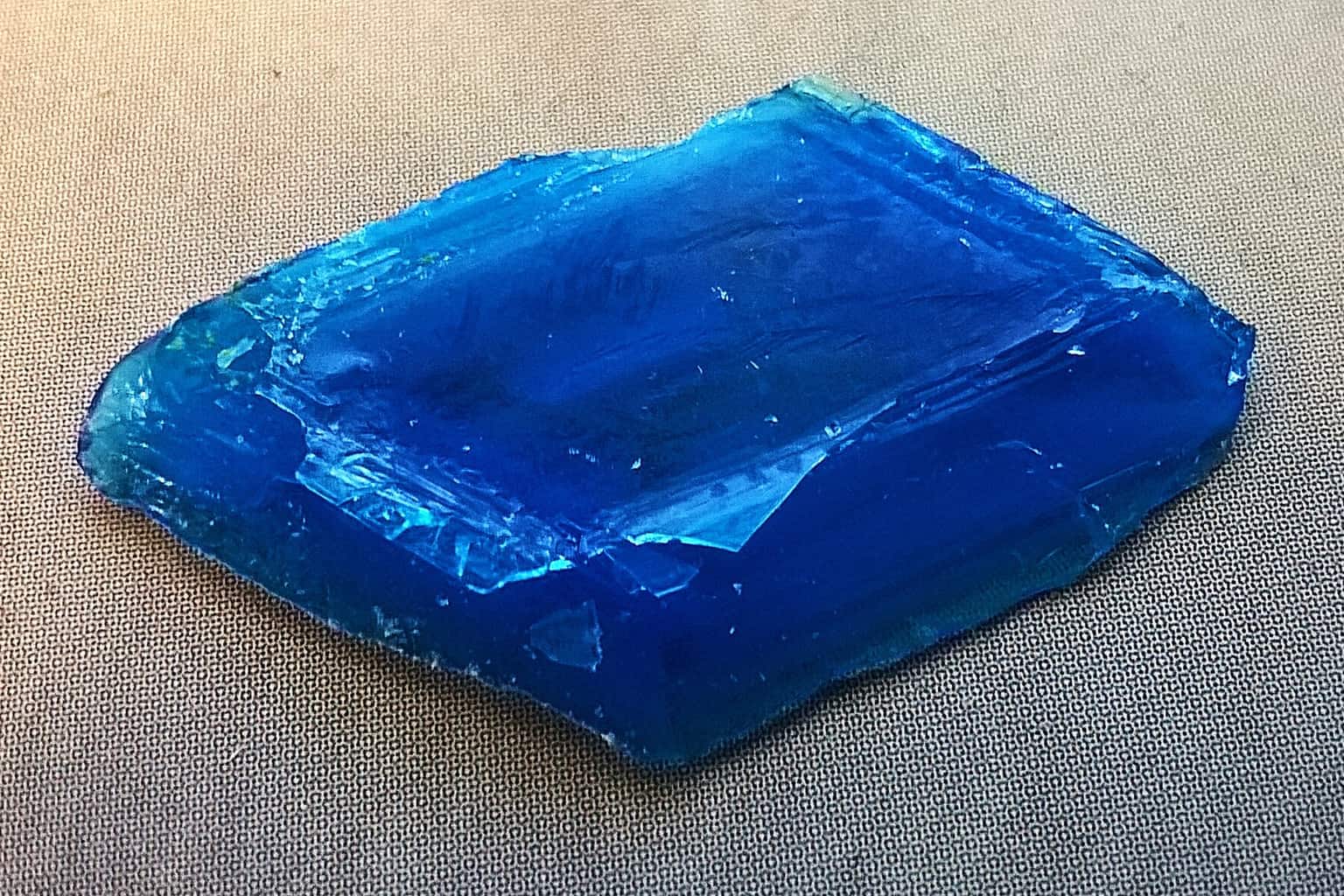
At room temperature, the water molecules attached to the copper ions point in a jumble of directions, and the crystal’s hydrogen bonds follow one uniform pattern. Cool the compound below 260 K and they snap into order. That reshuffle splits the hydrogen bonds into two distinct types and pairs up neighboring molecules. Kazuhiro Nawa, associate professor at Tohoku University’s Institute of Multidisciplinary Research for Advanced Materials, and co-corresponding author Norman Lu of National Taipei University of Technology report that this ordering switches on a magnetic link between copper ions that are not directly bonded to each other.
Molecular magnets are crystals built from individual molecules that each act as a tiny magnetic unit, and chemists can tune their elements, ligands and packing. Traditionally, their magnetic interactions travel through direct contact between magnetic ions or through strong covalent bonds. Hydrogen bonds, weaker and common throughout molecular materials, were poorly understood as carriers over distance. The team tested that idea on two fluorinated copper(II) complexes, 2FH-CuCl₂·H₂O and 3F-CuCl₂·H₂O. Using X-ray and neutron diffraction at the 4G-GPTAS instrument of the JRR-3 research reactor, they followed how the crystal structures changed as the temperature fell.
The magnetic data matched the structural picture. Both compounds show broad peaks in their magnetic susceptibility around 5 to 7 K, followed by a drop toward zero, the signature of antiferromagnetic pairing. A model of magnetic pairs fits the data with interaction strengths of roughly 10 K, and density functional theory calculations, a computer method for estimating how electrons behave, point to the hydrogen-bond network as the likely pathway. “A notable result was the clear connection between water molecule ordering and the formation of magnetic pairs,” Lu said. “Since the room-temperature structure prohibits the pairing of molecules, it was genuinely surprising to see antiferromagnetic pairs show up in the magnetization data.” The inconsistency was resolved only by a closer study of the water molecules themselves.
The Tohoku and Taipei Tech release presents the hydrogen bond as a new dial. The paper’s abstract adds a sharper rule: the magnitude of the magnetic interaction increases as the hydrogen-bond distances shorten. The idea is not entirely new. A 2009 paper listed on academia.edu carries a similar title on magnetic coupling between copper(II) ions mediated by hydrogen-bonded water molecules. A separate study on a cobalt complex reports that a slight rotation of coordinating water molecules can effectively control magnetic anisotropy, the directional preference of a magnet. What the Tohoku team adds is the link between a visible structural transition and the pairing itself.
For chemists designing magnetic materials, the change is practical. They could use hydrogen bonds, among the most common and adjustable interactions in chemistry, to carry magnetic coupling across larger distances inside a crystal, rather than relying only on strong direct bonds. Fluorination and other chemical substitutions can reshape how molecules pack and how their hydrogen bonds form, so the approach could map how small structural tweaks produce large shifts in magnetic behavior. The study gives no timeline for applications, and its results concern two crystals measured in the laboratory at temperatures a few kelvin above absolute zero. The next step the researchers point to is that systematic mapping, testing how further substitutions shift the magnetism of these materials.
Sources — read the originals(Paris time)
Pages consulted while writing
Read next
Comments
Loading the thread…
Sign in to leave a comment. Sign in