Infrared light locks gravitational-wave mirrors in lab tests
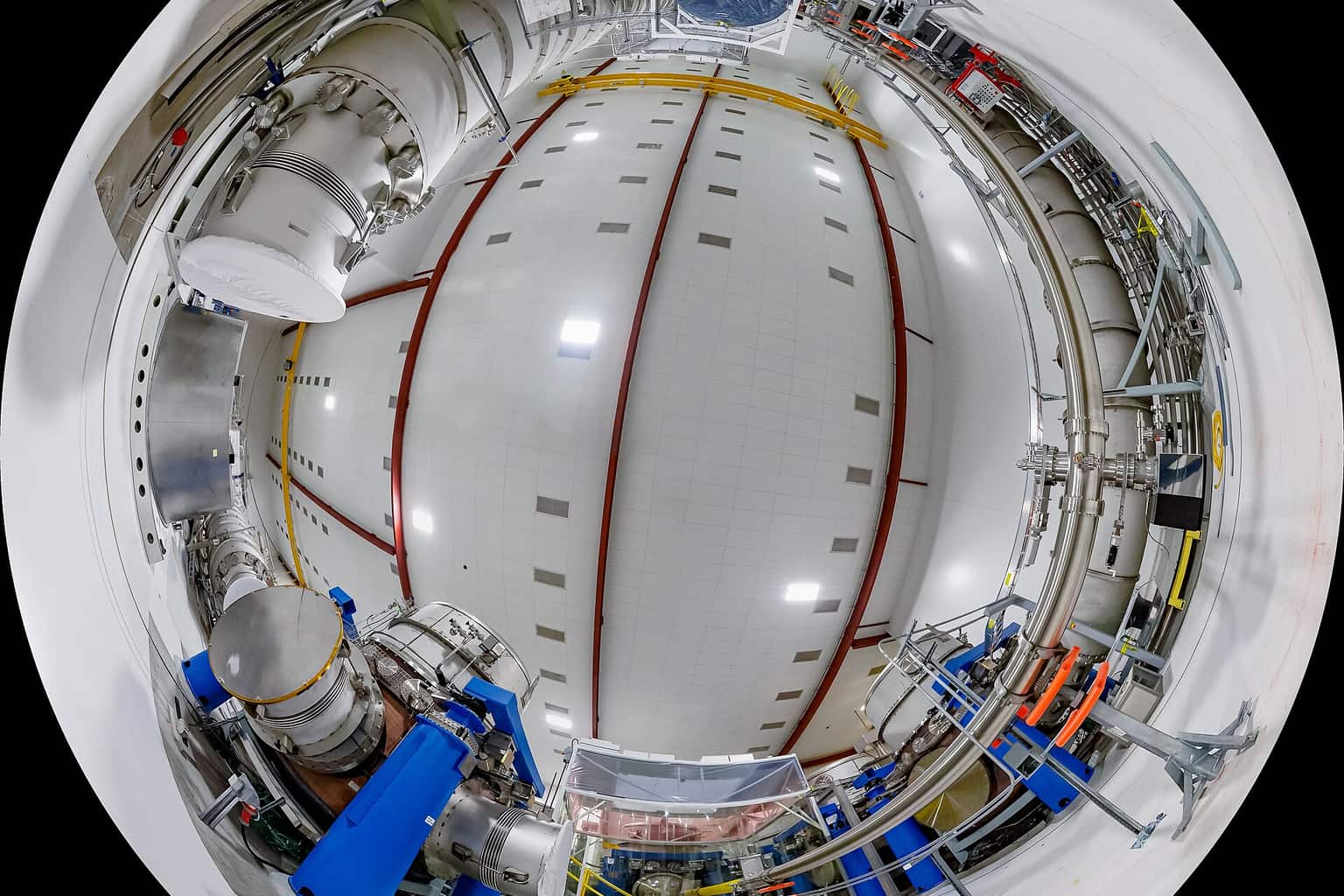
Two 40-kilogram mirrors sit four kilometers apart, and before a gravitational wave detector can listen to the universe, they must be brought to rest and held in exactly the right positions by laser light. Dr. Jian Liu, from The University of Western Australia, and his co-authors have tested a new way to do that job, one that keeps working when the mirrors are coated with the material the next LIGO upgrade needs.
LIGO detects ripples in space-time created by colliding black holes by measuring changes in distance 1,000 times smaller than the width of a proton. The next upgrade will use new crystalline mirror coatings to improve sensitivity. The problem is that these coatings absorb the green laser light that the current locking system relies on. Without a locking method that avoids that light, the coatings cannot be used as planned.
The team's answer is infrared light at 1596 nanometers, a color the new coatings do not absorb. Special crystals convert this locking light, and the detector's main 1064-nanometer laser, into green light. That shared green signal allows control to be handed over smoothly from the locking laser to the main laser. The handover took about 60 seconds in the team's demonstration, which Liu described as much faster than the current system, and it succeeded again over several days of repeated runs.
The team also estimates the measurement error between the two lasers at about one-tenth the width of an atom, even when measured along a four-kilometer LIGO arm. The authors present this as an estimate from their results, not as a value measured over a full-length arm, and the tests were carried out as a demonstration in the study rather than on an operating detector.
For detector teams, the result means the new mirror coatings do not have to wait for a locking method that suits them. For astronomers, it means a route to a more sensitive detector that can pick up distant black holes and neutron stars colliding. The study does not give a date for when an upgraded LIGO would adopt the scheme, and it does not say how it would be integrated into the instrument's existing hardware.
Comments
Loading the thread…
Sign in to leave a comment. Sign in