Lab pulses film a molecule's first 3-femtosecond moments
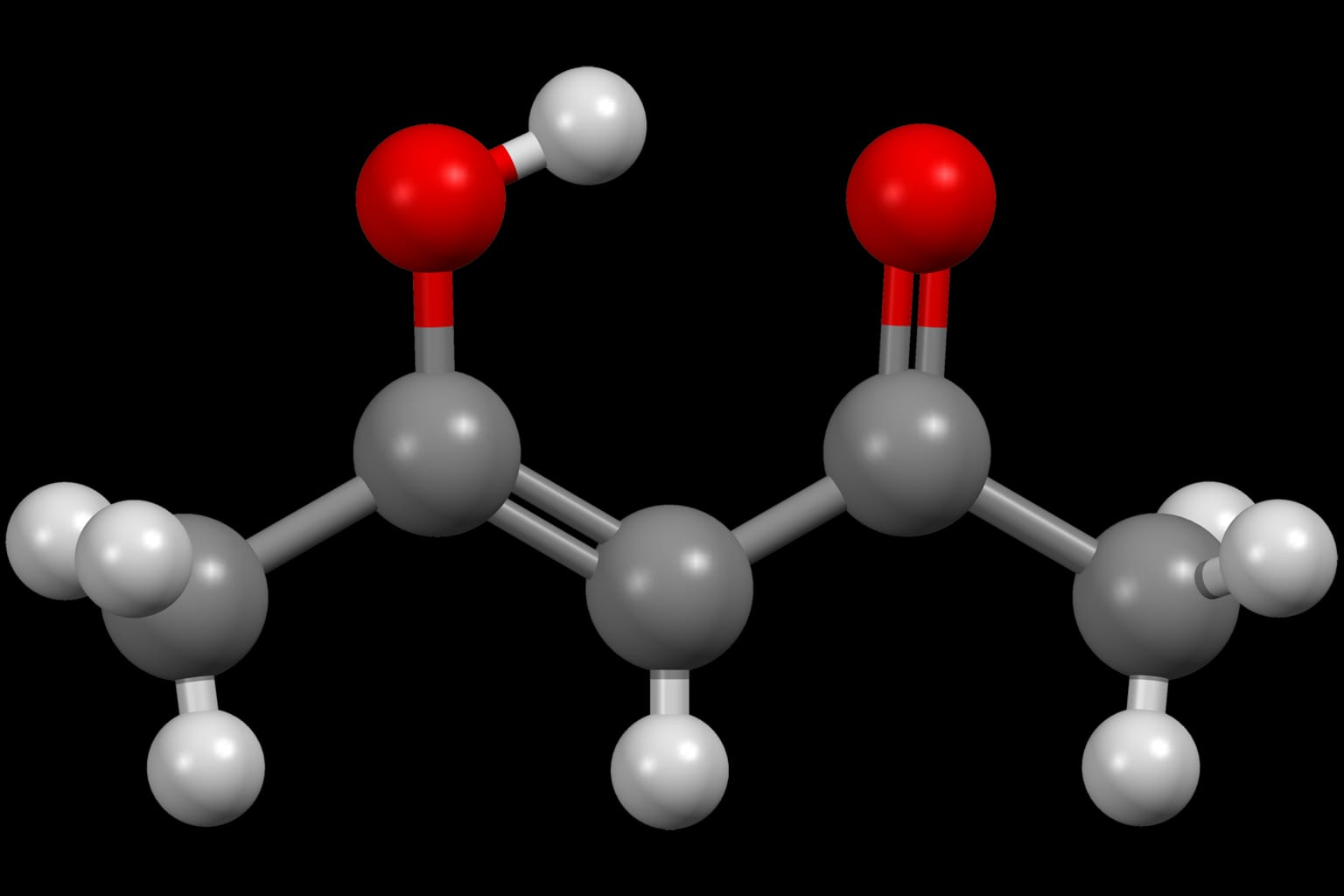
At the Politecnico di Milano, a short burst of ultraviolet light hits a molecule, and a second burst, far shorter, arrives a few moments later to read what happened. A team led by the Politecnico has used this sequence to observe a molecule in the first instants after it absorbs light, with a time resolution of approximately 3 femtoseconds. One femtosecond is one millionth of one billionth of a second. The work, published in Nature Communications, was carried out within the European ERC Synergy TOMATTO project.
The question at stake is a familiar one for photochemists: what happens between the moment light is absorbed and the moment a new molecule takes shape. The molecule studied, acetylacetone, is used as a model to understand how light can trigger rapid transformations. Its key moment is a conical intersection, the junction where a molecule changes electronic state and is directed toward one transformation pathway or another. The team could separate two successive passages through a conical intersection, phenomena that earlier instruments could not tell apart in time. Where a single transformation had appeared as one event, the measurement now shows its intermediate stages.
The apparatus combines two pulses synchronized with very high precision. The first, in the ultraviolet, is absorbed by the molecule and starts its evolution. The second, in the extreme ultraviolet and lasting a few attoseconds, arrives after a controllable interval and captures the molecule's state at that instant. Repeating the measurement at successive intervals gives the redistribution of energy and the joint motion of electrons and nuclei. "It is like vastly increasing the number of frames in a film," says Mauro Nisoli, professor at the Department of Physics of the Politecnico di Milano and coordinator of the project. "A seemingly single transformation finally reveals all its intermediate stages."
Maurizio Reduzzi, associate professor in the same department, describes what the instrument is designed to catch: "What we observe is the moment when light sets the molecule in motion and reorganizes its internal energy." The results come from one model molecule, measured in the gas phase, and the authors present the method as a platform rather than a finished tool. The apparatus can change the wavelength of its ultraviolet pulse, which makes it suitable, in principle, for other molecules and electronic states.
What changes for chemists is the range of questions they can ask. The authors name molecules of biological interest, photoactive materials and processes linked to energy conversion as possible targets, and they open the door to attochemistry, the study of observing and, eventually, controlling chemical reactions by acting on electrons before atoms begin to move. These are prospects described by the team, not results it has yet shown. The study does not give a timeline for applying the method beyond the laboratory, and the team has not put a date on it.
Sources — read the originals(Paris time)
Read next
Comments
Loading the thread…
Sign in to leave a comment. Sign in