Lab TOPCon solar cell reaches 26.03% certified efficiency
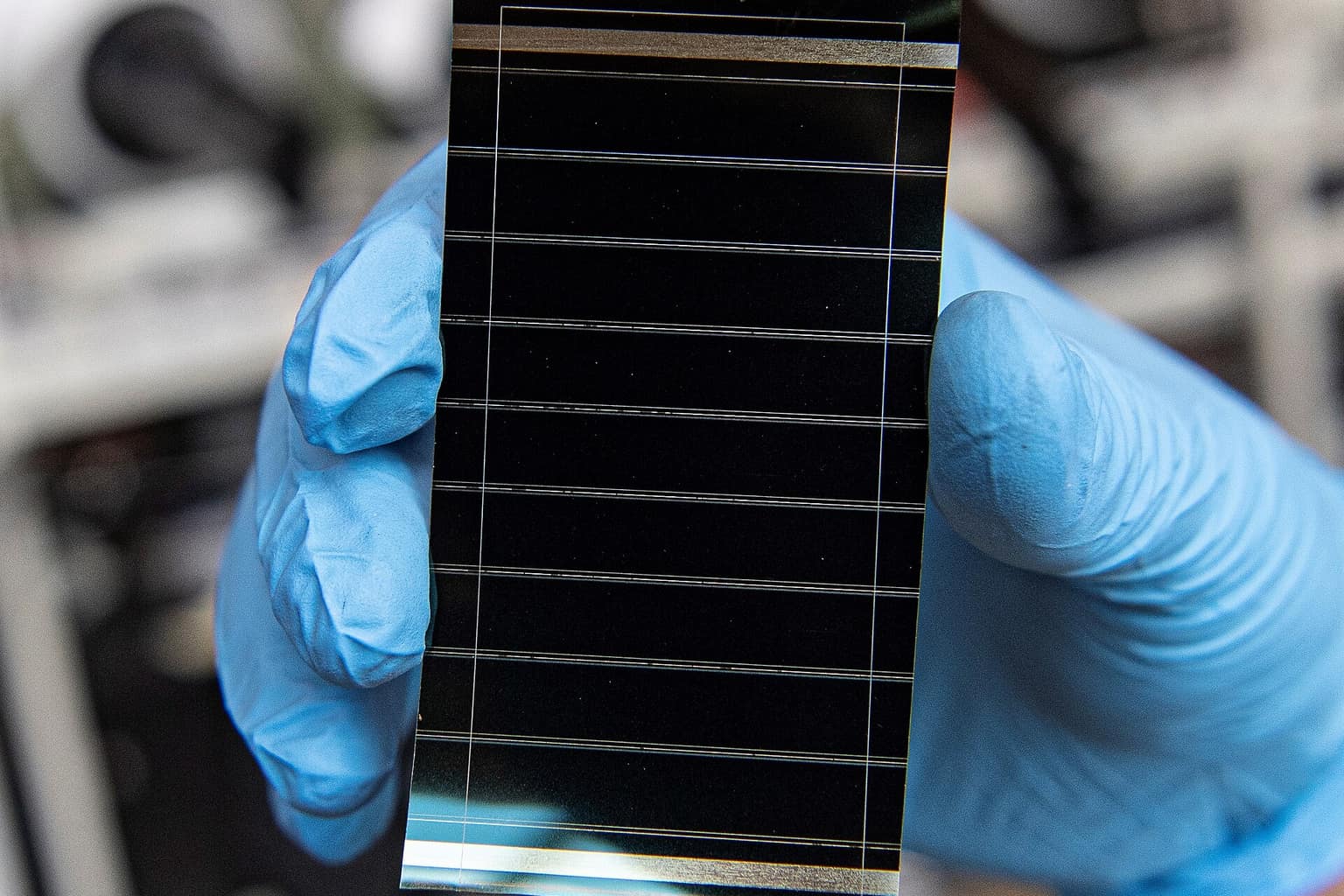
A research group led by Tongwei has pushed a TOPCon (tunnel oxide passivated contact) solar cell to 26.03% certified efficiency, a result confirmed by Solar Energy Research Hamelin (ISFH) in Germany. The cell was built and measured in the laboratory. Its main change lies in the boron-doped emitter, the layer at the front of the silicon that carries electrical charge.
The problem is a trade-off. The emitter must conduct well enough to keep the metal contacts efficient, yet heavy doping lets charge carriers recombine and be lost. The team's answer is a selective emitter: heavily boron-doped regions beneath the metal contacts, and lightly doped regions between them. The pattern is formed by a photoresist-based etching process that the researchers describe as non-destructive, and they report a sheet resistance of 1,600 Ω/sq in the non-contacted regions, which they believe is the highest reported for TOPCon to date.
The gains are measured against a conventional uniform emitter. Average cell efficiency rose from 25.82% to 25.98%, an absolute gain of 0.16 percentage points. Open-circuit voltage went from 742.6 mV to 745.5 mV, and fill factor from 83.54% to 83.76%. The best certified cell reached 26.03%, with an open-circuit voltage of 746.5 mV. The team also tested a locally boron-doped finger structure, which improved passivation but lost more in fill factor, so its efficiency advantage was limited.
The figures have limits. The 26.03% is the best certified cell, not the average, and the 0.16-point gain is an average across the study's samples. Part of the work is simulation: the Quokka3 model suggests that a contacted width of about 200 µm gave the highest efficiency among the configurations tested, and that metal fingers of 7 to 9 µm could allow a denser grid with a pitch of 500 to 550 µm. Those layouts have not been built. The team says that higher-resistivity silicon wafers paired with more closely spaced front contacts could help further, but that experimental validation is still required.
For manufacturers of TOPCon cells, corresponding author Xiajie Meng says the work could help refine emitter doping and contact designs without compromising electrical contact quality. The study was published in Solar Energy Materials and Solar Cells. No date for industrial adoption has been announced, and the team describes the findings as a basis that "could" support future efficiency gains and industrial use.
Sources — read the originals(Paris time)
Read next
Comments
Loading the thread…
Sign in to leave a comment. Sign in