Lasers in the lab reproduce how the sun's corona gets heated
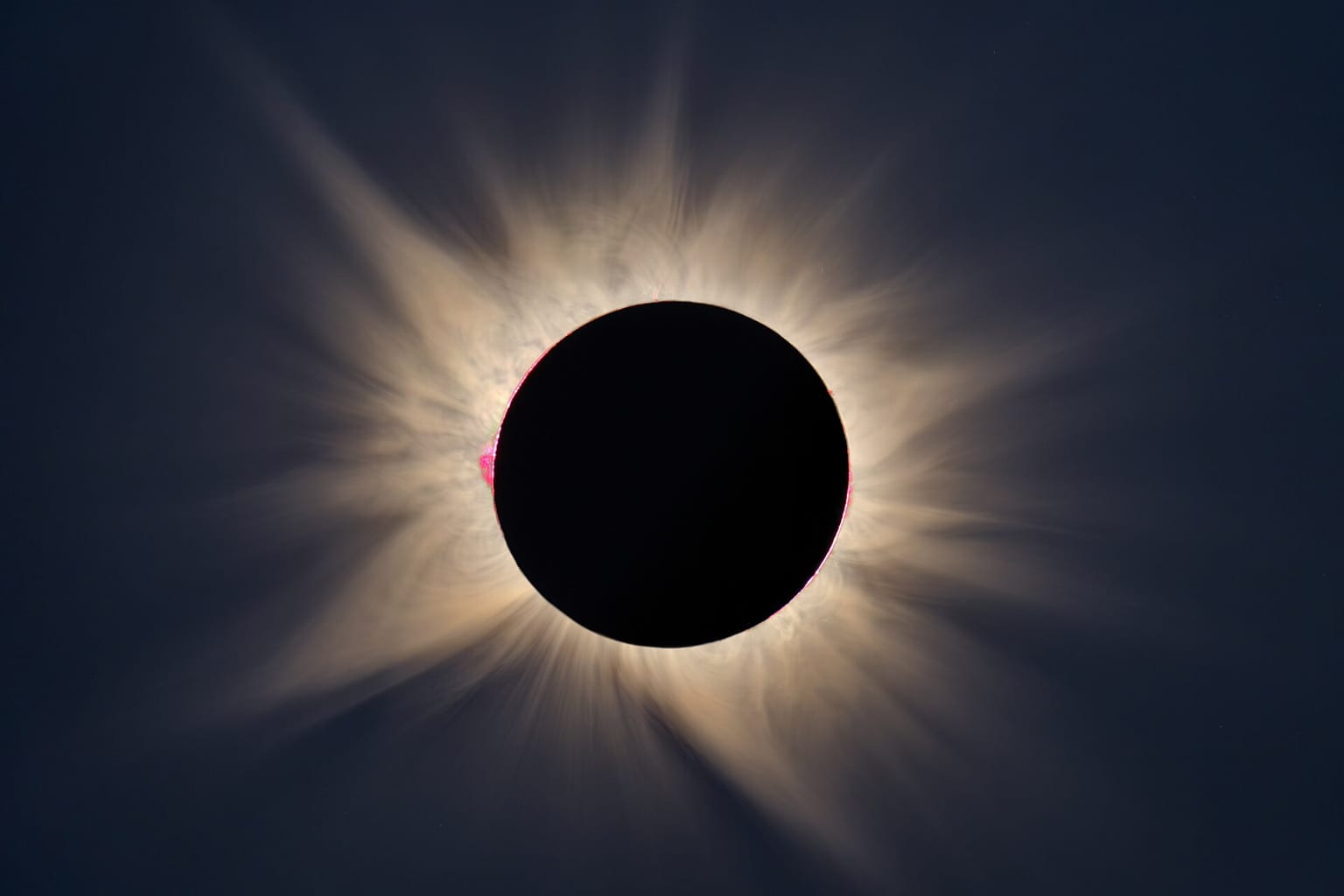
The surface of the sun sits at a relatively cool 5,800 kelvin. Above it, in the thin outer layer called the corona, electrons can climb to millions of degrees, and astronomers still cannot fully say why. In a laboratory at China's Shenguang-II laser facility, a team led by Wei Sun at the China Institute of Atomic Energy has rebuilt corona-like conditions in miniature and reproduced one of the candidate mechanisms: plasma instabilities that trigger small energy bursts called 'nanoflares'. The work is published in Physical Review Letters.
The leading explanation starts at the surface, where churning plasma twists and stretches the magnetic fields reaching into the corona and stores energy in them. Inside thin sheets of electrical current, field lines pointing in opposite directions can break and rejoin, a process called reconnection, releasing that energy suddenly. Each nanoflare is small by solar standards, but it can launch jets of plasma and briefly heat its surroundings to extreme temperatures. A separate clue comes from coronal rain, where dense, cooler plasma falls through thinner plasma and forms finger-like structures. Simulations suggested those fingers could squeeze magnetic fields together and trigger reconnection, but no direct evidence had tied them to nanoflare heating.
The team fired powerful laser beams at tiny plastic targets with wavy surfaces. This produced a plasma just millimeters across, with instabilities seeded in a precisely controlled way. Although far smaller than anything on the Sun, the plasma was tuned to behave like the plasma around coronal rain. Optical imaging tracked its structure and magnetic fields, and the X-rays it emitted were analyzed to estimate electron temperatures. Flat targets, where no instabilities could form, served as comparison. With the wavy targets, the finger-like structures reappeared, pushed oppositely directed magnetic fields together and drove reconnection. Electrons reached around 820,000 K, about twice the maximum produced by the flat targets. The authors present this as the first lab demonstration of nanoflare heating driven by plasma instabilities.
Accompanying computer simulations indicated that electrical heating inside the reconnecting current layers far outweighed heating from friction within the plasma. When the simulations suppressed the generation of magnetic fields, most of the extra heating disappeared. The limits are clear: the plasma is far smaller than the Sun, and the experiment covers one configuration. Whether the mechanism operates widely, and whether nanoflares occur often enough to explain a large fraction of the corona's heat, remain open questions.
For solar physicists, the gain is a testable link between an observed structure, coronal rain, and a specific heating process that until now existed mainly in simulations. The team hopes to build on the experiment with more three-dimensional plasmas and more precise measurements, which could help answer those remaining questions. It has not announced a date for that follow-up.
Sources — read the originals(Paris time)
Read next
Comments
Loading the thread…
Sign in to leave a comment. Sign in