Low sounds reach across the inner ear at once, not in one spot
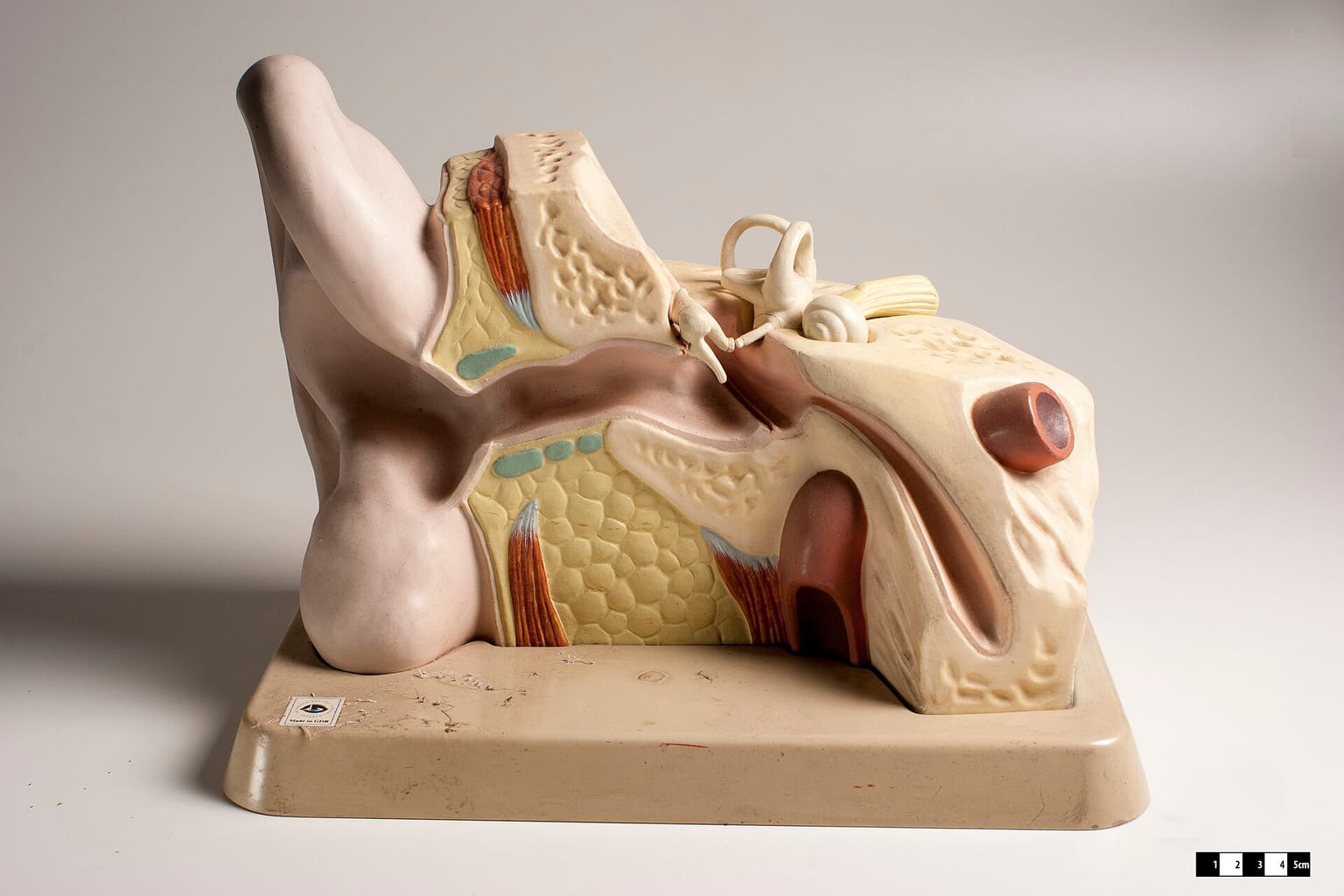
For more than sixty years, the standard picture of hearing has been a keyboard. In the cochlea, the snail-shaped coil deep in the inner ear, high notes make the tiny hair cells at one end move, and low notes make those at the other end move. A team led by George Burwood, a research instructor at Oregon Health & Science University (OHSU), has now watched low-frequency vibrations appear almost simultaneously across distant regions of that coil in guinea pigs. The ear, it seems, does more than sort sounds by position.
That matters because the picture is the basis of cochlear implants, the devices used around the world to help people with hearing impairments. An implant sends electrical signals through electrodes placed along the cochlea, each one standing in for a position on the keyboard. If the real ear works differently at low frequencies, the signals sent by those electrodes may be too simple. The researchers say the finding points to a way of designing implants that could convey the rich complexity of vibrations the brain turns into sound.
The low end is also where the hardest listening happens. Low frequencies are crucial to the brain's ability to follow complex patterns of speech, and, as Burwood put it, low-frequency background noise is "a very challenging environment for people with hearing loss." Yet this range is much harder to study than high frequencies, and the cochlea is so small that the mechanics of its low-frequency part were long out of reach. Georg von Békésy won the Nobel Prize in 1961 for showing that sound frequencies stimulate distinct places along the cochlea. Because of the cochlea's size and complexity, his measurements covered medium and high frequencies, not low ones.
The team got around that limit with optical coherence tomography, a light-based imaging method that is routinely used in eye exams around the world, and which OHSU physician-scientist David Huang helped invent. Combined with a new processing method that cancels out noise, it let the scientists detect the signal of low-frequency sound at several separate points in the guinea pig cochlea. The motion often synchronized over large distances. A previous study, published in 2022, had first revealed this unexpected pattern; the new work builds on it.
What the results mean is careful but significant. The study suggests that, at least for low frequencies, the processing between the inner ear and the brain is more complex than a simple place map. "The brain appears to have mechanisms that are able to differentiate frequencies without having a map or place code," said Larry Trussell, director of the Oregon Hearing Research Center at OHSU. The work was carried out in guinea pigs, and the researchers did not report any change to an implant. They also give no timeline for when a redesigned device could reach patients.
What opens up is a new question for the engineers. Burwood's team argues that the best pattern of electrode stimulation in an implant "may be more complex than just where and how intensely it's being stimulated." Testing that idea, and checking whether the same patterns hold beyond guinea pigs, is the next step the study points to.
Sources — read the originals(Paris time)
Pages consulted while writing
Read next
Comments
Loading the thread…
Sign in to leave a comment. Sign in