The brain's hearing region also starts every word we say
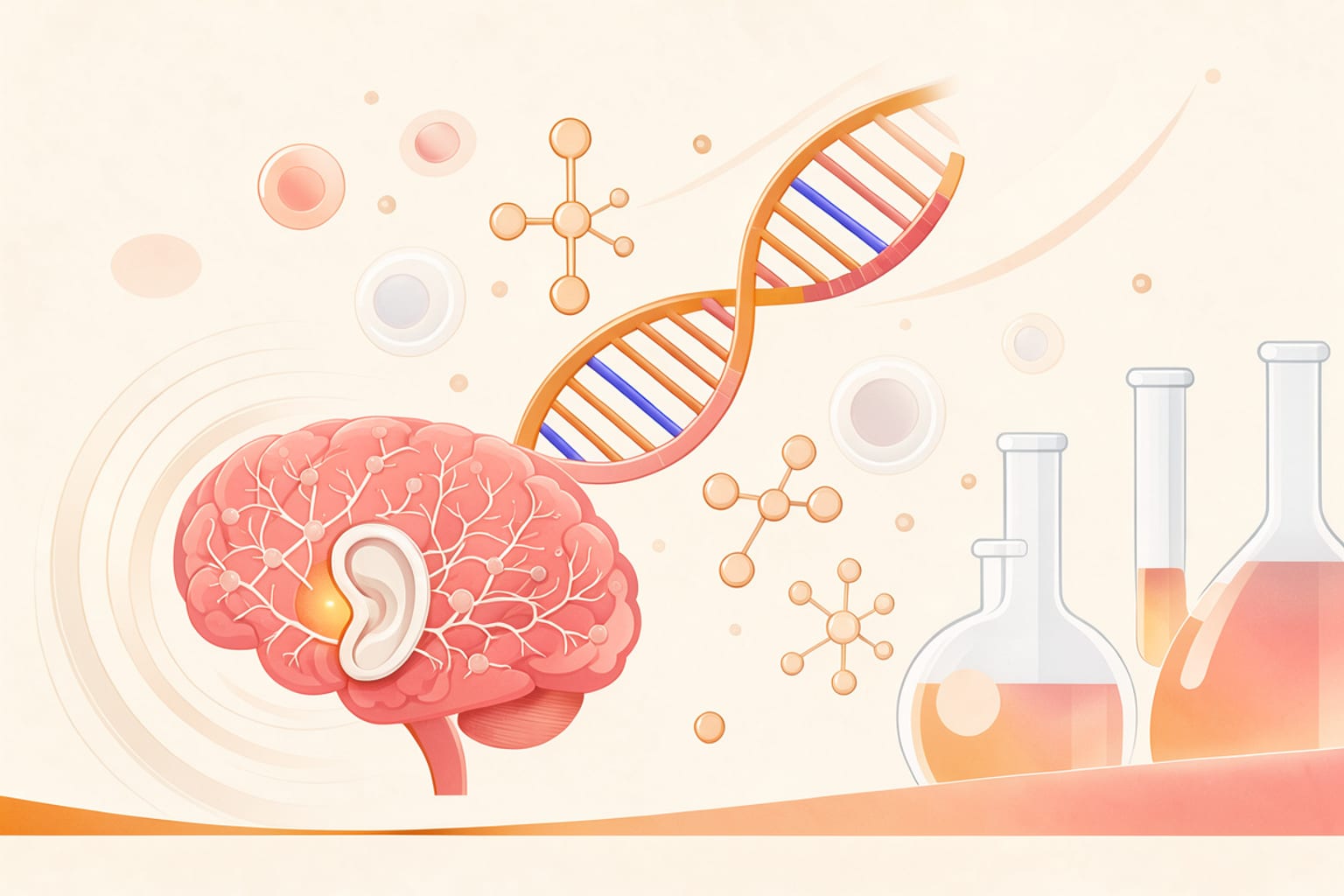
Every word you have said today started in a small spot just above your left ear, about a quarter of a second before you said it. That is how Edward Chang, a neurosurgeon at the University of California, San Francisco, put it to reporters. The spot belongs to a region long taught to students as the seat of understanding speech, and the new work shows it also does a second job.
The region is Wernicke's area, named after the German neurologist Carl Wernicke, who in 1874 described patients who had trouble making sense of words. Some of them also struggled to produce words. The textbook answer became a tidy split: Wernicke's area handles comprehension, and Broca's area, further forward in the brain, handles production. The two are linked by a bundle of nerve fibres. As Chang put it, “Why would damage to a hearing area of the brain break the ability to speak? That question has been open for 150 years.”
The answer came from combining older data with new recordings. Chang's lab had gathered brain data over about 15 years. For the new experiments, the team recorded activity in 28 people who were about to have surgery for epilepsy or tumors. The recordings showed that the small spot, the left posterior superior temporal gyrus, lit up both when people heard words and just before they tried to say them. Its cells also had preferences. Matthew Leonard, a cognitive neuroscientist at UCSF, gave an example: the activity is stronger “when you’re about to say the word caterpillar than when you’re about to say the word cat.” Scientific American reported that the activity grew with the length of the word about to be spoken, and was stronger for uncommon words.
What the spot produces is not the meaning of the word. It is closer to a plan, a sketch that records how long the word is, how many syllables it has and how often people use it. Neurons in the regions that control the mouth then turn that plan into the exact movements needed to say it. The idea is not new. In the 1870s Wernicke himself suggested that this area might hold an “auditory image of words”, something like a blueprint for the word to come. Later the region came to be seen mainly as a listening centre, because it sits inside the auditory cortex, the part of the brain that processes sound.
The team also tested the idea by stimulating the spot with electrical current. When the current was delivered just before a person spoke, it disrupted their speech, and the effect appeared only in this small area. The listening and speaking neurons sit side by side, sometimes overlapping. Leonard suggests that this closeness may help explain how children learn to turn the words they hear into words they can say.
Not everyone was surprised. Jeffrey Binder, a neurologist at the Medical College of Wisconsin in Milwaukee, said the study provides “convincing evidence that this brain spot is critical for speech production”. Brown University neuroscientist Leigh Hochberg expects more such revisions: “each part of the brain that, we were taught as a med student or a grad student, does this, probably does that and a whole lot more.”
The most immediate use may be in brain-computer interfaces, devices that turn brain signals into speech for people who can no longer talk. Most current designs read signals from the motor cortex, the region that controls the muscles of the mouth and throat. But that region can itself be damaged. Because the new spot works at an earlier stage of speech, the team argues it offers another route. In a person with severe paralysis who could no longer speak, the researchers decoded words the person tried to say and speech the person heard. Accounts differ on how many people were tested: one report describes two volunteers with paralysis, another describes a single participant.
The finding could also help surgeons. Knowing exactly where the listening and blueprint neurons lie could help them map a patient's brain more precisely and lower the risk of disrupting speech during an operation.
The results were presented on November 15 at the annual meeting of the Society for Neuroscience and published on November 19 in the journal Science. The team has not announced a timetable for a device. Alexander Silva, a UCSF bioengineer, says the spot could eventually support the back-and-forth of conversation, since it carries information both about speech a person hears and speech a person is about to produce, something current interfaces lack. For people who have lost their voice, that would mean a single target covering listening and speaking together, and a path to devices that do more than read out one-way commands.
Sources — read the originals(Paris time)
Pages consulted while writing
Read next
Comments
Loading the thread…
Sign in to leave a comment. Sign in