Six-bit audio converter gains at least 18 dB of range in lab prototype
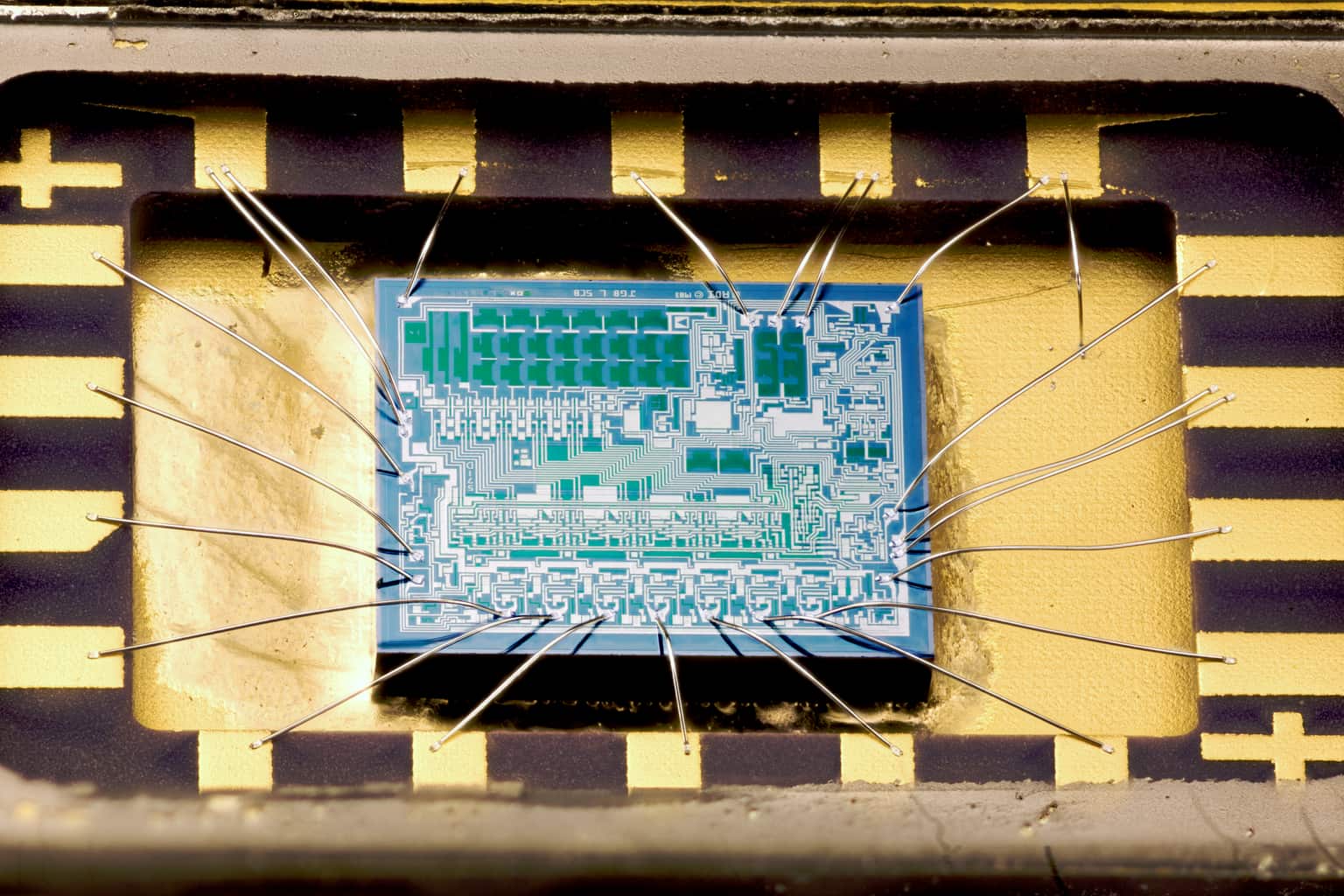
A faint heartbeat and a thunderous concert pose the same problem to a digital device: capture the quietest details without losing the loudest sounds. For nearly 90 years, engineers have managed this by trading off how loud a signal a converter can take in against the number of bits used to store it. At Imperial College London, a team has built a converter that bends that trade-off. In a lab prototype, six bits per sample now capture at least 18 dB more dynamic range than a conventional six-bit converter.
Dynamic range, measured in decibels (dB), is the gap between the quietest and loudest sound a device can record. A conventional analog-to-digital converter, the chip that turns a sound wave into numbers, has a fixed ceiling: any signal above it is clipped, and the lost peak is gone. Software can try to repair the damage afterward, but it cannot recover what was cut. The Imperial method, called Unlimited Sensing, takes the opposite route. Loud signals are folded into a smaller range before digitization, like the hand of a clock that wraps around after a full turn instead of stopping. The folded waveform can look scrambled, but its mathematical structure lets the original be reconstructed from the measurements. The idea builds on work dating back to Dr. Alec Reeves, who invented pulse-code modulation in 1937, and Claude Shannon, who laid the mathematical foundations of modern digital communications.
In tests on real recordings of speech, music, heart sounds and animal calls, the gain corresponds to approximately an eightfold increase in the range of amplitudes the converter can accommodate, without adding bits. In a listening study with 52 participants, reconstructed audio was rated higher than conventional recordings at the same bit depth, and higher than recordings affected by clipping. The results are published in IEEE Transactions on Audio, Speech and Language Processing. For now, every measurement comes from the group that designed the method, and the prototype is built from off-the-shelf electronic components rather than a custom chip. A companion preprint on the framework describes earlier hardware of this kind as often bulky, power-intensive and complex.
For a digital stethoscope, the gain matters where a faint heart sound and a louder background must both survive digitization. An environmental sensor could separate a subtle animal call from much louder surroundings. The team argues that AI systems interpreting the physical world depend on what the sensor keeps: information lost at digitization cannot always be recovered by computation, however powerful the model. The approach has also moved beyond audio. A radar prototype built on the Unlimited Sensing Framework is listed in the program of the 2026 IEEE International Conference on Acoustics, Speech, and Signal Processing (ICASSP), where it is presented as breaking the trade-off that limits conventional radar receivers. Imperial says the award-winning paper builds on more than five years of work on the framework. Neither a commercial product nor a date has been announced for audio or medical devices.
The next step on the public record is that radar prototype, due at ICASSP 2026, where the same idea is tested outside sound.
Sources — read the originals(Paris time)
Pages consulted while writing
Read next
Comments
Loading the thread…
Sign in to leave a comment. Sign in