Magnetic fields partly reverse ALS damage in cultured nerve cells
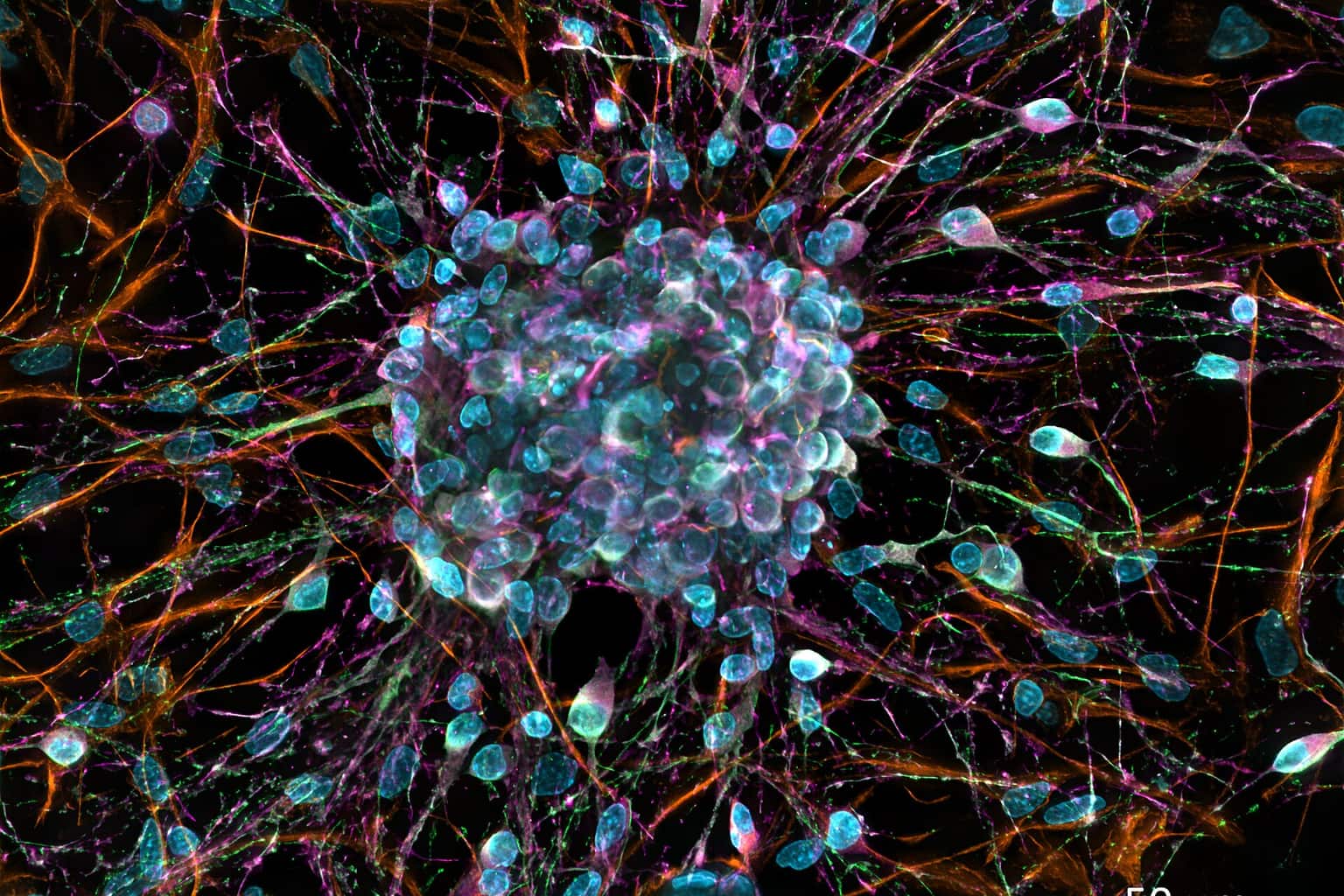
Inside a motor neuron, the cell's cargo, such as mitochondria and lysosomes, has to travel along the axon, the long extension that carries signals to the muscles. In ALS, that transport is impaired. At the HZDR research centre in Dresden, cell biologist Dr. Arun Pal and his team asked whether a magnetic field could push it back. In cultures of human motor neurons derived from ALS patients, it could: a frequency of 25 hertz markedly accelerated the movement of organelles.
The method is simple to describe. The team drove electromagnetic coils with sinusoidal alternating currents and varied the frequency, field strength and orientation of the field. Watching the cells under a high-performance laser-scanning microscope, they saw that a single treatment changed nothing. After four sessions, the benefits held for up to eight days before gradually fading. Pal's reading is that the field does not act directly on the transport machinery. It seems to trigger longer-lasting changes inside the cell instead.
Those changes are visible in the genes. The activity of thousands of genes shifted after stimulation. Before treatment, healthy and ALS motor neurons had distinct expression patterns; afterwards, the treated cells looked remarkably alike, whatever their genetic background, and both groups moved into a previously unobserved cellular state. Genes linked to the extracellular matrix, cell adhesion and mitochondrial biogenesis were switched on. Treated cells also responded better to induced DNA damage: the FUS protein gathered more efficiently at damage sites in the nucleus, and pathological FUS aggregates in the cytoplasm decreased.
The researchers are careful about the limits. The study was conducted exclusively in cultured cells, and the team says it is not yet evidence of a treatment for patients. Whether the effect holds in living people is an open question the study does not answer.
For people living with ALS, the appeal lies in the method. Current drugs offer only modest extensions of survival, and a noninvasive, drug-free approach could, if it holds up, be tested alongside other therapies. Because the effect lasts for days rather than requiring constant exposure, Pal notes that continuous treatment might not be necessary. The team is also encouraged that the approach could eventually prove relevant to other neurodegenerative diseases, not only ALS.
Sources — read the originals(Paris time)
Read next
Comments
Loading the thread…
Sign in to leave a comment. Sign in