NASA locks in key design of first nuclear-reactor spacecraft for Mars
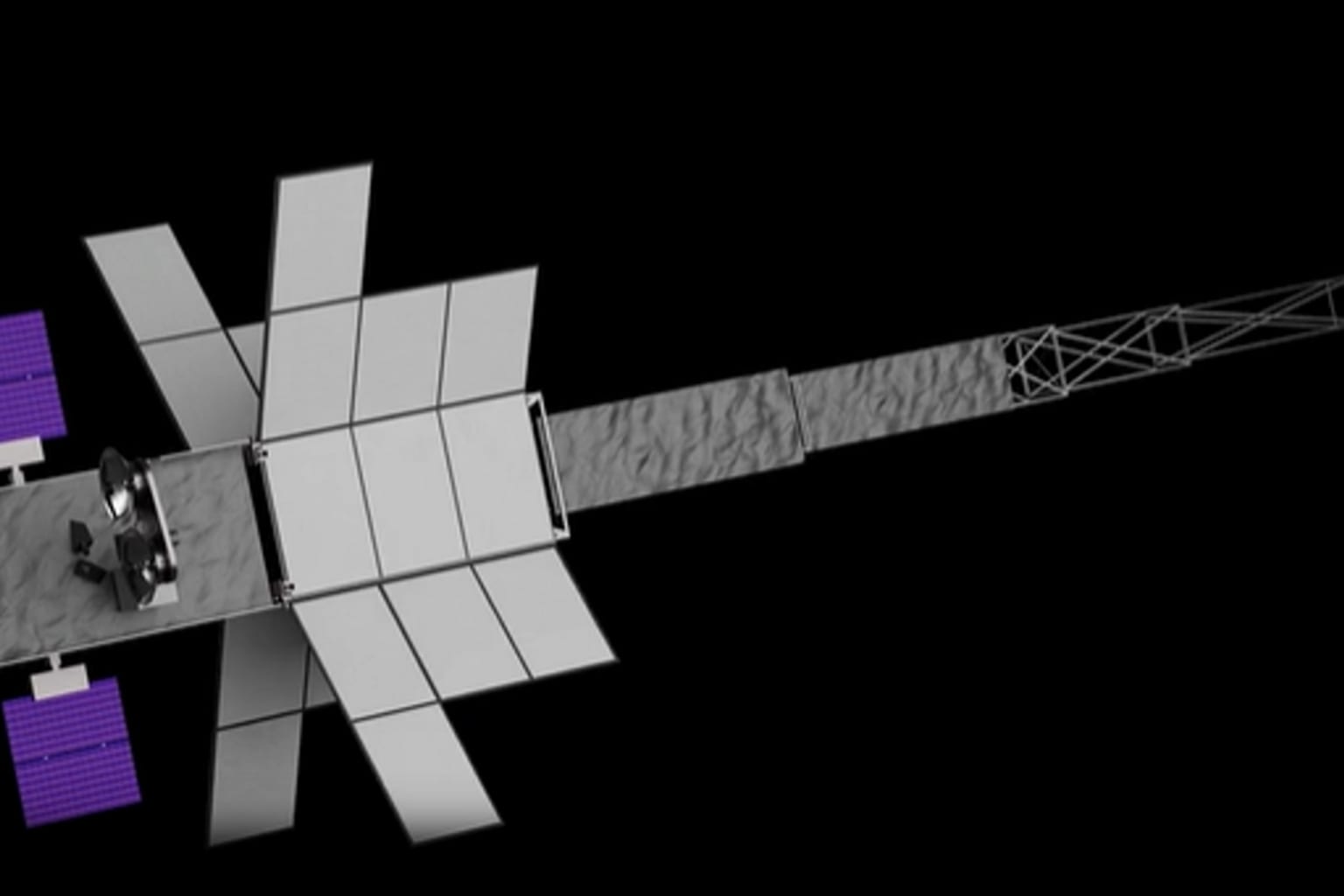
In October, experts from NASA, the U.S. Department of Energy and industry gathered at the Glenn Research Center in Cleveland for a design review of Space Reactor-1 (SR-1) Freedom. They made several key decisions and locked in the spacecraft's main elements. NASA now targets a launch in late 2028, for a craft meant to demonstrate nuclear electric propulsion in deep space for the first time.
The mission has a cargo with a purpose. SkyFall, a capsule carrying three next-generation helicopters, will be delivered to Mars. Once deployed, the helicopters are to study Martian geology and climate history, explore new terrain and search for signs of subsurface ice. Steve Sinacore, the SR-1 program director, sees the mission as a first step in a longer route: “This mission will be the first freight run on the railroad of the solar system, and the decisions we’re making now are laying the tracks for every nuclear-powered spacecraft that follows.”
The reason for a reactor is power. NASA says future spacecraft and surface operations will need far more power than current systems can provide, especially where sunlight is limited or unavailable. SR-1 is meant to show that fission can power long missions, and to pave the way for reliable surface power for NASA’s future Moon Base. Interesting Engineering describes it as a stepping stone to Lunar Reactor-1, planned for 2030, within a broader move toward mass-producing megawatt-class reactors.
Here is how the propulsion works. In nuclear electric propulsion, heat from the reactor makes electricity, much as a power plant on Earth does, NASA explains. That electricity drives ion thrusters, which push charged atoms out of a nozzle. The push is gentle. The Conversation notes the system produces very low thrust, but it can run continuously for years. Science adds the catch: it produces too little thrust to push a spacecraft into orbit, so conventional boosters will handle the launch.
The idea is old, the flight is not. Space.com recalls that NASA's SNAP-10A mission, launched in 1965, was the first and so far only time nuclear electric propulsion was successfully deployed. Jared Isaacman, NASA's administrator, introduced SR-1 at the agency's Ignition event in March, with a plan for a fission-powered spacecraft in time for the next Mars launch window. Engineers and scientists interviewed by Science said such a project would normally take three to five years to design and build. To meet 2028, NASA is taking what Science calls a “Frankensteinian” approach, co-opting existing hardware.
The design has changed since March. The boom that links the reactor to the spacecraft's main body, the Power and Propulsion Element, is shorter than in early illustrations, which cuts weight and simplifies assembly. Better shielding lets the reactor sit closer to the rest of the craft while still protecting electronics and SkyFall. The communications system also changes, with larger radio dishes to send data back across deep space. Still open are the number of radiator panels, the output power of the nuclear power module and how long the reactor will run.
The reactor produces heat that has to be removed for it to run safely and efficiently. NASA awarded $39.3 million to the Applied Physics Laboratory at Johns Hopkins University to design, build, test and produce the flight hardware for this heat rejection system. The lab works with Advanced Cooling Technologies on heat pipes and composite radiators. The heat pipes were developed at Glenn for Kilopower, a 2018 experiment, and WKYC reports they will move heat from the reactor to the engines.
The scale is modest. The reactor is designed to generate 20 kilowatts, enough to power 20 to 30 homes, according to WKYC. NASA gives the spacecraft's weight as about 12,000 kilograms. NASASpaceFlight notes that Falcon Heavy can deliver 16,800 kilograms to Mars, and that the Power and Propulsion Element weighs roughly 5,000 kilograms, which leaves room for the reactor, systems and payloads. The launch vehicle is not yet confirmed.
Once the spacecraft has left Earth orbit, its reactor power rises gradually and runs for an initial period before shutting down, while the craft sends performance data home and its solar arrays power the cruise. NASASpaceFlight says the solar arrays unfold within hours of launch and the reactor is activated less than 48 hours after launch. A panel reported by Nuclear Newswire gives a different figure: about seven days to start the reactor and run its checks. After SkyFall is delivered to Martian orbit, the reactor restarts to collect more data. Isaacman has called SR-1 a “70 percent solution to prove that it works”, and a panelist, Ezell, describes it as a C+ reactor whose data will help industry build an A+ one.
The outside view is more cautious. MIT Technology Review, quoting Holmes, calls the timeline aggressive and suspects it is partly driven by China's and Russia's own deep-space nuclear ambitions. It found little detail publicly available, and NASA's spaceflight researchers did not respond to its requests for comment. Science quotes Myers, who calls SR-1 a “real, major step forward”. The same outlet reports that the price is unspecified, that testing will be one of the first things to slip, and that a proposed $3.4 billion cut to NASA science would take 47 percent of that budget.
For now, the gain is for the people who will build the next reactors. SR-1 is a test of how a reactor behaves far from Earth, and its data is meant to shape the designs that follow, for the Moon and for Mars. For Mars, the helicopters would bring back a picture of the planet's subsurface ice.
The next dates are already set. NASA says the design work continues to reduce risk and simplify the spacecraft, and commercial providers will be asked for input as early as June. Systems must be ready for assembly, integration and testing by January 2028, and the full vehicle is due at the launch site by October 2028, ahead of a December launch. About a year after launch, SR-1 Freedom is scheduled to reach Mars.
Sources — read the originals(Paris time)
Pages consulted while writing
Read next
Comments
Loading the thread…
Sign in to leave a comment. Sign in