Two NASA probes slingshot off Earth toward Mars
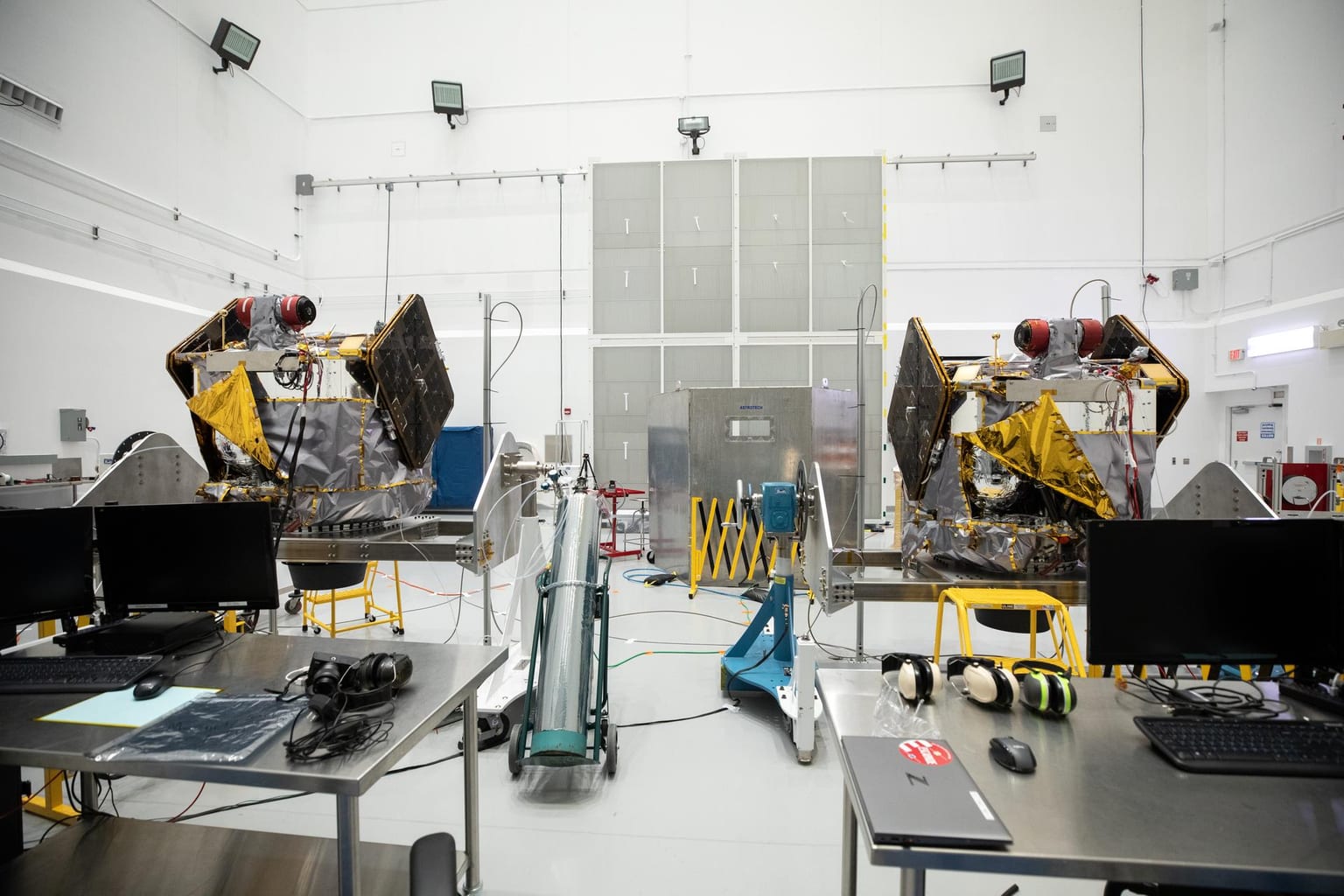
On Nov. 7, 2026, at 5 a.m. EST, Robert Lillis, the principal investigator of NASA's ESCAPADE mission, waited in the operations center at the University of California, Berkeley's Space Sciences Laboratory for a signal. The first spacecraft was firing its engine about 1,000 miles above Earth's surface. Two days later, the second did the same, from about 650 miles up, and its burn ended at 6 a.m. EST on Nov. 9. Each engine firing lasted about nine minutes.
Most Mars missions fly straight there when the planets line up, a window that comes around roughly every two years. ESCAPADE launched on Nov. 13, 2025, when Earth and Mars were on opposite sides of the Sun, so it could not take that direct path. Instead, both spacecraft entered a 'loiter' orbit and traced a kidney-bean-shaped course around Lagrange point 2, a gravitational balancing point about a million miles from Earth. They then returned to Earth and used its gravity, combined with the engine burn, to slingshot toward Mars.
This is what changes for the next missions. According to Jeff Parker of Advanced Space, the lead mission designer, the method “provides the flexibility to launch almost anytime and then use Earth’s gravity to get a boost to Mars, rather than waiting every two years to launch there directly.” NASA says this is the first time it has used a powered Earth flyby to propel a spacecraft toward Mars, and that it has now done so twice in two days.
The journey is not over. Both spacecraft face a 10-month cruise, with trajectory corrections along the way to keep them on a precise course. Their orbit insertion burns are planned for Sept. 7 and Sept. 9, 2027, two days apart, each lasting about 11 minutes. Then the spacecraft will take several months to reach their first science formation, flying one behind the other in the same orbit. Science operations are expected to begin in June 2028. The mission will study how the solar wind, a stream of material flowing from the Sun, interacts with the Martian environment and drives atmospheric loss. NASA's program scientist, Michele Cash, said the findings “could help us plan and prepare for future human exploration of the Red Planet.”
The route has so far been flown only by these two spacecraft, and the arrival at Mars still lies ahead. What opens next is the orbit insertion in September 2027 and the start of science operations in June 2028.
Sources — read the originals(Paris time)
Read next
Comments
Loading the thread…
Sign in to leave a comment. Sign in