New gene switch controls two cell types independently in zebrafish
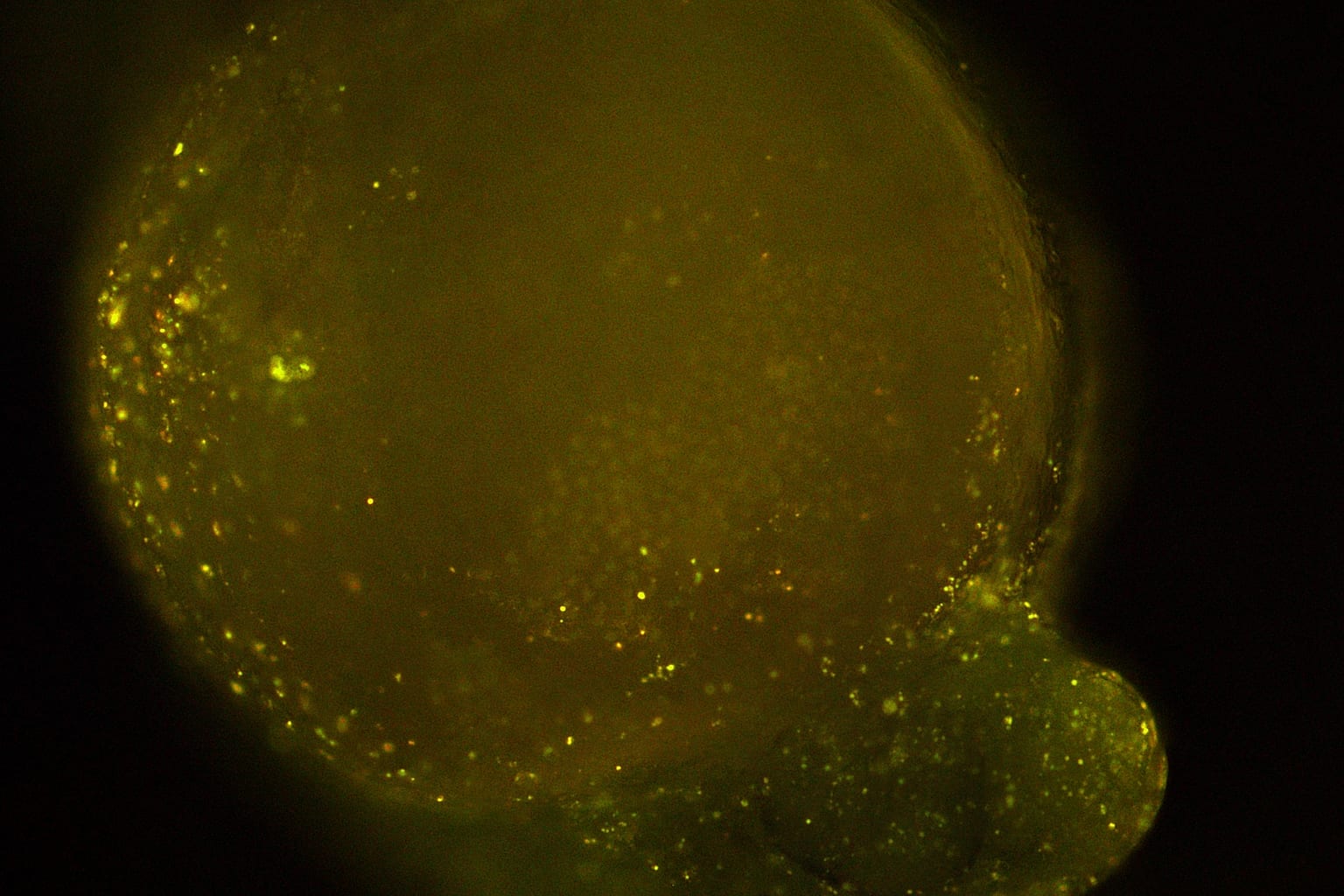
Researchers who want to switch a gene on in one cell type, and not in its neighbour, have one main tool: the Gal4/UAS system. A team at the National Institute of Genetics (NIG) in Japan has now built a second switch that works independently of it, so that two cell types in the same animal can be controlled separately.
The new system, called Cro/O R 3, relies on Cro, a DNA-binding protein from a bacteriophage, a virus that infects bacteria, and on the short DNA sequence it recognises, O R 3. The researchers fused Cro to an activation domain, a piece of protein that turns a gene on, creating CroF2. CroF2 switched on a target gene placed downstream of O R 3 in zebrafish and human cultured cells. The team then combined it with Gal4/UAS in the same zebrafish, and controlled gene expression separately in neurons and astrocytes, the star-free name for the glial cells that regulate the environment around neurons, so that each population could be manipulated without the other.
To test the tool on a real question, the team expressed a mutant form of Slc1a3b in astrocytes. Slc1a3b is an astrocyte transporter that helps keep levels of glutamate, an important neurotransmitter, under control, and the mutant form is associated with episodic ataxia type 6, a human movement disorder. In zebrafish, the mutant protein changed the positioning of motor neurons labelled by Gal4/UAS in the spinal cord. The authors conclude that proper astrocyte function matters for normal motor neuron placement.
For researchers, the gain is the ability to watch one cell population while changing another in a living animal, a question that a single switch could not address. The team also describes disease modelling: a disease-associated protein could be expressed in one cell type, and its effect on neighbouring cells that do not carry it could be examined. The team has also generated enhancer-trap zebrafish lines, in which a DNA sequence called an enhancer drives CroF2 in specific cell populations, and more than 150 Cro lines are available through an online resource. The study does not give a timeline for wider use, and the cross-species potential is, for now, a suggestion from zebrafish and cultured human cells. As Asakawa puts it, "Having multiple independent gene expression systems gives us a way to observe one cell population while manipulating another, allowing us to examine these interactions directly in living animals."
Sources — read the originals(Paris time)
Read next
Comments
Loading the thread…
Sign in to leave a comment. Sign in