Brain astrocytes come in specialized types, study in mice shows
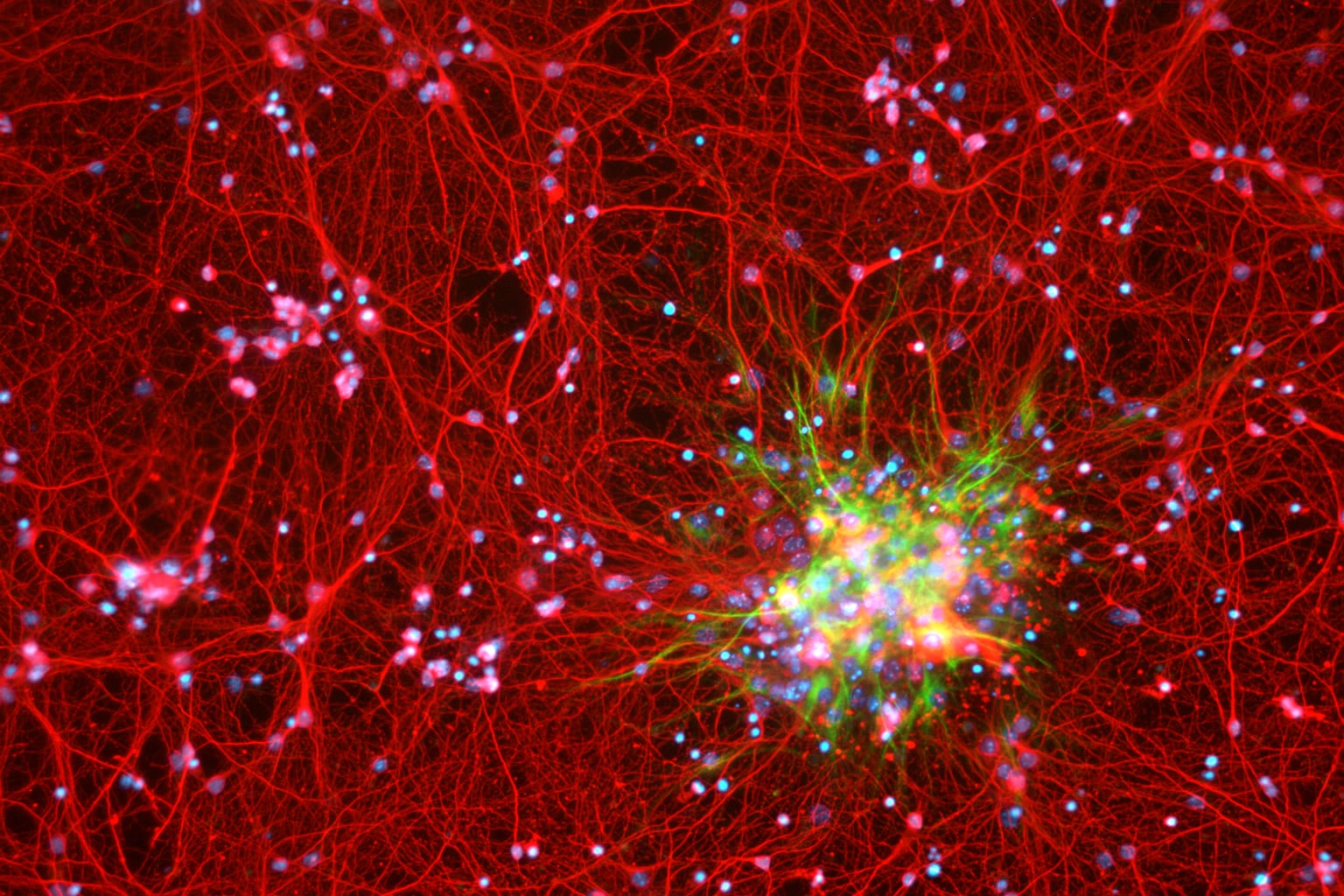
For a long time, astrocytes were treated as one undifferentiated crowd. These star-shaped cells are the most abundant support cells in the brain and spinal cord, and scientists had wondered whether they came in specialized types that do different jobs, as neurons do. A study in Nature by researchers at Baylor College of Medicine now answers yes: distinct astrocyte subtypes carry out distinct tasks in the living brain.
The team focused on CD51, a protein that sits on the surface of some astrocytes but not others. Earlier work had shown that CD51 divides astrocytes into groups with different molecular features. But no animal models or lab tools existed to compare the two groups in a working brain. The researchers first built a new mouse line that lets them label and control CD51-positive and CD51-negative astrocytes separately, then compared them in the cerebral cortex, the outer layer that handles thinking, sensing and voluntary movement, and in the hippocampus, key to forming memories. They studied developing, adult and injured brains.
In the developing and injured cortex, CD51-positive astrocytes help form synapses, the junctions where neurons pass messages to each other, and they do this using a protein called glypican 6. CD51-negative astrocytes do not. In the hippocampus, CD51-positive astrocytes help memory circuits work and adapt, while CD51-negative astrocytes do not, and the CD51 protein itself drives the rewiring of these circuits.
The findings also matter after brain injury. In mice that had a stroke, CD51-positive astrocytes helped the brain recover function by remodeling connections between neurons, while CD51-negative astrocytes did not. Researchers studying astrocytes in health and disease will now need to specify which subtype they are studying, the team says. For patients, nothing changes yet: the study is in mice, and the team gives no timeline for applying it to people.
Comments
Loading the thread…
Sign in to leave a comment. Sign in