Squeezing mouse skin cells lifts neuron conversion from 3% to 40%
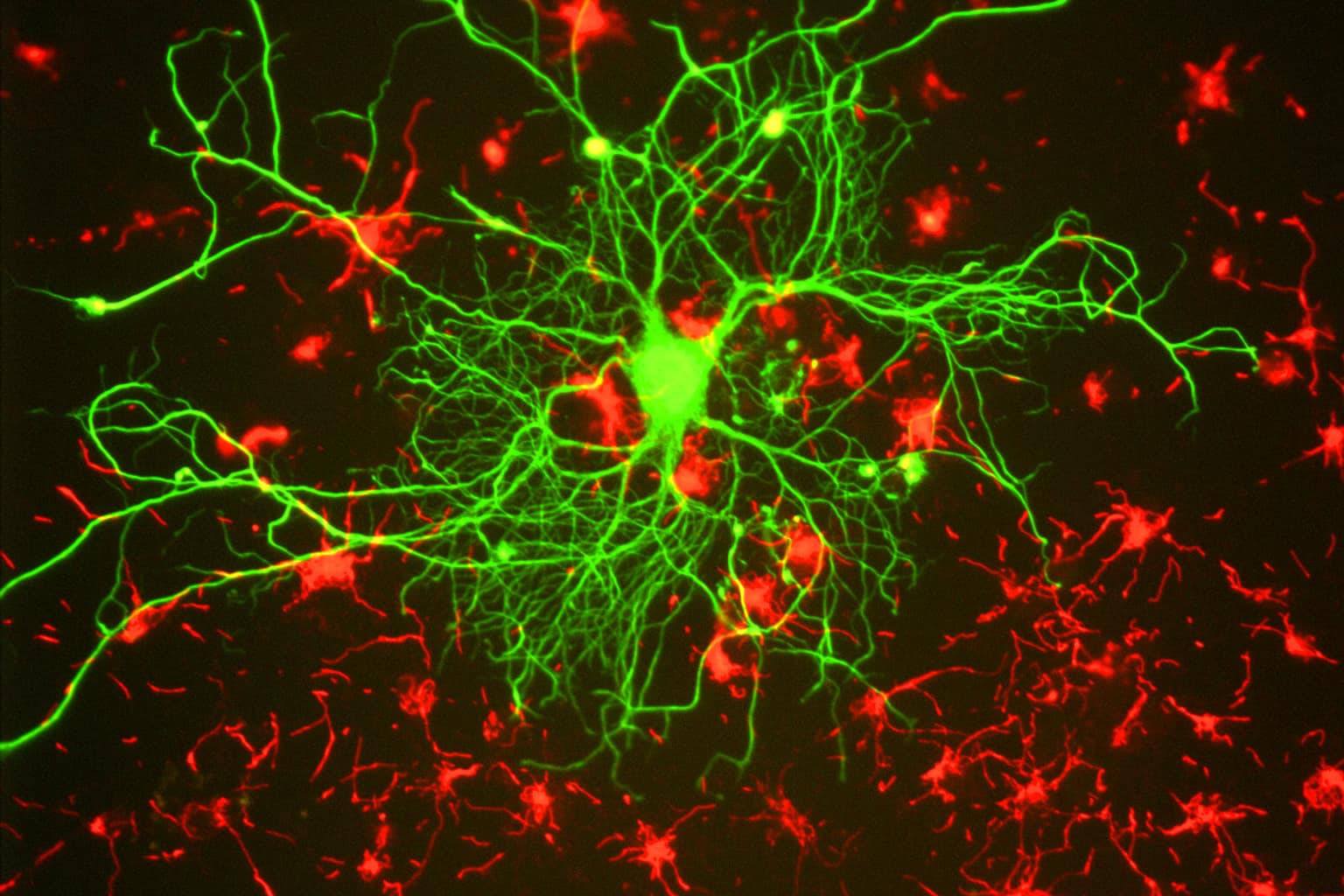
In a lab at UCLA, mouse skin cells are pushed through a microfluidic chip whose channels are narrower than the cells’ own nuclei. For a few milliseconds, each cell is squeezed and deformed. Afterwards, a share of those cells that used to refuse to change begins to behave like neurons. The squeeze is the new part, and it is what the team led by Song Li reports in the journal Matter.
Reprogramming, the conversion of one cell type into another, is one of the most useful tools in stem cell research. Scientists turn a patient’s skin cells into neurons or heart cells to study how a disease develops, to test drugs for safety and effectiveness, and to grow tissue that the patient’s immune system may be less likely to reject. The process is still inefficient. In mouse cells, often only a few percent of cells convert, and in human cells the success rate can fall to a fraction of a percent. The problem, according to Li, is access: the reprogramming factors are inside the cell, but they cannot reach the genes they need to switch on.
The tool at the centre of the work is CRISPRa, a variant of CRISPR that activates genes without cutting the DNA. A short piece of RNA guides it to its target, and finding guides that work well usually takes trial and error. Li’s group first showed that briefly squeezing skin cells loosened their DNA packing. In this study, they mapped which regions of the genome open up after the squeeze, then aimed the guides at those regions. The team delivered CRISPRa as short-lived RNA rather than with a virus, a common alternative that can raise safety concerns. Using this approach, about 10% of skin cells became neurons, compared with about 3% with CRISPRa alone.
The biggest gain came from a priming step. The team switched on Oct4, a gene that keeps stem cells flexible, and the squeeze let far more skin cells activate it. The cells moved partway toward a stem cell–like state without becoming stem cells, more of them divided, and their DNA was less tightly packed. When the researchers then switched on Ascl1 and Brn2, about 40% of the cells became neurons. “It’s like giving the cell some exercise, so it has more plasticity,” Li said. “We are addressing that last-mile problem, which is accessibility.”
For now, the gain applies to mouse cells, and the team has announced no calendar for human work. Researchers who need neurons from patient skin cells for disease models are the first to benefit, since a higher conversion rate means fewer cells to grow and fewer donor samples to collect. Growing replacement tissue, the longer-term goal the team’s work points toward, would require the same gains to hold in human cells, and nothing in the study yet shows that they will.
Sources — read the originals(Paris time)
Read next
Comments
Loading the thread…
Sign in to leave a comment. Sign in