Ultrasound now edits genes in chosen spots of mouse brains
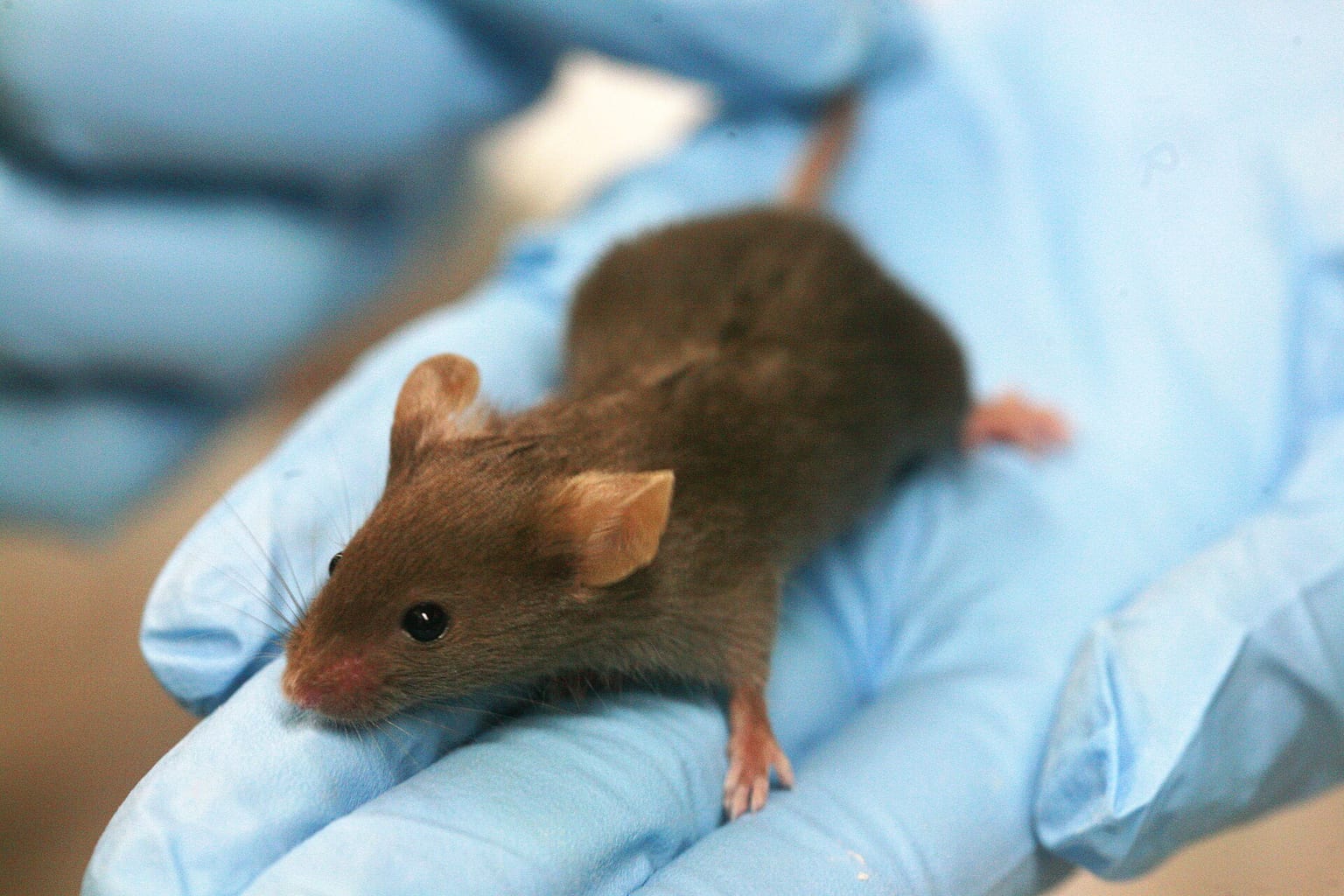
On one side of a mouse's brain, the glow starts. On the other side, it stays dark. That contrast is the proof: the Stanford team edited a gene in one chosen spot and nowhere else, with no surgery and no implant. Their method, published in Cell, uses focused ultrasound to aim a signal deep into the brain.
The problem is older than the tool. CRISPR, the gene-editing technique behind the 2020 Nobel Prize in Chemistry, usually acts across the whole body. Reaching one area means invasive methods, such as implanted nanoscaffolds that release CRISPR tools and affect only a handful of cells. Light could in principle target a spot, but it travels poorly through biological tissue. Ultrasound penetrates much further, so the team built nanoparticles that circulate in the bloodstream and emit light when focused ultrasound strikes them.
Neither technology worked alone. Lin's light-sensitive editor was too large to fit into a single viral delivery vehicle, the usual way CRISPR molecules enter cells. Postdoctoral scholar Daesun Song developed a much smaller editor, Cas12f, and made it respond more efficiently to light. Hong's group made its nanoparticles brighter, so less ultrasound power is needed to activate the editor, and lower power is less likely to damage tissue. The sequence is then simple: deliver the Cas12f editor, focus ultrasound on one location, let the nanoparticles there emit light, and the editor acts on its target gene.
For patients, the clearest application concerns neuropathic pain. Research in mice suggests that silencing genes linked to sodium ion channels with CRISPR can control this pain, but the approach numbs the whole body. Silencing those genes only in the part of the nervous system tied to the pain could, one day, offer more targeted relief. The same spatial control could also help researchers see how genes work in different brain regions. The team has not announced any human test, and it gives no date.
The next steps are already under way. Lin's group is working on a variant that switches genes on or off temporarily, without changing the underlying DNA. Hong's group is developing a wearable ultrasound device, which would let researchers control genes while an animal moves freely and observe how its behaviour changes.
Sources — read the originals(Paris time)
Read next
Comments
Loading the thread…
Sign in to leave a comment. Sign in