CRISPR switches off cancer gene fusions in lab cells
A cancer cell carries a join that no healthy cell has: two genes that were once separate, now fused into one. Peter Mac scientists, working with Dr. Mohamad Fareh and Dr. Wenxin Hu, have found a way to aim at exactly that join. In a paper in Science Advances, they report silencing nine cancer-driving gene fusions in laboratory cell models.
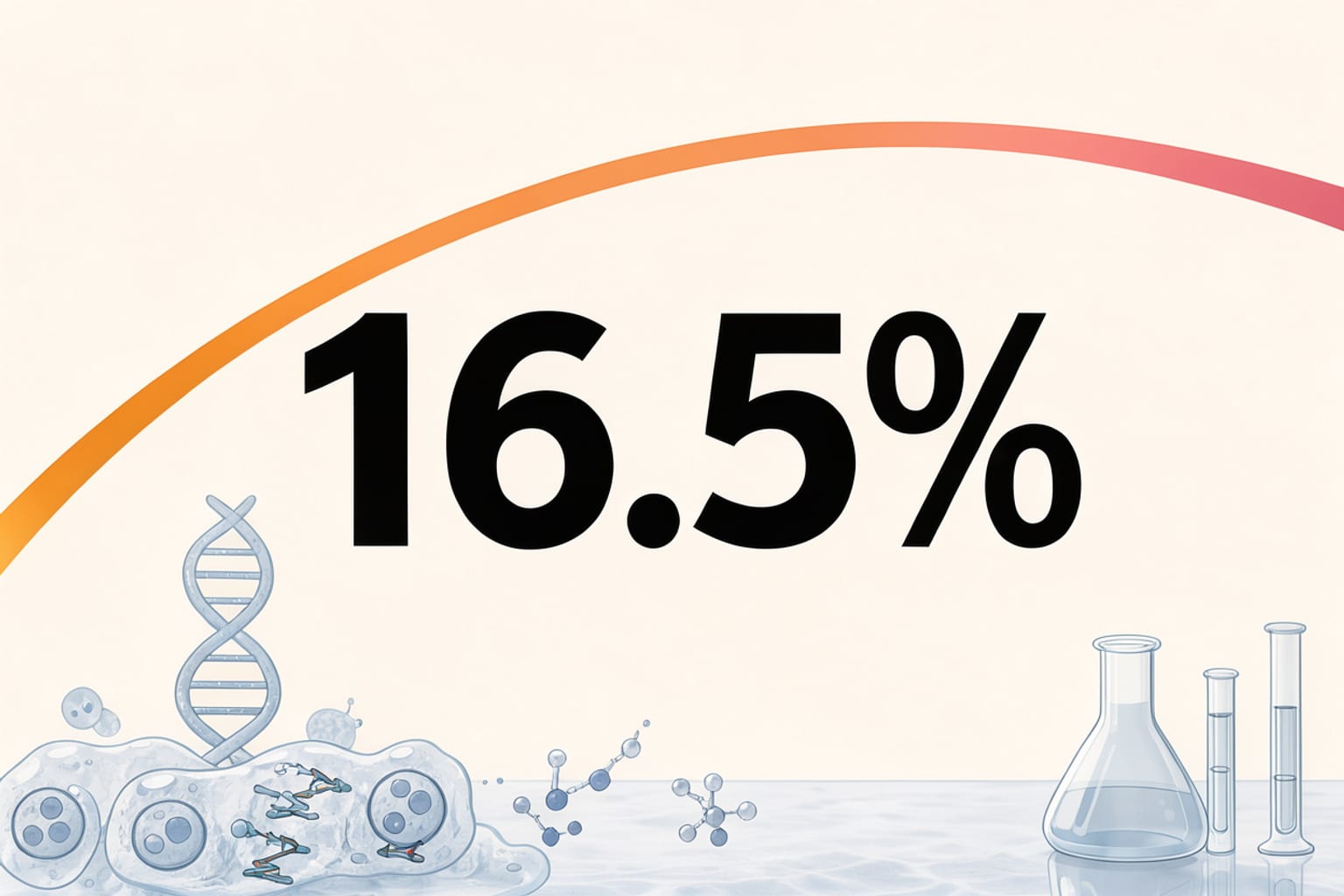
A gene fusion starts with damage. When DNA breaks inside a cell and is repaired incorrectly, parts of two different genes become joined. Such fusions are present in about 20% of all cancers, and act as "bona fide oncogenic drivers" in 16.5% of cases, according to the researchers. Some are common enough to be known by name: BCR-ABL1 appears in nearly all cases of chronic myeloid leukemia, and EWSR1-FLI1 in more than 85% of cases of Ewing's sarcoma, a rare cancer of bone and surrounding soft tissue.
The tool is CRISPR-Cas13, a set of molecular scissors that can be programmed to recognize a specific sequence. The team points it at the place where the two genes meet, so that the fused gene's messenger RNA is silenced and its cancer-driving effects stop. Because each tumor can carry a slightly different fusion, the programming changes from patient to patient. "Instead of developing a completely different technology for every cancer, we can reprogram the CRISPR system," Hu says.
For a patient, this would mean treatment matched to the exact genetic change in their tumor, but that outcome is still far off. The method has so far been demonstrated only in laboratory cell models, not in animals or people. The team must still show how effectively the CRISPR machinery can reach tumors in the body, and whether it hits only cancer cells in more complex models. Fareh calls the work "an important step" toward turning cancer's genetic information into new treatments; the next checkpoints are those experiments, not clinical trials.
Comments
Loading the thread…
Sign in to leave a comment. Sign in