Noak raises €5 million to industrialise perovskite-silicon solar
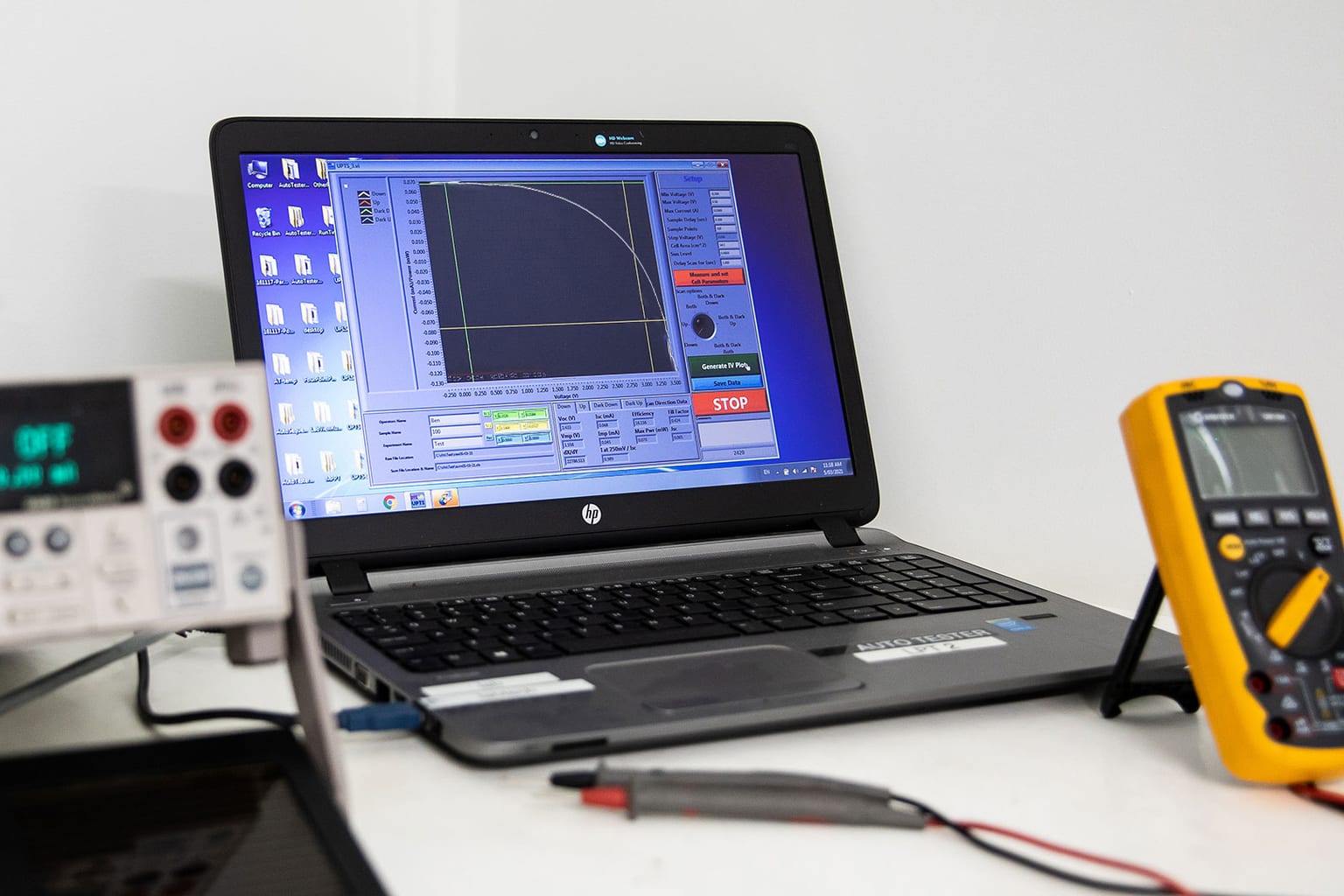
For five years, the cells at the heart of Noak have been left outdoors. Across over ten test sites on three continents, in Asia, Europe and North America, the perovskite-silicon tandem has faced intense sunlight, heavy rain, extreme heat and sub-zero temperatures, with five years of outdoor operation accumulated, according to the research institute imec and Hasselt University. On that record, the young company has just raised €5 million ($5.6 million) in seed funding to scale the technology up.
The tandem pairs a perovskite layer stack, built from proprietary chemical compositions and deposition techniques designed to scale, with a silicon cell. The work behind it goes back more than a decade, at the Institute for Materials Research on the university’s campus. Noak adds a 3D woven back-contact foil that carries the electrical connections at the rear of the cell. According to the partners, this removes the need for front-side metallisation, the metal contacts on the sunlit face, which reduces shading losses and supports easier recycling at the end of the module’s life.
The partners say the 3D foil and tile architecture makes it possible to drastically reduce the use of expensive and rare metals. They tie this to cost and to dependence on critical raw materials, a concern for any future solar build-out. CEO Geert Palmers says the spin-off aims to build a value chain through global industrial partnerships, “without relying on vulnerable critical dominant dependencies”.
The seed round comes from Belgium’s Helios Foundation, the Limburg climate investor Nuhma, and V2HFin, a subsidiary of Flemish Energy Holding that backs start-ups and scale-ups in Flanders. The five years of field data are the partners’ own. The next phase, they say, is to demonstrate long-term stability and performance at scale, which they call key requirements for bankability, that is, the proof investors need before financing a solar project.
For module makers and buyers, the promise is a cell that uses less expensive, rare metal and can be taken apart more easily at the end of its life. The timetable is not yet set: the partners give no date for scale-up, and no price or production volume. What is announced is the next step, the long-term stability tests at scale.
Sources — read the originals(Paris time)
Read next
Comments
Loading the thread…
Sign in to leave a comment. Sign in