RadianX claims record 22.33% solar efficiency for indoor devices
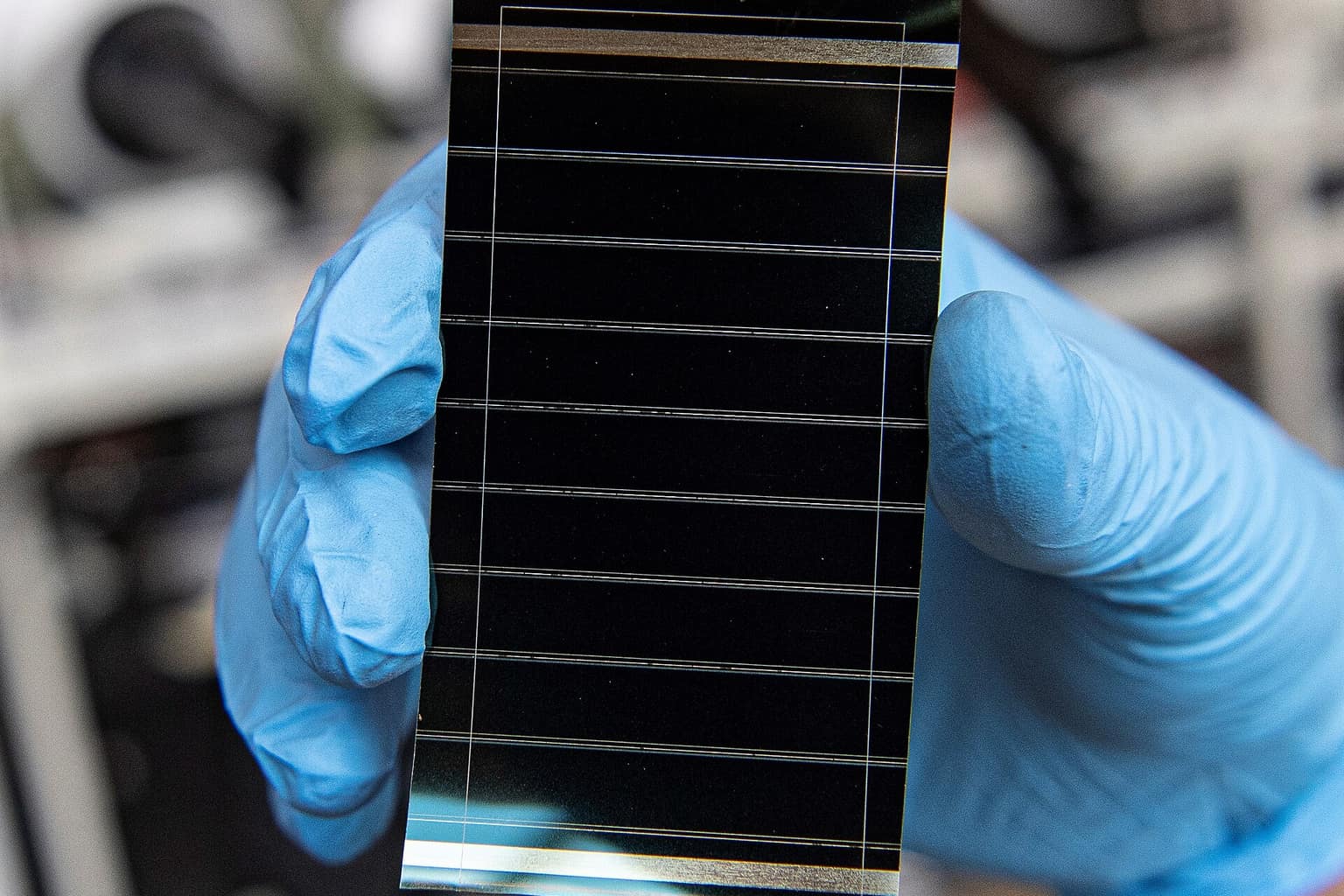
Every battery runs flat, sooner or later. RadianX, a startup, wants to make that the last charge a device ever needs. Its bet is on a solar material that, according to the company, now captures 22.33% of incoming light, which it calls the best result on record for a panel of its size, 1.2 by 0.6 metres.
The material belongs to a family called perovskites. Solar-powered calculators have run on light for decades, but the power demands of modern devices outgrew traditional panels, and the idea was set aside. What RadianX says it has done is make a perovskite panel with high power density, the amount of electricity it produces per unit of area. Co-founder and CEO Vivian Qu puts it simply: "The reason why perovskites have been so interesting is the high power density." The company also says its material is as good as existing panels outdoors and twice as good at harvesting indoor light, which is where most small electronics actually operate.
The catch is that perovskites have long been held back. They cost more than standard silicon panels and are less durable, although they have improved in recent years. RadianX says it has met a key industry standard for durability, and that indoor use exposes its panels to less wear. Its panels can be as thin as 0.7 millimetres, which lets them be sized to fit inside a device. The company is also building power electronics tuned for perovskites, since most circuits are designed for silicon and, in Qu's words, "silicon has a very different light soaking characteristic." Rather than sell bare panels, RadianX intends to deliver complete power packages to device makers.
For a manufacturer, the change would be concrete. An e-reader that never needs charging, an IoT sensor that never needs a battery swap, and robots or wearables whose runtime is capped by their battery could all become possible. RadianX raised $5 million in a seed round led by SOSV and Twynam, and Pacific Union Technology Precision Manufacturing is adding $4 million in non-dilutive investment to build a dedicated production line. The company has not said when devices using its panels will reach customers, or at what price.
The next step is the production line itself. Until it runs at commercial volume, the efficiency figures remain the company's own measurements, and independent tests have not been published. If the line delivers, the first real test will be whether an e-reader or a factory sensor can run for years on indoor light alone.
Sources — read the originals(Paris time)
Read next
Comments
Loading the thread…
Sign in to leave a comment. Sign in