One molecule holds a quantum bit for 2.2 ms
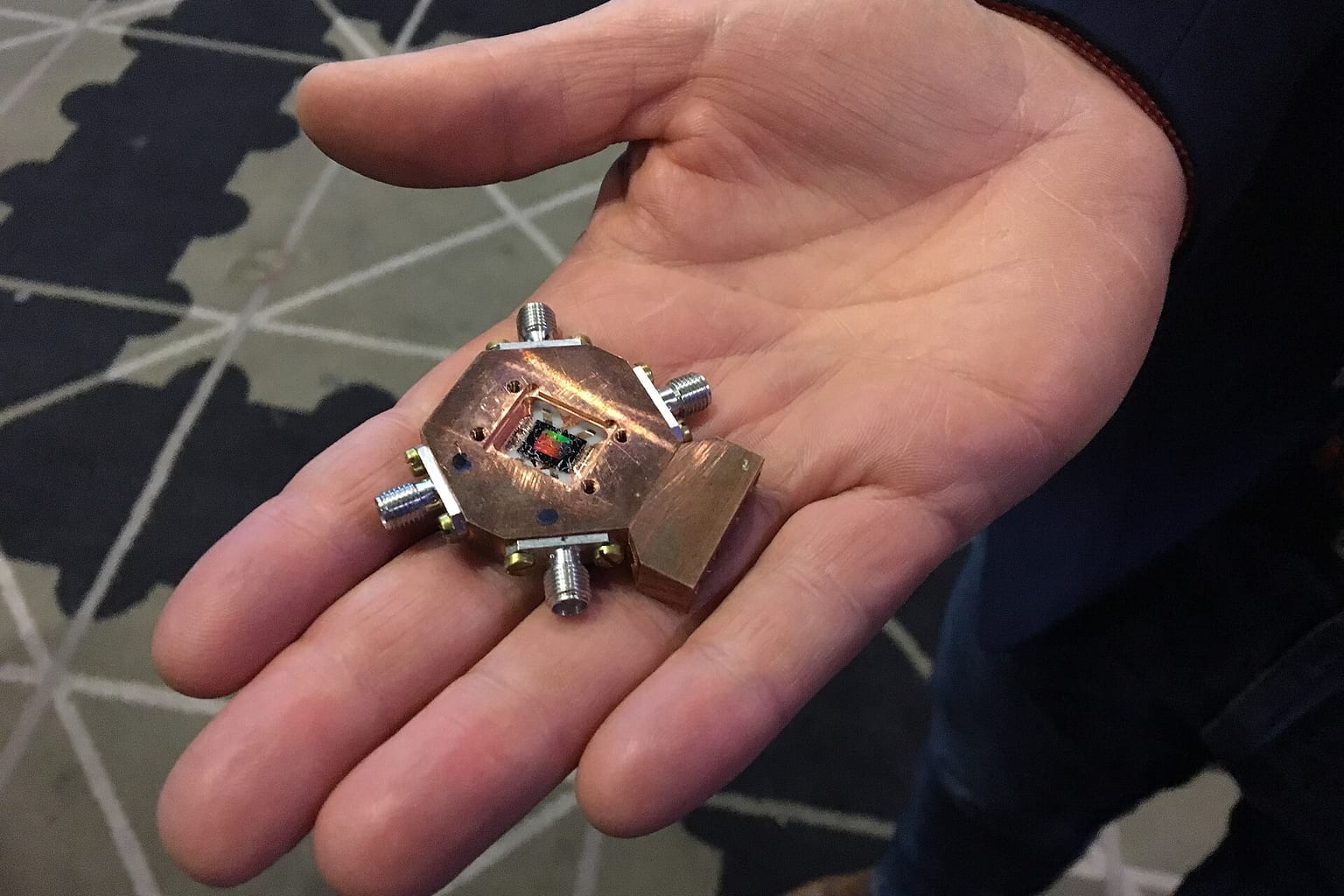
Cooled to 4.5 Kelvin, about -269°C, a crystal in a German lab holds molecules that can each store a quantum bit. A team from German startup NVision Quantum Technologies embedded a chemical compound in the crystal, then used laser light to turn it into molecules called carbenes. Each one carries two unpaired electrons, and their combined spin serves as the memory.
Quantum computers store information in qubits, and linking them across long distances means sending that information as light. The usual hosts for qubits, tiny defects in diamond and other semiconductors, have a flaw: unwanted defects and trapped electrical charges make the frequency of their emitted light drift, which makes reliable connections hard to establish.
The researchers used microwave pulses to steer the electrons' spin and laser light to read the result. They could control and read out the spin state of an individual molecule, which kept its delicate quantum properties for about 2.2 milliseconds. The frequency of the light emitted by individual molecules stayed remarkably stable for more than one hour. The authors write that these results "establish molecular qubits as a viable platform for single-emitter quantum optics."
This is a laboratory demonstration, and the authors frame it as such. Their focus was a single addressable molecular qubit, and its properties still have to be set against the requirements of a quantum-network node. For researchers building quantum networks, the gain is a building block that can be designed chemically and processed into materials, with the team saying the molecules could be integrated with existing photonic chips. No date for practical use is given.
The next step the researchers name is to link the information stored in individual molecules to photons, the particles of light that would carry it between machines.
Sources — read the originals(Paris time)
Read next
Comments
Loading the thread…
Sign in to leave a comment. Sign in