Quantum chip defects store lost energy and return it, lab study
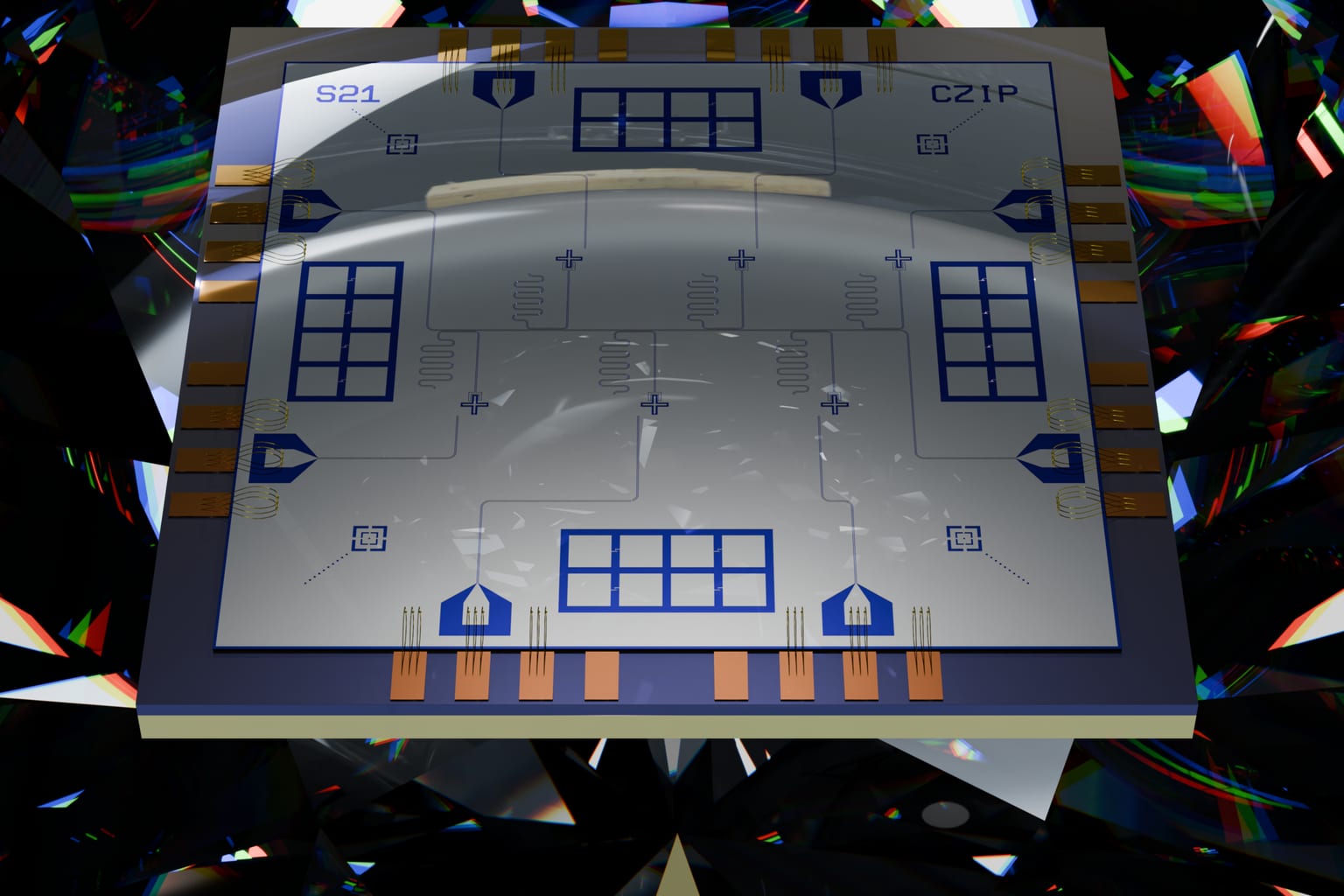
A quantum computer's basic unit, the qubit, loses its fragile information when energy leaks into its surroundings. Standard theories assume that energy lost this way is gone for good. A team led by Ioan Pop at the Karlsruhe Institute of Technology (KIT), in Germany, now shows that part of it can be caught and returned. Some microscopic defects in the materials around the qubit hold this energy far longer than the qubit itself survives, then release it, pushing the qubit back toward a state it was in earlier.
The usual way to measure a qubit's lifetime, its T1, captures only the average rate at which energy leaks out, and that average hides the memory. Until now, the only way to study these defects was to deliberately manipulate the qubit and probe its surroundings, which makes calculations far more time-consuming. A 2018 study in Physical Review Letters had already found that a qubit's energy-relaxation time can swing by an order of magnitude over 15-minute spans, a sign that the surroundings are not as stable as the standard model assumes.
The team took another route. Instead of prodding the qubit, they measured it continuously and recorded its spontaneous quantum jumps, the switches between its low-energy ground state and its higher-energy excited state, driven by tiny fluctuations of heat. They then analyzed how each later jump depended on the earlier ones and built a model of how the qubit trades energy with its surroundings. To test it, they repeated the measurements at different qubit frequencies and electric field strengths, which let them pick out individual defects one at a time.
The jumps came in clusters. A qubit that has just released its energy normally needs time before it can jump again, so its jumps should be evenly spread. Instead they bunched together, a sign that energy was stored in nearby defects and handed back, passing between qubit and defect several times before escaping. The memory showed up without the team ever exciting the qubit on purpose. Each defect appeared as a distinct peak as the frequency changed, and each responded to electric fields, a clue to its microscopic origin.
For now, this is a research tool rather than a fix. It shows how these long-lived defects behave without costing computing time, which gives teams building quantum hardware a way to account for errors that standard models do not capture. The paper gives no timeline for that.
The next step is to pin down what these defects are and where they form. The authors suggest that knowing this could allow error-correction methods built for the errors they cause in real quantum hardware.
Sources — read the originals(Paris time)
Pages consulted while writing
Read next
Comments
Loading the thread…
Sign in to leave a comment. Sign in