Only the second probe ever to orbit Mercury, after 8 years
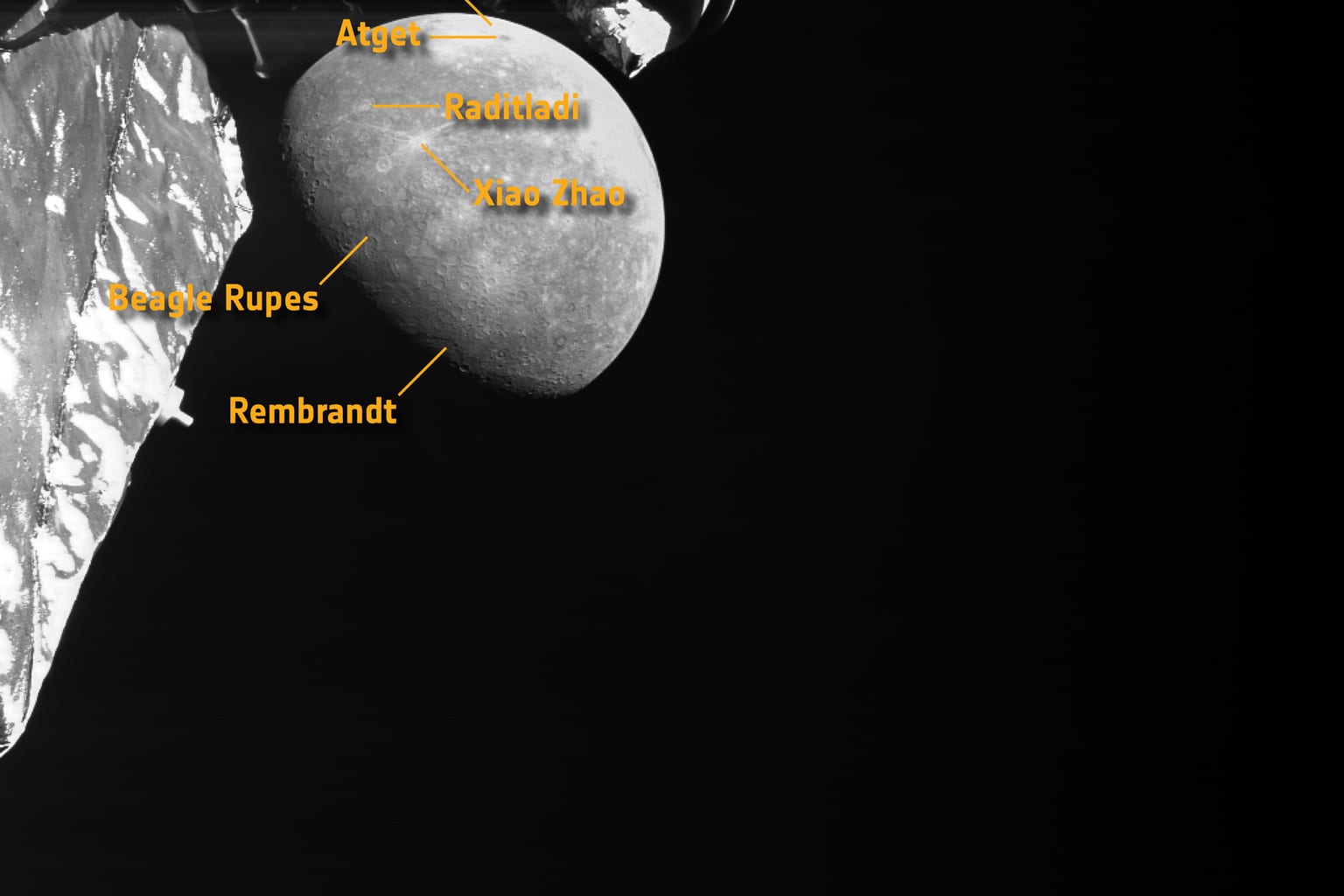
On 21 November, the probe passed about 635 kilometres above Mercury and fired its four chemical thrusters, engines that burn fuel for short, powerful pushes. The push was meant to slow it enough for the planet's gravity to capture it. After an eight-year trip, BepiColombo, a joint mission of the European Space Agency (ESA) and Japan's JAXA, is now in orbit around the innermost planet of the solar system, becoming the second spacecraft ever to orbit Mercury.
The mission is named after Giuseppe "Bepi" Colombo, the late Italian scientist and mathematician. It is in fact two orbiters: ESA's Mercury Planetary Orbiter and JAXA's Mercury Magnetospheric Orbiter, known as Mio. Until now, only NASA's MESSENGER had circled the planet. The mission's main science work is expected to begin in April 2027.
Getting there was the hard part. A probe falling toward the Sun speeds up, and to be caught by a small planet with weak gravity, it has to shed most of that speed. Ordinary chemical engines would have needed far too much fuel for such a long journey, according to ESA, so the probe relied on solar electric propulsion: electric thrusters powered by sunlight that push gently for a very long time. Then came nine planetary flybys, which reshaped its path and cut its speed relative to Mercury. ESA also presents the arrival as a first for a planetary mission, which entered orbit using “weak stability capture”, a technique that lets a spacecraft arrive at lower speeds than is typical.
The trip was originally due to end in December 2025. An electrical problem in the electric propulsion system, found in April 2024, forced a new trajectory and pushed the arrival back by almost a year. Space.com instead blames an issue with the solar panels, so the two accounts differ on the cause.
The capture succeeded; the burn did not go as planned. The four thrusters were supposed to fire for 37 minutes, after which contact with Earth would resume. When contact came back, engineers found the probe in safe mode, a fallback state in which a spacecraft shuts down most functions to protect itself. “Upon finding Bepi in safe mode, it was like flipping a switch,” said ESA flight operations director Ignacio Tanco. ESA and its manufacturer Airbus traced the fault to software controlling orientation and thrusters, and investigations are still under way. The burn delivered 77% of its planned change in speed, so the orbit lasts about 75 hours instead of the planned 58. The agency disclosed that shortfall only on 22 November, after first confirming the capture. “We confirm Mercury orbit capture!” said ESA flight dynamics manager Frank Budnik.
For the mission, the immediate effect is mostly on the timetable. Mission controllers revised the remaining manoeuvres without adding any extra thruster burns. The next milestone is 9 December, when the two orbiters separate. After that, BepiColombo will be the first mission to operate two spacecraft at the same time around Mercury.
Sources — read the originals(Paris time)
Pages consulted while writing
Read next
Comments
Loading the thread…
Sign in to leave a comment. Sign in