Oral Alzheimer's candidate cuts decline 31% in patients not on current drugs
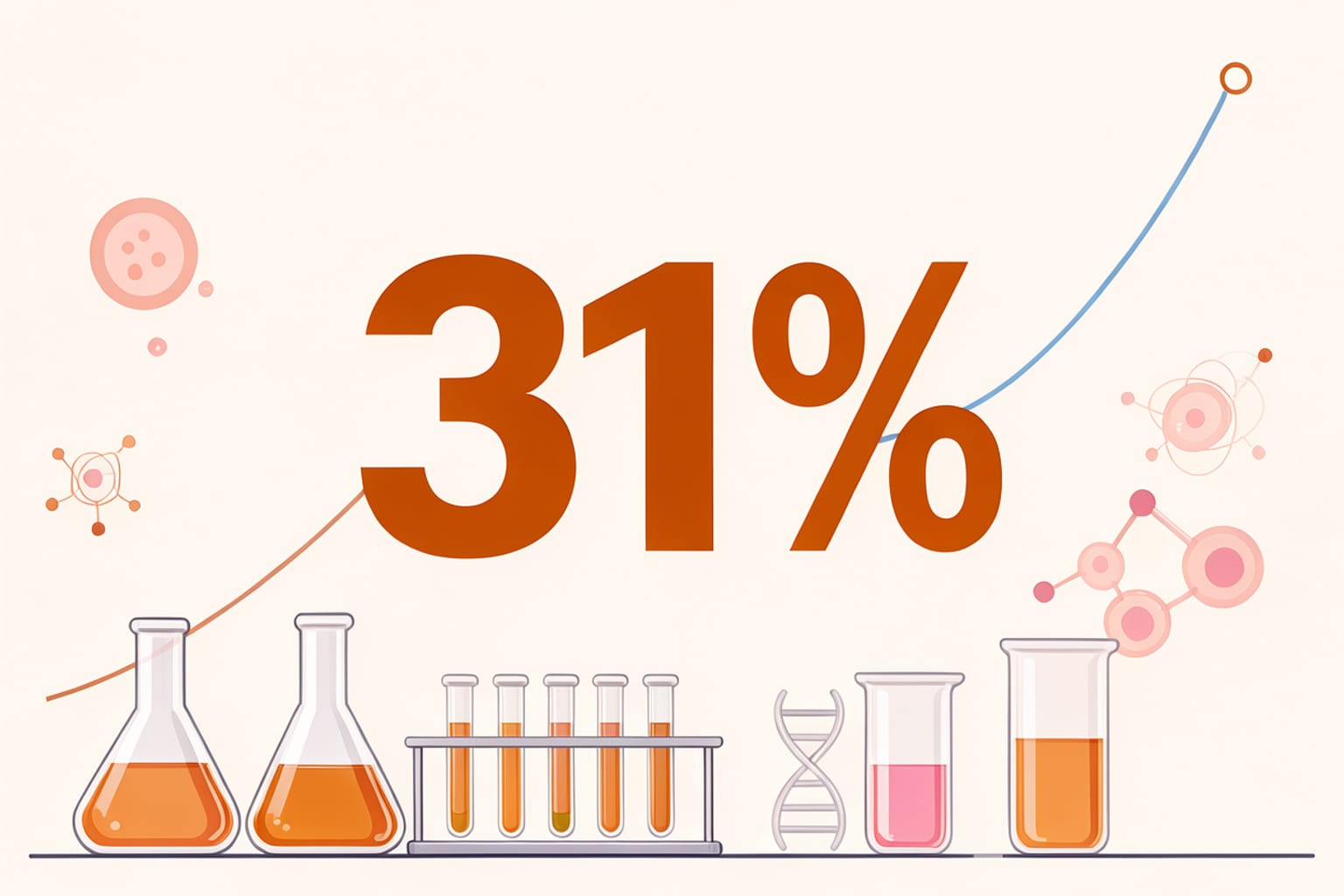
On November 23, 2026, AriBio Group Chairman Jeong Jae-jun presented clinical results for AR1001, the oral Alzheimer's candidate, at a press conference in Yeouido, Seoul. The main Phase 3 results were first unveiled at the Clinical Trials on Alzheimer's Disease (CTAD) conference; today's release covered the extension study results for the first time. Looking only at the 604 patients who were not taking existing dementia symptom drugs, the worsening of their dementia scores at 52 weeks was 31% smaller than in the group that received a placebo.
Alzheimer's patients commonly take drugs that relieve symptoms today. AR1001 belongs to a class of drugs that block the activity of an enzyme called PDE5 and is being developed as an oral formulation. The Phase 3 trial, which will ultimately confirm the effect in humans, enrolled 1,535 early-stage patients across 13 countries. Efficacy was measured with the Clinical Dementia Rating Sum of Boxes (CDR-SB), which is scored based on interviews with patients and caregivers. Higher scores mean greater decline in cognitive function and daily living ability.
The key difference lay in existing drugs. When patients who were taking existing drugs were included, the gap shrank to 7%, which was not statistically meaningful. That is why the company focused on the monotherapy group, using AR1001 alone. Interpretations of the same data differ. Some see the primary goal as met in the pre-specified monotherapy group, while others see it reached only in a subgroup rather than the full population.
The extension study produced even bigger numbers. At 78 weeks, disease progression was slowed by 33%, which translates to about 7.2 months, according to Fred Kim, head of AriBio's U.S. subsidiary. However, all placebo patients switched to AR1001 after 52 weeks, so no untreated comparison group remains at 78 weeks. About 95% of patients who completed 52 weeks of dosing enrolled in the extension study.
Side effects also need attention. In the Phase 3 data, diarrhea, falls and dizziness were more frequent with AR1001, and the discontinuation rate was 5.2%, compared with 1.7% in the placebo group. There is also a benchmark. Using the same scale, the Alzheimer's drug Leqembi (lecanemab) was reported to slow worsening by 27% versus placebo at 18 months in its Phase 3 trial (Clarity AD). The trials differ in population and duration, so the figures cannot be directly compared, but they give a sense of where AR1001's 31% stands.
AriBio therefore plans to file for approval with the U.S. Food and Drug Administration (FDA) next year, in the second half. It will discuss with the FDA a plan to prescribe AR1001 as a first treatment for early-stage patients who are not taking existing symptom drugs. Because no effect was confirmed in the overall patient population, the eligible group is likely to be narrowed to this subgroup. Overseas licensing is also moving. China's Fosun Pharma will decide whether to secure additional rights for major markets including the United States, Europe and Japan. If it exercises the option within 90 days of receiving the Phase 3 primary results, AriBio will receive an $80 million upfront payment on top of the existing $60 million option fee.
Before filing, AriBio will strengthen the data supporting the long-term efficacy and safety of use. Chairman Jeong said, “We will make the evidence firmer through additional analysis and extension studies, and work closely with global regulators.” The company plans to keep tracking changes in cognitive function and daily living ability among extension study participants and use the results in its discussions with the FDA.
Sources — read the originals(Paris time)
Pages consulted while writing
Read next
Comments
Loading the thread…
Sign in to leave a comment. Sign in