Penn State's pilot syphilis test reads lower antibody levels
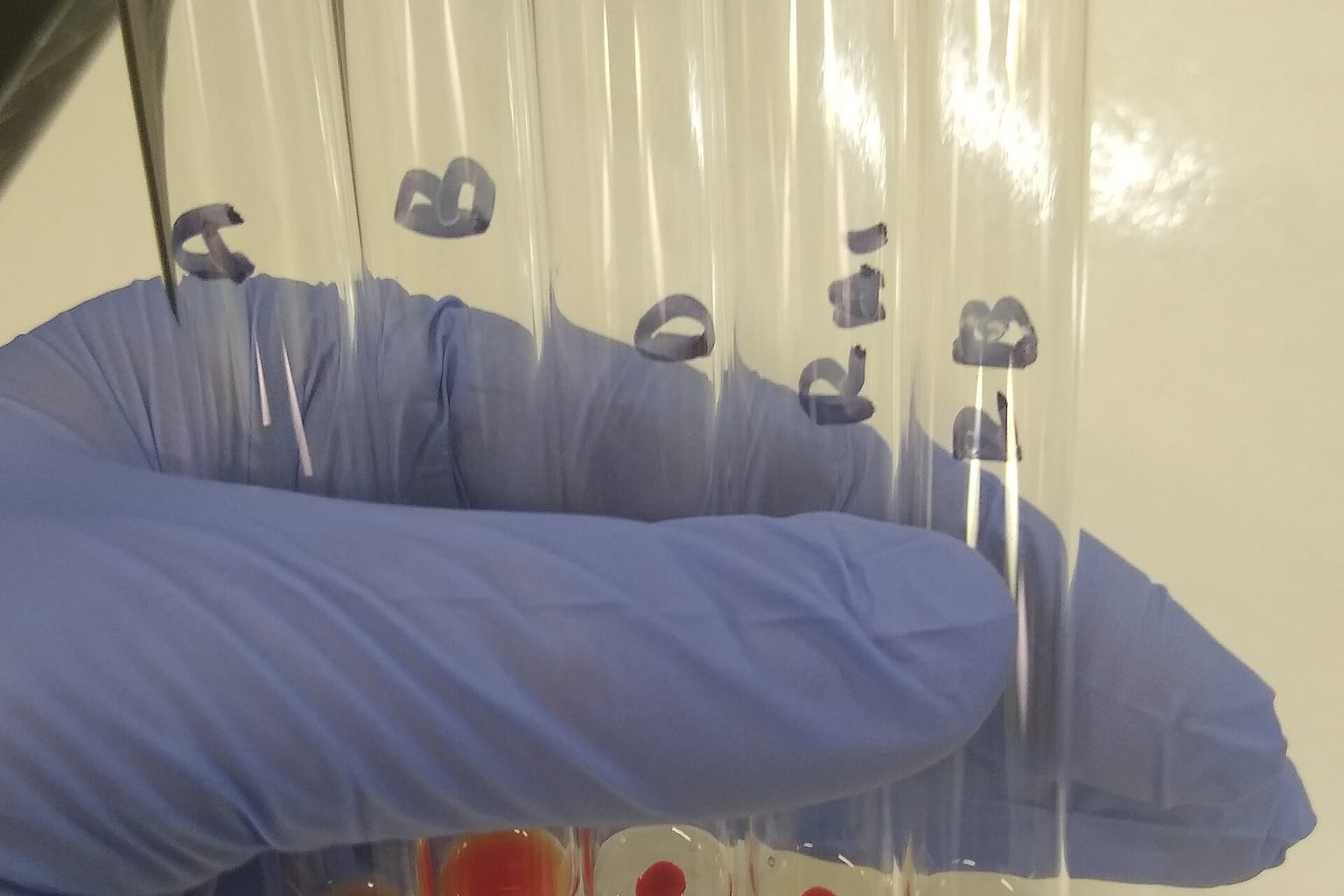
A visible line the width of a pencil stroke is all a patient gets from a rapid test. In syphilis, that line has often appeared too late, or not at all, when antibody levels are still low. A team led by Penn State researchers has built a pilot rapid test that tries to catch those low levels, and that does in one strip what usually takes two blood tests.
Syphilis has been curable with penicillin since 1943, but it remains difficult to catch. Its symptoms mimic many other diseases and can disappear without treatment while the infection keeps causing harm. If it goes undetected, it can spread to partners and to babies during pregnancy, with effects that last a lifetime. The diagnostic pathway set by the U.S. Centers for Disease Control and Prevention (CDC) relies on two blood tests. The first, called treponemal, looks for antibodies against the bacterium Treponema pallidum. Those antibodies can stay in the body for decades, so a patient treated years ago still tests positive. The second, non-treponemal, looks for antibodies produced in response to cell damage, which shows the stage of infection and whether treatment is needed. Running both lowers the risk of false results and tells doctors whether the disease is past, active or properly treated.
The new device, described by Dipanjan Pan and first author Ketan Dighe in a study published in ACS Sensors, keeps that logic but compresses it. Pan says the aim is not to change clinicians' habits: “we are trying to reproduce the same sequence of diagnostic information in a much faster and potentially point-of-care format.” The obstacle was not detecting the antibodies but seeing the signal. Gold nanoparticles only show as a visible line when enough of them gather, and making them bigger causes them to clump at around 60 nanometers, about 100 times smaller than a red blood cell. The team changed their composition instead. Silver has stronger optical properties than gold but degrades quickly in air, so the researchers sandwiched it between two gold layers. The three layers reinforce one another, which Pan compares to a choir: “those three layers work together to produce a much stronger optical signal than the original gold particle alone.”
The measured gain is 19% to 46% stronger test lines than comparable devices, and the largest advantage appears at the lowest antibody concentrations, the range that the team calls the most challenging and the most clinically important. Those figures come from the team's own study, and the device is still a pilot: the reports describe a lab-built device tested on samples, and do not describe trials with patients or a product sold in pharmacies.
For patients, the immediate gain would be an earlier and simpler answer. A single strip would replace two separate blood tests, and a result could be read near the patient rather than after a laboratory round trip, which means fewer appointments. For clinicians, the same strip would confirm early infection, a late stage, or the fall in antibodies after treatment, which is the situation where a missed signal leaves a treated patient in doubt. The team has not announced a calendar for clinical validation, regulatory approval or a price, and no date is given for an at-home version of the test. The next question for the work is therefore not whether the signal is stronger, but whether that gain holds in patients, across the populations that the CDC pathway is meant to serve.
Sources — read the originals(Paris time)
Read next
Comments
Loading the thread…
Sign in to leave a comment. Sign in