Perseverance measures Mars dust down to about 100 nanometers
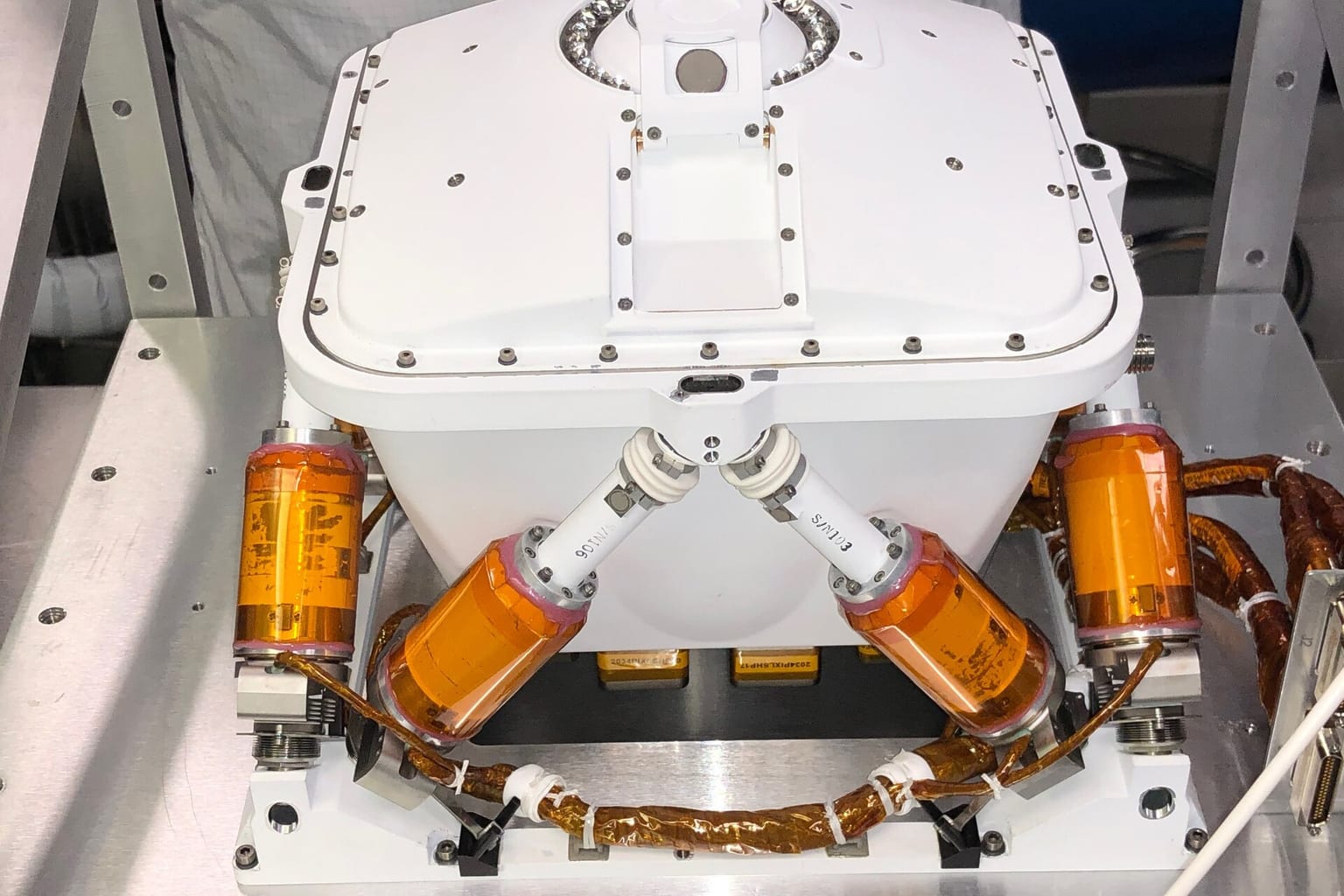
On a rover tucked into the Martian landscape, five swatches of spacesuit material have been collecting dust for years. Each one is a square of about 20 millimeters. NASA's Perseverance rover has now used them, along with its PIXL X-ray spectrometer, to measure the finest grains ever recorded directly on Mars: fine particles below 2.5 micrometers and ultrafine particles around 100 nanometers, about 700 times thinner than a human hair. Earlier measurements on the planet had resolved dust only down to about 3 micrometers.
The contrast with the Moon explains why this matters. Lunar dust scratched visors, degraded outer spacesuit layers and damaged seals during the Apollo missions, and some crew members reported symptoms similar to hay fever. Martian grains are less abrasive, because wind-driven collisions have rounded them, but they are enriched in sulfur, chlorine and iron and contain more silica than lunar dust. Regional and global dust storms keep them circulating through the atmosphere. "Dust has been a surface-exploration challenge since the Apollo program," said Lindsay Hays, acting director of NASA's Planetary Science Division.
The answer to which grains stick to which surfaces is static electricity. Grains become charged as they collide in the air, and different materials attract grains of different sizes. Organic polymers such as Teflon, common in the outer layers of spacesuits, readily collected the fine dust, and the finest particles stayed attached through years of driving and drilling. "The larger clumps, the Martian dust bunnies, get shaken off over time," said Scott VanBommel of Washington University in St. Louis, the paper's lead author. "But the smallest particles stay behind, and those are the ones that pose the greatest challenge for human support systems." On Earth, particles below 2.5 micrometers are linked to a range of negative health effects, because they penetrate deep into the lungs and enter the bloodstream. Studies have shown that ultrafine particles can travel from the nasal cavity to the brain along the olfactory nerve.
For the people designing the first crewed missions, the gain is a set of measurements they can act on now. The study found that some materials hold less dust than others, which could guide future choices of materials and protective coatings for spacesuits and habitats. Suitports, which let astronauts enter a suit attached to the outside of a habitat, and dual-chamber airlocks could reduce how much dust gets inside living quarters. The findings could also inform dust-removal procedures and crew health standards for future NASA missions to Mars. "Perseverance is giving our engineers and flight surgeons measurements they can use to improve our existing designs well before the first American astronauts arrive on Mars," Hays said.
Sources — read the originals(Paris time)
Read next
Comments
Loading the thread…
Sign in to leave a comment. Sign in