Protein and silk parts rival standard optics
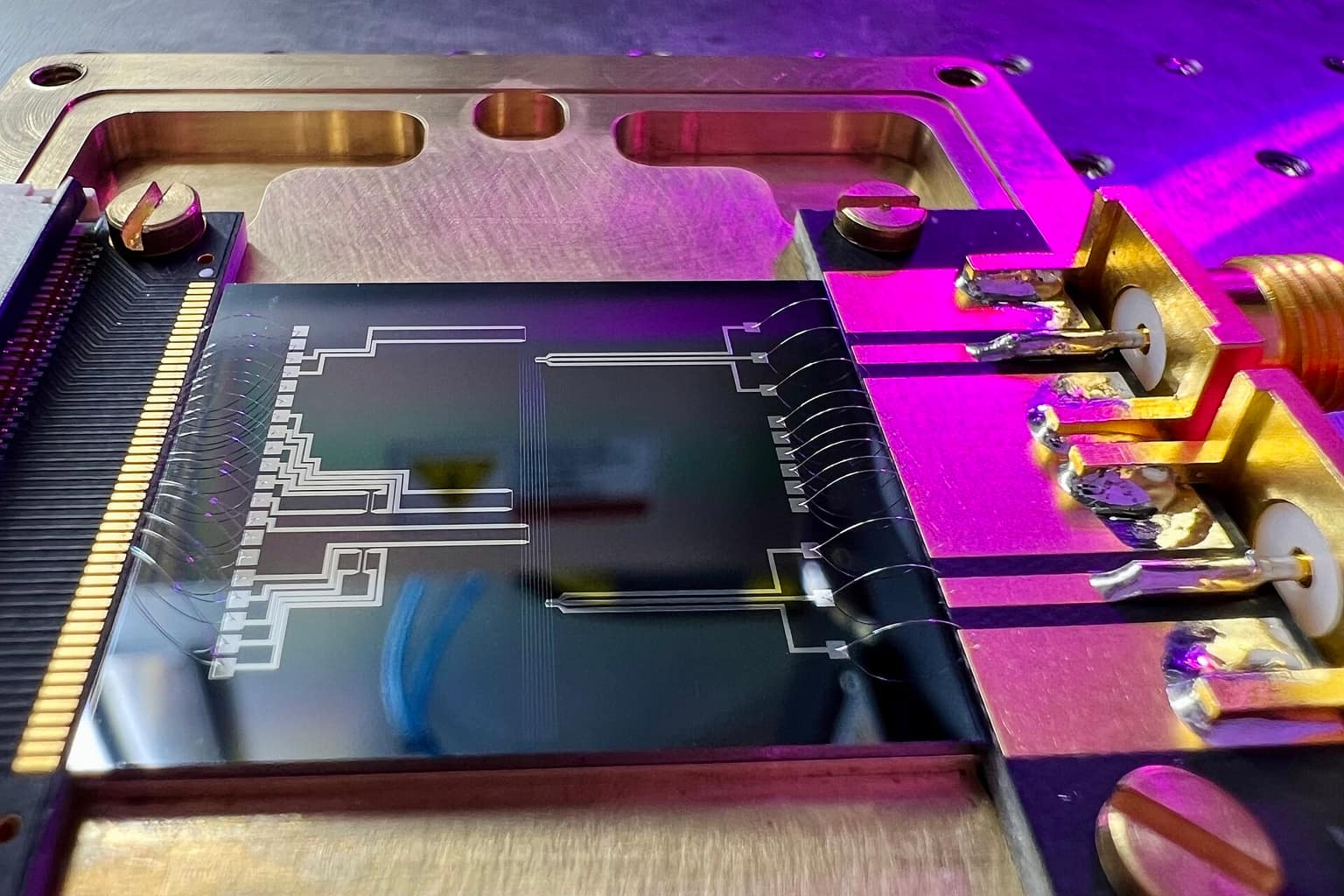
Silk, DNA and fluorescent proteins are no longer a curiosity at the edge of photonics. A review published in Advanced Functional Materials lists them as working parts of light-based chips, with figures that put them close to conventional components. The review's first author is Anastasiia Kudriavtseva, within an international team.
The problem is well known. Electronic circuits are reaching fundamental limits in speed and energy efficiency, and photonics, which uses light instead of electrons to process and transmit information, is widely seen as the next step. Yet today's photonic chips still rely on rigid inorganic semiconductors. The authors argue that biomaterials are most useful not as full replacements, but as specialized components that complement those platforms. Their main advantages are genetic programmability, self-assembly and the ability to interface with living tissue.
The review's examples come from several device families. Silk fibroin and DNA waveguides exhibit optical losses below 1 dB/cm across the visible and telecom windows, rivaling conventional polymers, and they can be made with CMOS-compatible processes, the standard methods of chip factories. Bio-hybrid LEDs built on engineered fluorescent proteins reach ~130 lm/W, with operational lifetimes exceeding 150 days, which places them on par with rare-earth phosphor LEDs. Hybrid photodetectors reach responsivities up to 7×10³ A/W, and optoelectronic memristors, components that store and process signals, use energy as low as 0.25 femtojoules per event. The biolasers, built from silk and the mCherry protein, are still at an early stage.
What this changes is where such a chip could go. Flexible, biocompatible waveguides suit wearable and implantable sensors, and the protein-based LEDs are already being explored for neonatal jaundice phototherapy and wound healing. Lasers that work inside cells could support intracellular sensing and cell tagging with many markers at once. The review gives no date for any of these applications.
The limits are real, and the review names them. Proteins denature at temperatures above 40–50°C, and most biomaterials degrade under the solvents, plasmas and heat used in standard semiconductor fabrication. Encapsulation, chemical crosslinking and genetic engineering are being developed to address this. The larger gap is organizational: standardized protocols and process design kits for biophotonic integration remain virtually nonexistent.
The next steps are the ones the review calls for: CMOS-compatible biopatterning methods, standardized characterization protocols, and open-source design kits that academic and industrial foundries could adopt. Until those tools exist, the authors write that a fully integrated bio-photonic chip stays a long-term goal, one that is, in their words, "increasingly within reach."
Sources — read the originals(Paris time)
Read next
Comments
Loading the thread…
Sign in to leave a comment. Sign in