Simpler loop design sharpens quantum magnetic sensors
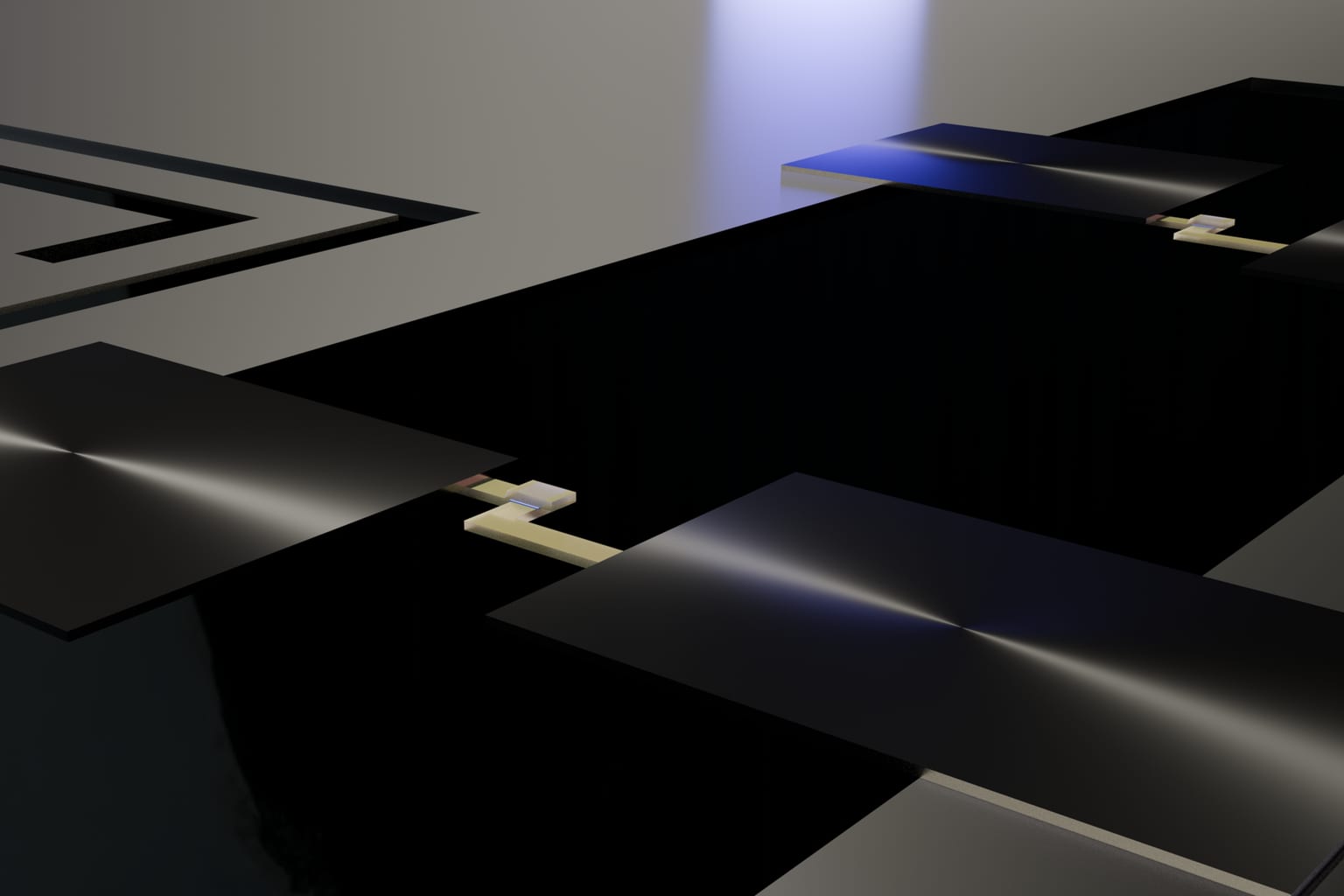
Adelaide University quantum engineers have found a way to make some of the world's most sensitive magnetic sensors accurately identify when a field is exactly zero, with a design simpler than the one it replaces. The work comes from the university's Quantum and Nano Technology Group (QuaNTeG) and is published in Physical Review Applied. Its central idea fits in one sentence: keep the loops the same size, and replace some of them with "bare loops".
SQUIDs, short for superconducting quantum interference devices, rank among the most sensitive magnetic field detectors ever created. They already sit inside brain imaging systems, scientific instruments and advanced radio-frequency sensors. Yet they can detect incredibly small changes in a field and still struggle to say when that field is exactly zero. Until now, engineers have worked around this with complex circuits of hundreds or even thousands of superconducting loops, each a different size. That approach is effective, but it lowers the device's overall sensitivity.
The Adelaide team, including doctoral students Ross Monaghan and Jonathan Marenkovic, took another path. The loops stay identical, but some are swapped for "bare loops" that contain no Josephson junctions, a key component of traditional SQUIDs. These loops change how magnetic signals travel through the circuit and create what the researchers call a "synthetic area spread". The sensor then behaves as though it contained many differently sized loops, without needing them. The team developed the theory first, then confirmed it on fabricated superconducting circuits operating at very low temperatures. The new design, in their words, behaved exactly as predicted.
For the people who build these instruments, the change is twofold. The sensor keeps the conditions needed for maximum sensitivity, which the old design gave up. And the factory side gets simpler: there is no longer a need to fabricate large arrays of many loop sizes, which the researchers say could make future devices easier and less costly to manufacture. Lead researcher Giuseppe Tettamanzi, an associate professor at the School of Chemical Engineering, points to improved brain monitoring, more sensitive radio-frequency receivers and low-noise communication technologies. None of these uses is announced as a product, and the researchers have not given a date for commercial devices, saying only that further testing is required first.
What comes next is already under way. Further studies aim to improve device performance and explore new applications, while the concept is protected by an international patent application.
Sources — read the originals(Paris time)
Read next
Comments
Loading the thread…
Sign in to leave a comment. Sign in