Simulations show classical light can make single photons thermalize
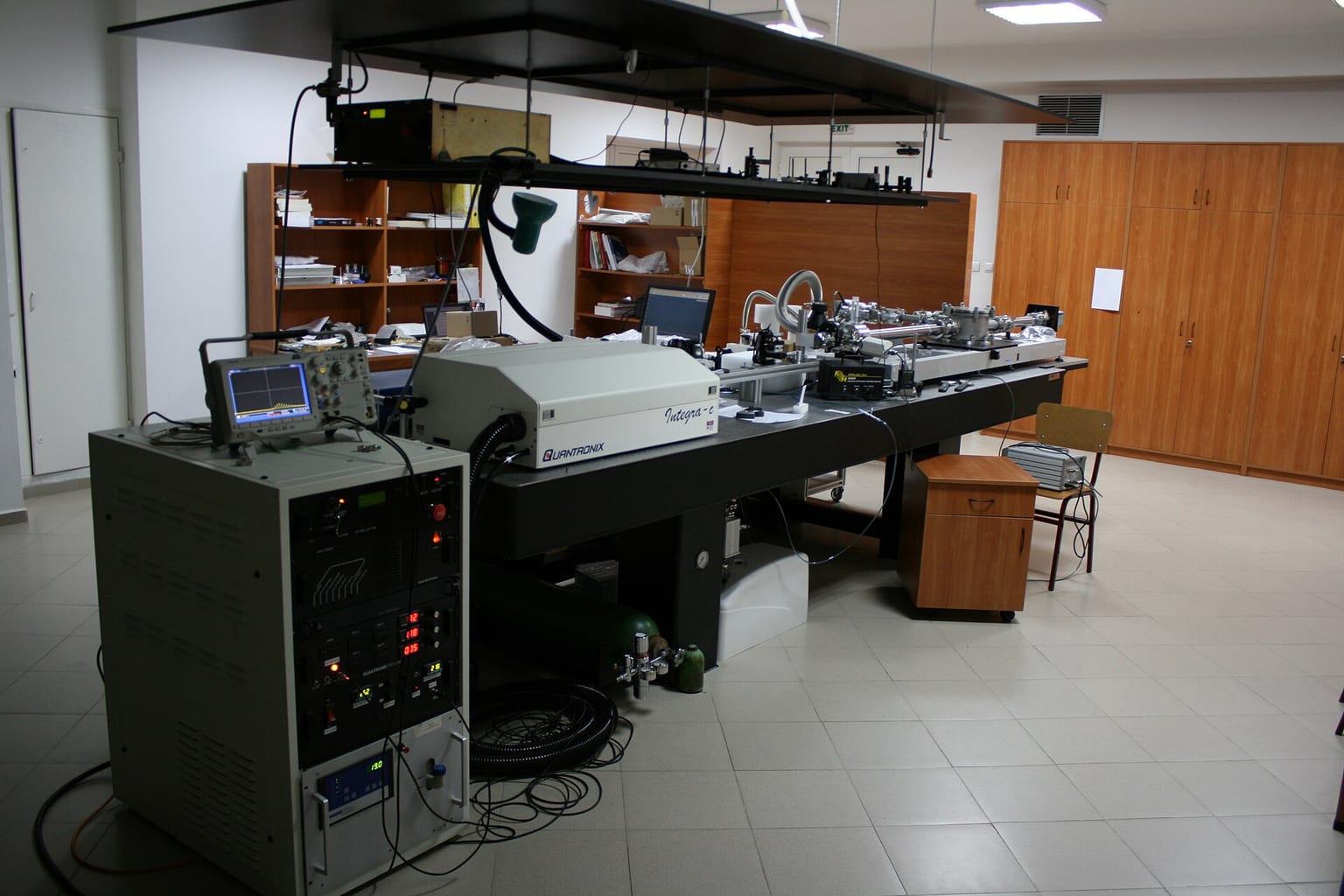
Photons carry information at the upper speed limit, yet they do not interact with one another. In conventional optical media, the nonlinear response that would couple light to light almost vanishes at very low intensity, so single photons pass straight through each other. That absence has kept the collective behaviour of many interacting quantum particles largely out of reach in optics.
A team from Saint Louis University, the Max Born Institute in Berlin and Humboldt-Universität zu Berlin has found a way around that barrier, in simulation. Their paper, published in Science Advances and written by Fouad Chahrour with Şahin K. Özdemir among the authors, sends single- or two-photon quantum light through a multimode nonlinear optical system alongside intense classical light. In the simulations, the quantum states thermalize, settling into the statistical distributions that describe equilibrium.
The classical light does the work. Its nonlinear evolution makes its intensity profile effectively chaotic, which produces fluctuations in the effective refractive index that the quantum light experiences. The photons then relax toward a thermal state that closely matches the classical field, and the result follows Rayleigh-Jeans and Boltzmann distributions. The study itself flags a discrepancy that, in its words, warrants further investigation.
For a researcher in quantum optics, the appeal is practical. The usual route to such interactions relies on single-photon nonlinear materials, which are notoriously difficult to fabricate and scale. The authors say their mechanism is not tied to one experimental platform and uses standard classical optical structures. In principle, that makes a testbed for open quantum systems available in ordinary laboratories. No date is given for an experiment that would check these predictions.
Everything here is numerical. The work is theoretical, and its results come from simulations rather than a laboratory setup. The study notes that observing classical mode thermalization depends on power conditions that produce weak nonlinear interactions. Phys.org's account of the work points to aspects of quantum phase transitions as the next territory to explore in standard laboratory settings, a prospect rather than a result.
Sources — read the originals(Paris time)
Pages consulted while writing
Read next
Comments
Loading the thread…
Sign in to leave a comment. Sign in