Solar heat pump prototype gains 18.7% efficiency in strong sun
In a research centre in Rome, water enters a test loop at 20°C and leaves at about 60°C, the temperature a household needs for its hot water. The machine heating it is a 10 kW heat pump that moves heat from a cold place to a warmer one, and it runs on a refrigerant that is not the usual one: carbon dioxide (CO₂). Researchers from Italy have spent a test campaign on this unit to find out when it works best.
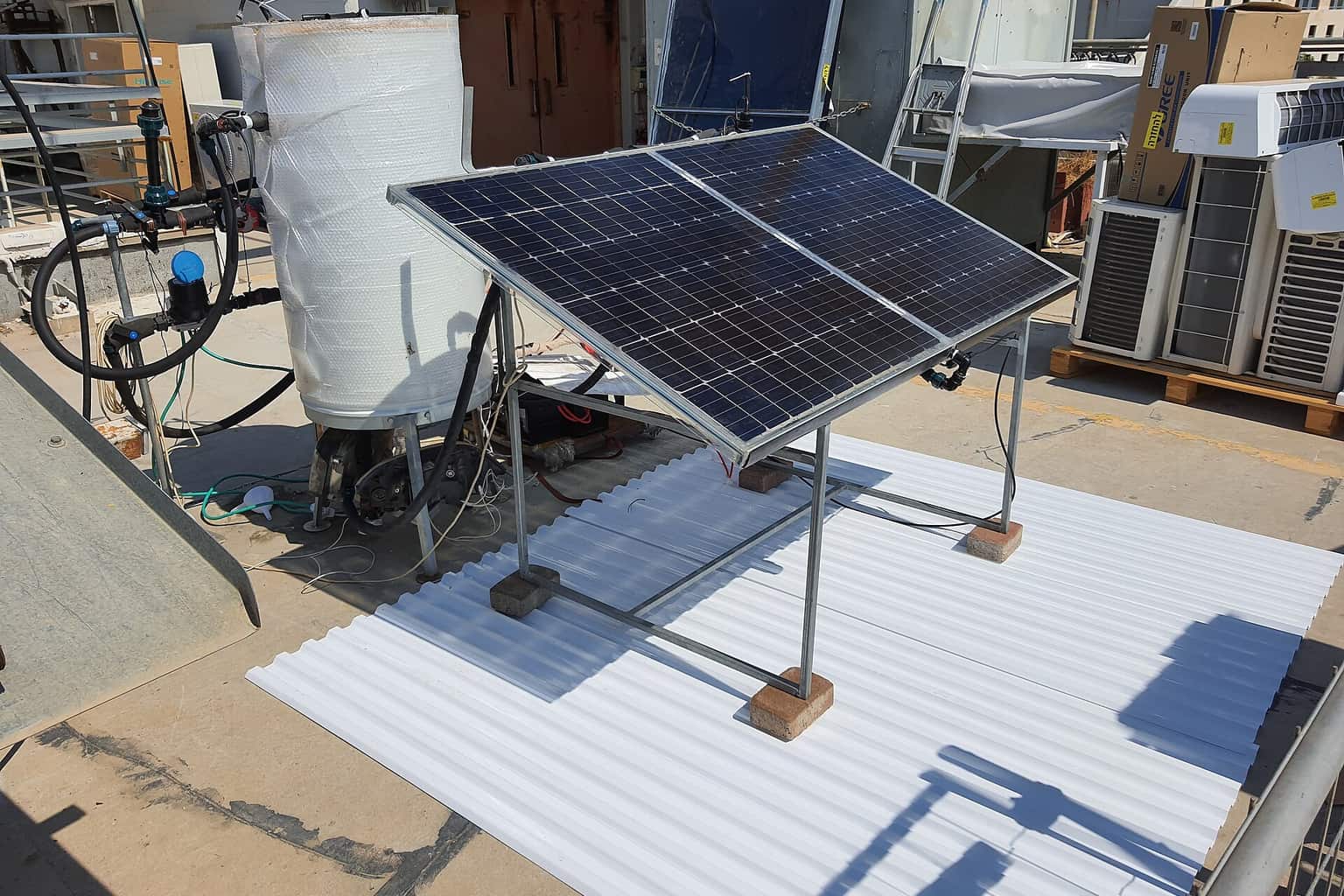
The heat pump can take its heat in two ways. A fan pulls in outside air through an evaporator, or the CO₂ circulates through copper tubes attached to the back of ten photovoltaic-thermal collectors, which are panels that produce electricity and heat at once. The collectors face south and are tilted at 48 degrees. When sunlight is strong, the refrigerant evaporates at a warmer temperature, so the compressor has less work to do. As irradiance rose from 322 W/m² to 904 W/m², the evaporation temperature went from 4°C to 12.9°C. Heating capacity rose by 21.1%, from 8.75 kW to 10.6 kW, and the coefficient of performance, the ratio of heat delivered to electricity consumed, improved by 18.7%.
The gain has a limit. The team ran 307 tests in total, 164 in air mode and 143 in solar mode, varying the compressor frequency between 50 Hz and 70 Hz. Under weak sunlight, the researchers write, air mode stayed more efficient, which points to a minimum irradiance threshold above which the solar mode becomes advantageous. Because the measurements were not uniform, the team trained artificial neural networks, which are computer models that learn from existing data to predict performance across a wider range of conditions.
What this changes, and for whom, depends on the arithmetic of electricity. The researchers say that the electricity saved by switching between air and solar sources stays limited, at roughly 100 to 120 kWh per year under the most favourable conditions. The bigger effect comes from the electricity the collectors produce at the same time, which weighs heavily on the economics. In their annual simulations for seven cities, from Rome and Tenerife to Toronto and Beijing, simple payback ranged from about 6 to 10 years where solar availability is high to more than 20 years in less favourable climates. Households in sunny regions with a steady demand for hot water are the group the figures favour. The study does not say when a commercial version could reach them, and it reports no unit in use outside the prototype.
The numbers come from a single machine, measured by the team that built it, and the simulations rest on five hot-water demand profiles and a 900-litre tank. They are a solid base for a next step, a trial in more than one place, but they are not yet a product.
Sources — read the originals(Paris time)
Read next
Comments
Loading the thread…
Sign in to leave a comment. Sign in