Solar-powered basil tunnels pay back in about 2 years
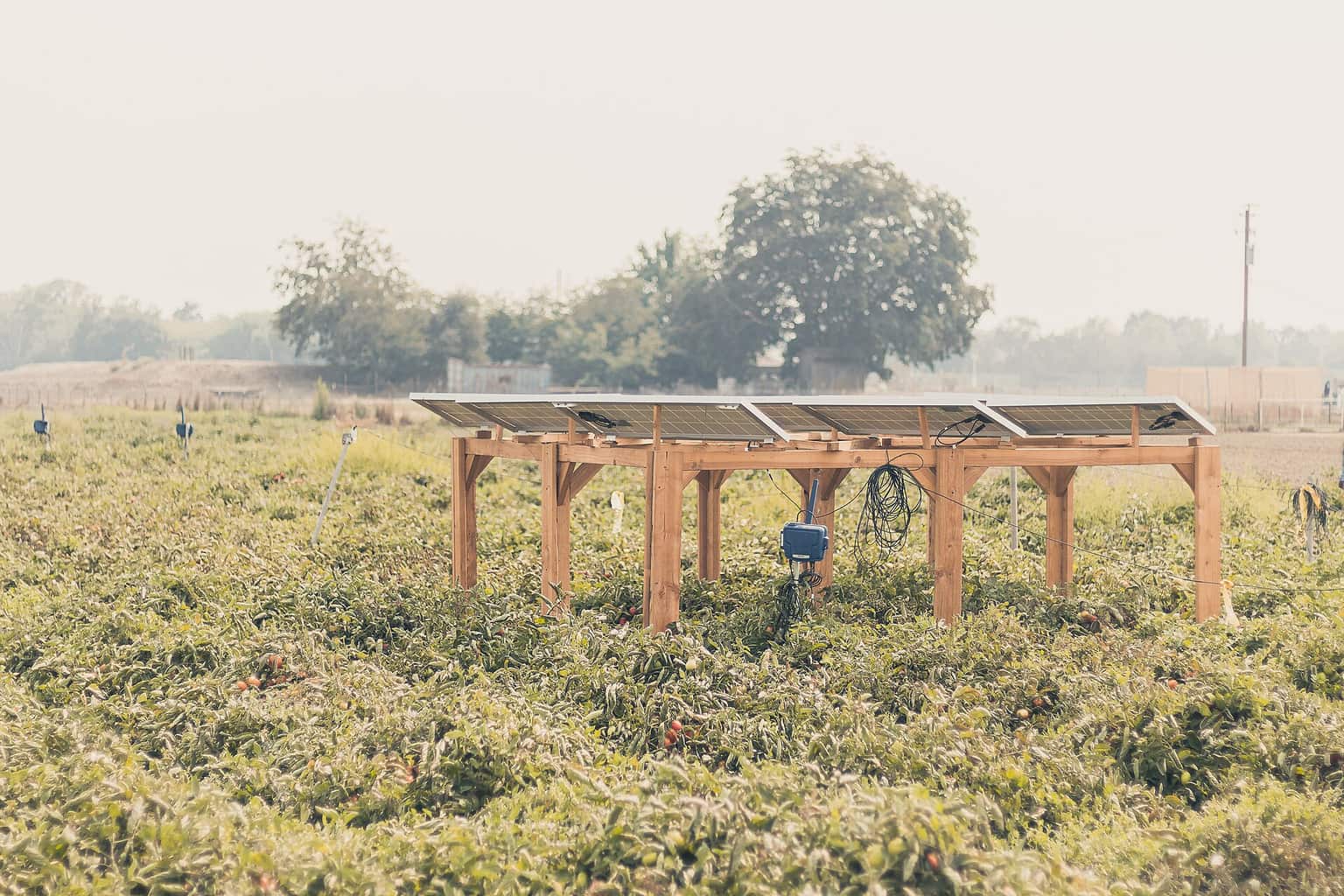
Basil grows in stacked vertical walls inside a sealed tunnel in Ilderton, Ontario, under LED (light-emitting diode) lamps. Electricity is what usually sinks such farms, and the study's corresponding author, Joshua Pearce of Western University, says it plainly: "many indoor farms go bankrupt because of high energy costs." His team's model now puts solar panels on that bill, and the result for a commercial basil tunnel is profit margins of 517–829% across six North American cities.
The model accounts for the electricity loads: the LED lighting, heat pumps, ventilation fans, dehumidifiers and irrigation pumps. A grid-connected photovoltaic (PV) system, with no battery, is then optimized with computational methods, together with the lighting schedules, to find the cheapest way to run the farm. The result is near-zero net electricity consumption in most of the locations analyzed.
The team compared one to three basil plants per pot, under 18 or 24 hours of light a day. The most profitable setup was three plants per pot under continuous 24-hour light, for an annual yield of 3,573 kg, against 2,681 kg under 18-hour lighting. Capital investment ranges from about $567,000 to $745,000, operating costs from $60,000 to $119,000 a year, and the model projects returns on investment of 317% to 499%, with discounted payback in 1.6 to 2.2 years. The Canadian sites generally show higher net present values than the US ones. In Santa Fe and San Francisco, export compensation rules limit how much solar can offset grid bills, although solar still beats grid-only power there.
The figures are model outputs, not measurements from a running farm: the commercial numbers come from scaling up experiments. The sensitivity analysis is the honest counterweight. Basil market price matters most, followed by the initial cost of the tunnel, and the electricity bill ranks behind both. Pearce presents the solar gain as cutting the levelized cost of energy, meaning the average cost of a unit of power over the system's life, and says it makes the economics "even tastier." The paper, Technoeconomic Analysis of Indoor Basil Cultivation in Agrivoltaic Agrotunnels with Optimized Near-Zero Energy Systems, appeared in Cleaner Energy Systems, and an SSRN preprint carries the same title.
For an operator weighing an indoor basil tunnel, the study moves the main question away from the power bill and toward the price the basil fetches. Solar makes the energy side manageable in most of the sites studied, and the Ilderton unit, which the university describes as the world's first agrivoltaic agrotunnel and a compact, mobile unit, is the physical proof of concept. The university has also tested agrivoltaics on lettuce in extreme heat, where some configurations raised yields by more than 400% over unshaded control plants, and on greenhouses and cold frames. Neither the study nor the university gives a date for a commercial tunnel built on this model.
Sources — read the originals(Paris time)
Pages consulted while writing
Read next
Comments
Loading the thread…
Sign in to leave a comment. Sign in