Magenta solar panels kept broccoli yield, in one Swedish trial
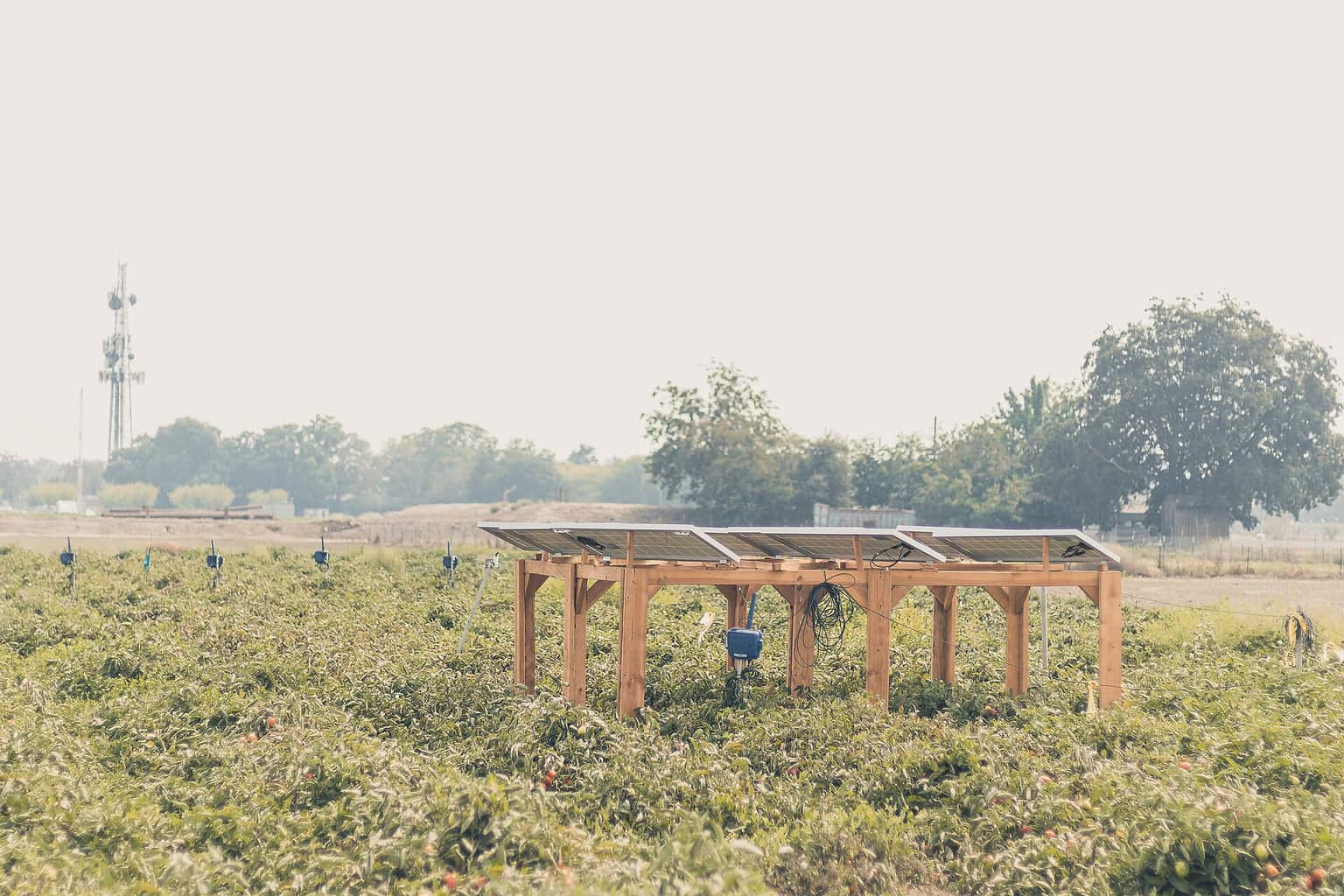
Under a row of solar panels at an experimental site on the Kärrbo Prästgård farm in Sweden, broccoli is growing in a magenta light. These panels do not block the sun the way ordinary ones do: they are semi-transparent, and their colour is the point.
The idea is called agrivoltaics, which means putting crops and solar panels on the same land instead of dividing it. The obstacle is simple. A standard panel is opaque, so the plants beneath it get less of the light they need for photosynthesis, the process by which they turn sunlight into plant matter. Engineers have been trying to share the light by wavelength instead, much as governments divide radio and television signals into separate frequency bands. A 2020 study had already tested panels that let red light through: basil yields held steady under them, while spinach yields fell.
The new study tests a different design. Its panels let most red light and some blue light pass through, casting a magenta light on the plants, and convert much of the rest into electricity. Broccoli grown under them took 25 more days to harvest but produced roughly the same yield. The panels also reduced the vapour pressure deficit, a measure of when plants must close their pores to avoid losing too much water. Biomass rose 2.8- to 4.5-fold compared with unshaded plants, and the authors say this may have improved how efficiently the plants turned light into growth. Levels of calcium, magnesium and phosphorus were higher than or similar to unshaded plants, while iron, copper and zinc were slightly lower.
This is only a preliminary study. One site in one country, over one growing period, cannot show that the result holds on larger fields, in other seasons or under other sunlight. The study points to larger plots, several seasons and different climates as the next steps.
For a farmer in a sunny region, the appeal is that one stretch of land could yield both a crop and electricity. The 2020 study estimated that farmers growing spinach under a different panel design could earn 35 percent more income by selling both. The scale is a separate question. Climate studies suggest the approach could work especially well across a wide sunbathed swath of the United States, from Texas up to Nebraska and west to California. Devoting just 1 percent of US farmland to agrivoltaics could cover up to 20 percent of the nation's electricity needs. Those are upper estimates, not measured outcomes, and the study gives no date for when panels like these could reach farms.
Comments
Loading the thread…
Sign in to leave a comment. Sign in