Ultrathin pipes could let offshore platforms recover heat, in a demo
In a test facility in Stord municipality, Norway, a steam boiler has gone through 305 start-stop cycles without a single leak. Its length and height match those of a standard offshore boiler, but its width is only 20% to 25% of the usual dimension. The demo plant is about as large as a two-family house, and it is built around a 5 MW gas turbine, roughly 20% of the capacity of a typical offshore unit.
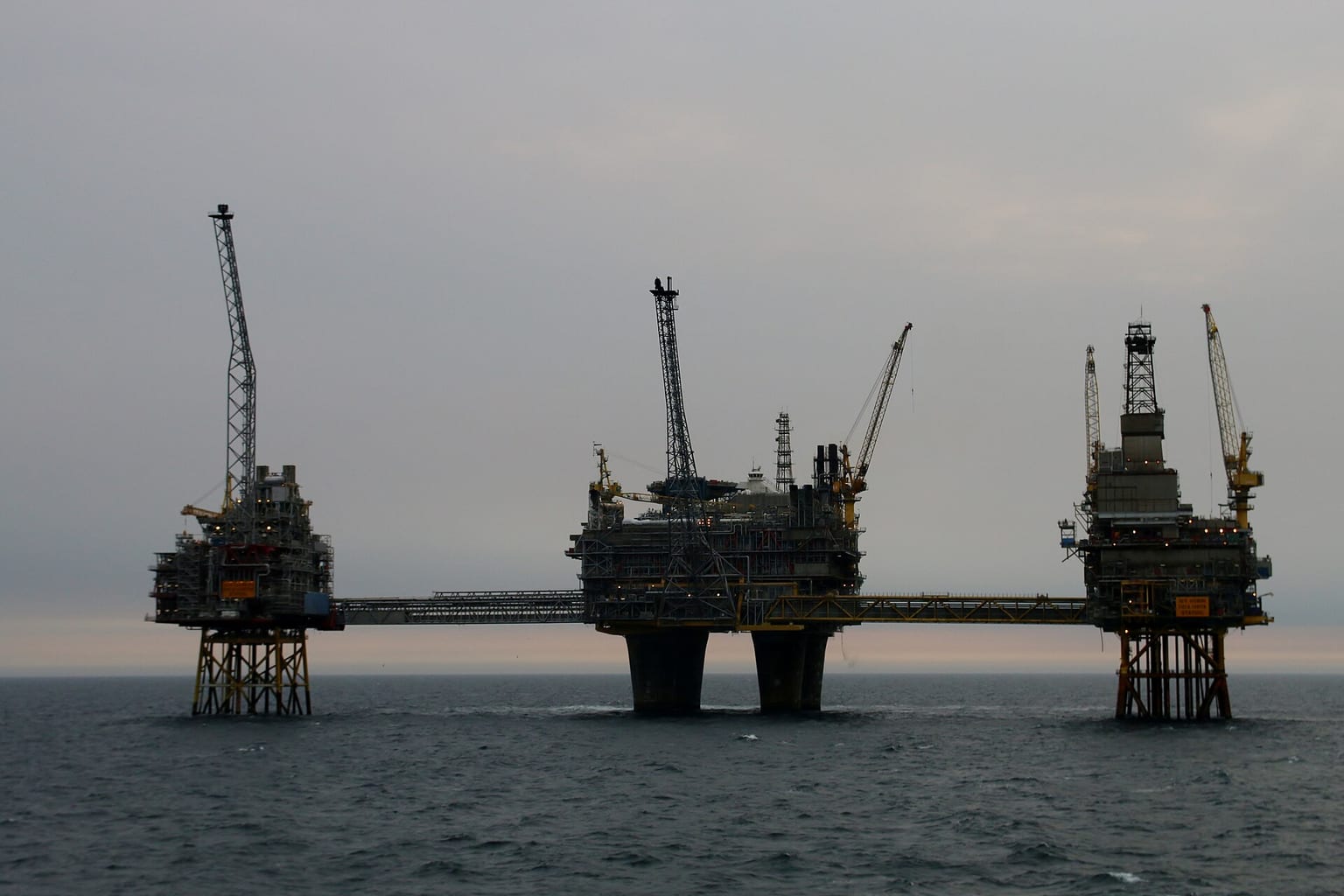
Around 250 gas turbines run on Norwegian platforms, powering offshore oil and gas production. Their exhaust releases heat and CO2 straight into the atmosphere. On land, the answer has long existed: a bottoming cycle captures that exhaust heat, turns it into steam and uses the steam to drive an additional turbine, which yields significantly more electricity from the same fuel. Offshore, the equipment was too large and heavy to fit. Some older, bigger platforms installed such systems as long ago as a quarter of a century, but the platforms still running on gas turbines are now so cramped that there is no room for them. Techouse and SINTEF Energy Research spent 15 years on a version small enough to fit.
On a platform, a heat exchanger must be light, compact, efficient and able to withstand sharp swings in temperature and pressure. Every choice of pipe, flow path or geometry affects all the others, which is why the team built FlexHX, a computer program that simulates and optimises designs before any metal is cut. To fit, the pipes had to be thinner than standard and packed more densely with fins, the small ribs that enlarge the surface where heat passes. The demo plant uses walls of 1.65 mm and fins of 0.5 to 0.75 mm. Thin walls raised two worries: vibration that could wear the equipment, and fatigue caused by the heating and cooling of every start and stop. Earlier simulations had flagged weak points, but only real operation could confirm them, which is why the full-scale demonstration was needed.
The operators assume about 10 start-stop cycles a year, so to simulate a 30-year service life the boiler was started and stopped more than 300 times. Water and steam quality, including conductivity, pH and oxygen levels, were kept under control throughout, and high-speed filming watched for vibration. The result: zero leaks after 305 cycles. According to SINTEF researcher Ruben Mocholi Montanes, the vibrations stayed within safe limits. The full analysis of the raw data is still to be completed, so this confidence is provisional. The figures on the design come from the developers. Techouse presents the boiler as designed to cut CO2 emissions by 25%, and SINTEF says the redesigned exchanger can now replace one in four offshore gas turbines. SINTEF also reports weight reductions of 52% for a 12 MW offshore bottoming cycle and 38% for a 16 MW one, compared with a 16 MW reference, achieved in part through small steam generator tubes.
For a platform with no room for a conventional boiler, this means extra electricity from the fuel it already burns, and a lower CO2 footprint. Mocholi Montanes says the technology can be deployed in various settings, for instance on older platforms where space is limited. The project is backed by TotalEnergies, Equinor and SINTEF Energy Research. The next milestone named by the researchers is the completed analysis of the raw test data. Neither Techouse nor SINTEF has announced a commercial launch date or a price.
Sources — read the originals(Paris time)
Pages consulted while writing
Read next
Comments
Loading the thread…
Sign in to leave a comment. Sign in