Unresponsive patients control a tone with their thoughts
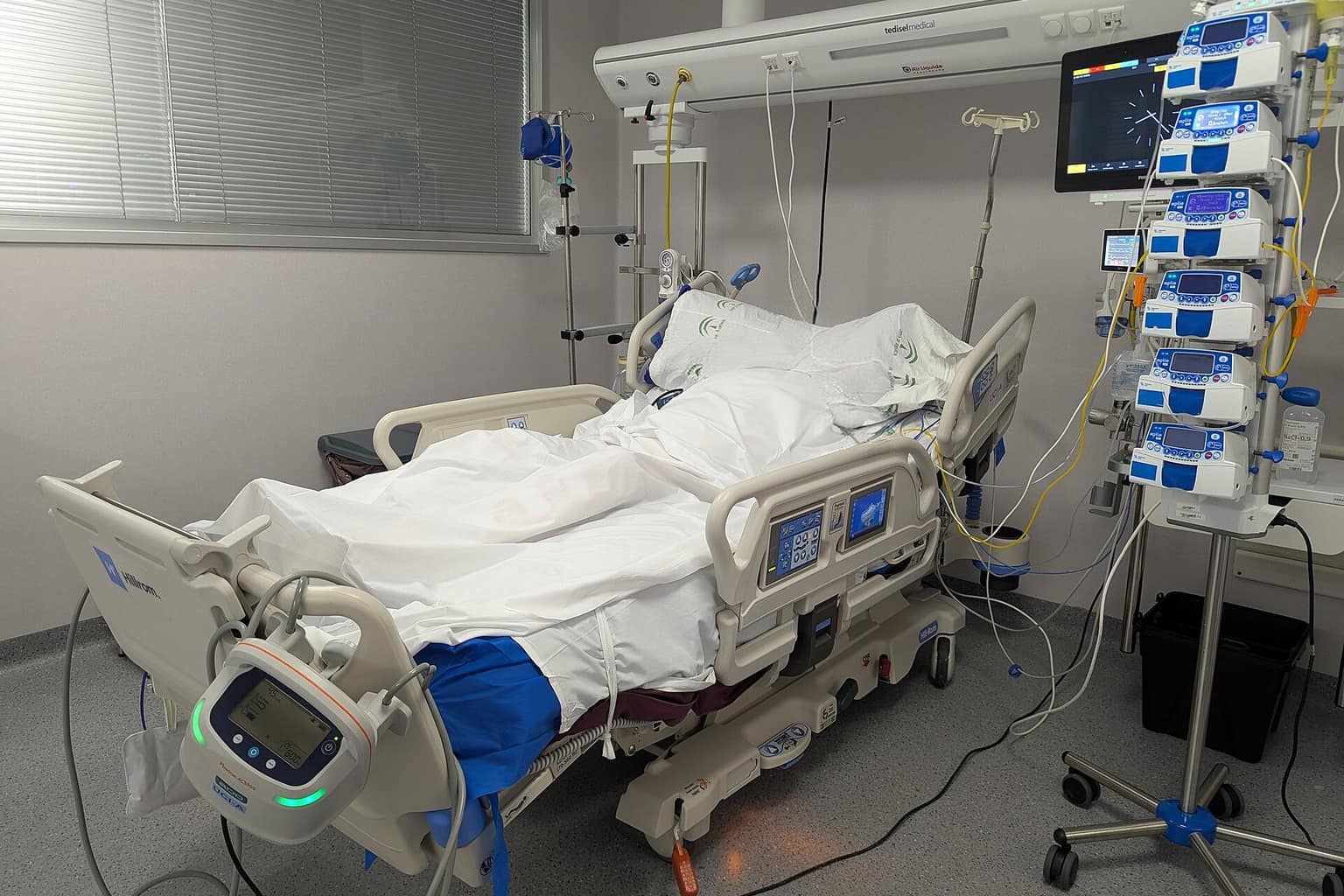
A beeping tone plays through headphones. A recorded voice asks an unresponsive patient to open and close their hands. The patient cannot move, cannot speak, and appears to be in a coma. Yet some of them manage to push the tone's pitch up and down. That is the result a team at Columbia University reports in Brain: about one in three of 41 unresponsive patients with acute brain injury controlled the tone with their thoughts alone, after a brief training period.
The lead author, Jan Claassen, is a professor of neurology and medical director of the neurocritical care unit at NewYork-Presbyterian/Columbia University Irving Medical Center. His group has spent years on what he calls hidden consciousness. In 2019 it used standard EEG and AI to analyze the brain waves of unresponsive, brain-injured patients, and found signs of hidden consciousness in 15% of them. Those patients had tried to obey commands to blink, make a fist or wriggle their toes, but could not move. The team later linked this gap to a communication breakdown between brain regions responsible for higher-order thinking and regions that control muscles. Patients with this cognitive motor dissociation, or CMD, are more likely to regain consciousness and recover much of their day-to-day function. CMD identification techniques, however, are still not available outside research studies.
Most brain-computer interfaces that restore communication rely on a chip implanted on the surface of the brain, which is a poor fit for a patient with a severe, acute injury in intensive care. Here the team attached EEG wires that are already placed on patients' heads for routine monitoring. A computer at the bedside analyzes the signals in real time and adjusts the feedback: the voice encourages attempts and congratulates the patient when the target is met. Functional MRI has previously given answers to simple yes-or-no questions from a single unresponsive patient, but it cannot be used routinely. Claassen puts the difference simply: 'EEG is used in clinical practice every day in the ICU. The only sophisticated part is the computer program we wrote.'
For families and clinicians, the immediate gain is a channel that requires no surgery. Participants and their relatives found the system helpful, and suggested adding a loved one's voice, culturally relevant details, and functions to detect pain, hunger and awareness. The team's goal is to refine the system so patients can tell their doctors and loved ones how they feel. The study does not give a date for use in hospitals, and Claassen describes the work as 'only a first step.'
For patients with hidden consciousness or CMD, the stakes are the ability to communicate at all. 'Patients with hidden consciousness or cognitive motor dissociation are unable to show any expression or communicate in any way,' Claassen says. 'I think that's where our work can be fundamentally transformative.'
Sources — read the originals(Paris time)
Read next
Comments
Loading the thread…
Sign in to leave a comment. Sign in