Voyager 1 becomes first probe one light-day from Earth
On Wednesday, November 18, 2026, at 11:16:07 a.m. CET, NASA's Voyager 1 will reach a point no human-made object has reached before: one light-day from Earth. A signal traveling at the speed of light will then need more than 24 hours to cover the distance between the probe and Earth. At that point, the probe will be just over 25.89 billion kilometers away.
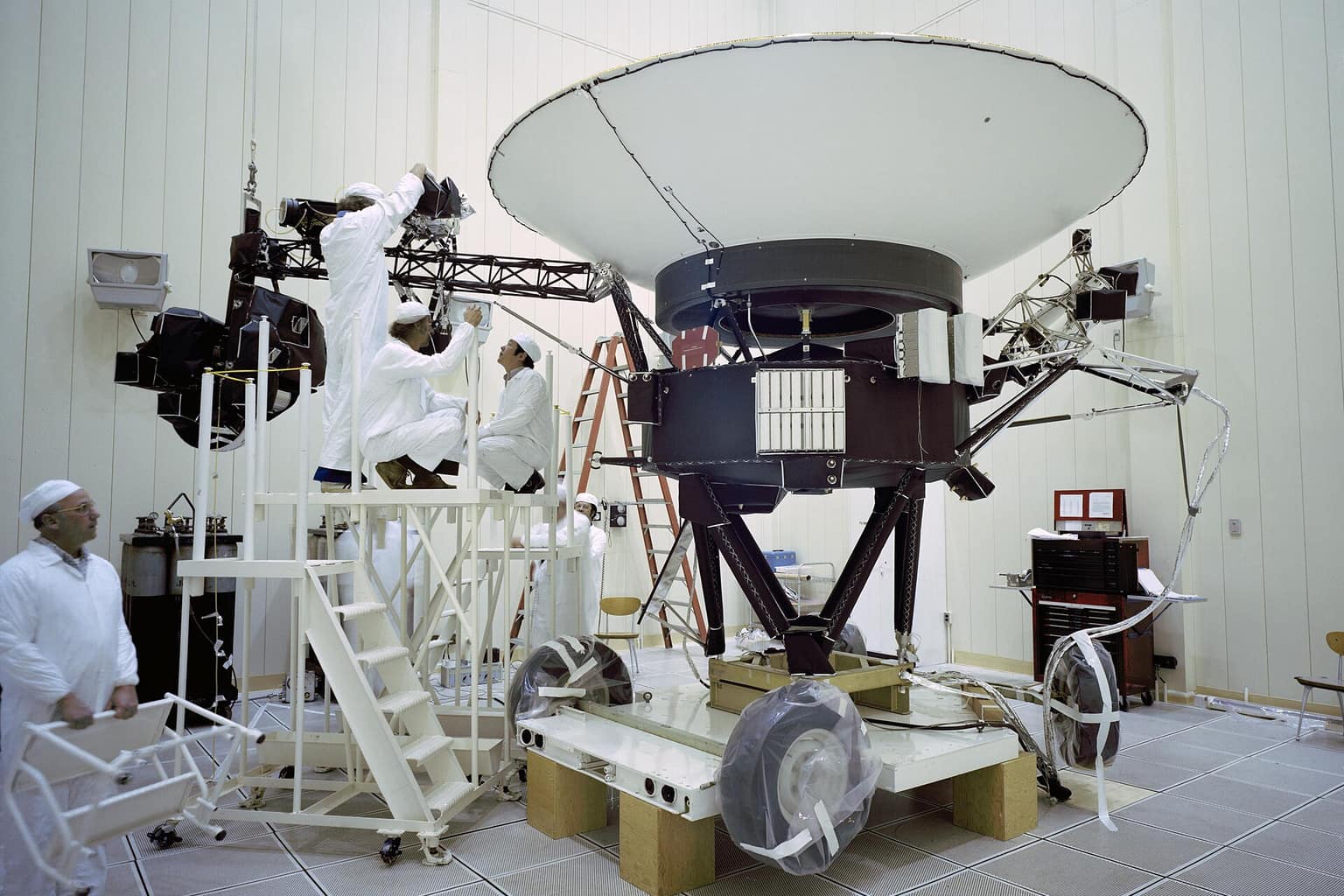
Voyager 1 launched on September 5, 1977, on a mission originally scheduled to last four years. It took advantage of a rare alignment in which the four largest planets of the solar system came unusually close together. The probe visited Jupiter first and gained momentum there for Saturn, where its path diverged from that of its sister probe, Voyager 2. Voyager 1 then headed out of the plane of the solar system, while Voyager 2 set course for Uranus and Neptune. Today, the mission has lasted more than twelve times as long as planned, and the probe is moving at about 61,000 km/h relative to the sun.
The age of the technology is hard to miss. Of the ten original instruments, only two are still collecting data: the magnetometer and the Plasma Wave Subsystem. Voyager 2 still has three working. In 2024, the end of Voyager 1 seemed near after it had sent unusable data for a long time. The problem could be fixed at the time. In October, contact was lost again, this time for two days, before the probe reported back on its own. NASA wants to find the cause but has not yet identified it.
NASA's “Shine Bright for Voyager” campaign connects the milestone with people on Earth. On November 17, after sunset, people are invited to flash the call sign V-G-R in Morse code into the night sky, using a smartphone, a laptop or another light source. A dedicated NASA page provides the blinking rhythm, and the signal takes about one minute. The campaign is aimed at people in their immediate neighborhoods, since the lights cannot be seen from space. The probe itself cannot see them either: its cameras have been switched off for decades, and its last images were taken in 1990.
The milestone brings no physical change to Voyager 1 itself. It does, however, kick off a series of celebrations leading up to the mission's 50th anniversary in August and September of next year. According to NASA, Voyager 2 is expected to reach the same mark in November 2035, roughly nine years after its twin probe.
Sources — read the originals(Paris time)
Pages consulted while writing
Read next
Comments
Loading the thread…
Sign in to leave a comment. Sign in