With AI, amateur searches flag 49 possible new planets in NASA data
Every 13.8 days, a star in the constellation Lyra loses a sliver of its light. Kevin Bond, an engineer at OpenAI, found that rhythm in archived NASA data after writing a search program with Codex, OpenAI's coding tool. A second search, run by Ethan Byrd, founder of the email-infrastructure startup Primitive, used another OpenAI tool, Astra, on observations of about 19 million stars. Byrd's first pass produced 49 potential planets, and Bond's flagged more than 200 signals. Neither man has confirmed a new planet. Their candidates have, however, reached professional astronomers.
The search itself is old: find worlds orbiting other stars. Astronomers have confirmed more than 6,400 exoplanets since the first discoveries in 1992, and amateurs have contributed by combing through public telescope data. What is new is who can take part. Both searches used data that anyone can download, and OpenAI's own account of the work notes that neither researcher needed a telescope of their own.
The method is simple to describe. When a planet passes between its star and us, it blocks a little of the starlight, and a plot of brightness over time shows that moment as a dip. Repeated dips at regular intervals can mean something is orbiting the star. NASA compares the effect to spotting an ant crossing a massive searchlight from tens of miles away.
The difficulty is that dips lie. Two stars passing in front of each other can produce a similar dimming, and temperature changes inside a telescope can mimic one as well. A 2012 study estimated that up to 40% of Kepler's transit signals in single-planet systems could be false positives. Confirming a candidate takes more than one dip: astronomers typically need at least three transits, or a measurement of the tiny wobble a planet's gravity causes in its star.
Bond's program combed through about 100,000 stars observed by Kepler between 2009 and 2018. It flagged more than 200 signals, and 10 of them matched planets already confirmed, a useful check that the method finds real worlds. Two others stood out. The most striking involves KIC 5689121, a cool star about half the size of the Sun. If a planet causes its 13.8-day dip, it could be about 2.4 times Earth's diameter. Bond shared the result with the SETI Institute, whose associate director, Vishal Gajjar, ran a separate search and found two of the same signals in the Kepler data. Those notes posted alongside Bond's code put the exploratory false-positive probability at 6.9%, and say an unresolved companion star could be the host. The write-up has not been submitted for publication.
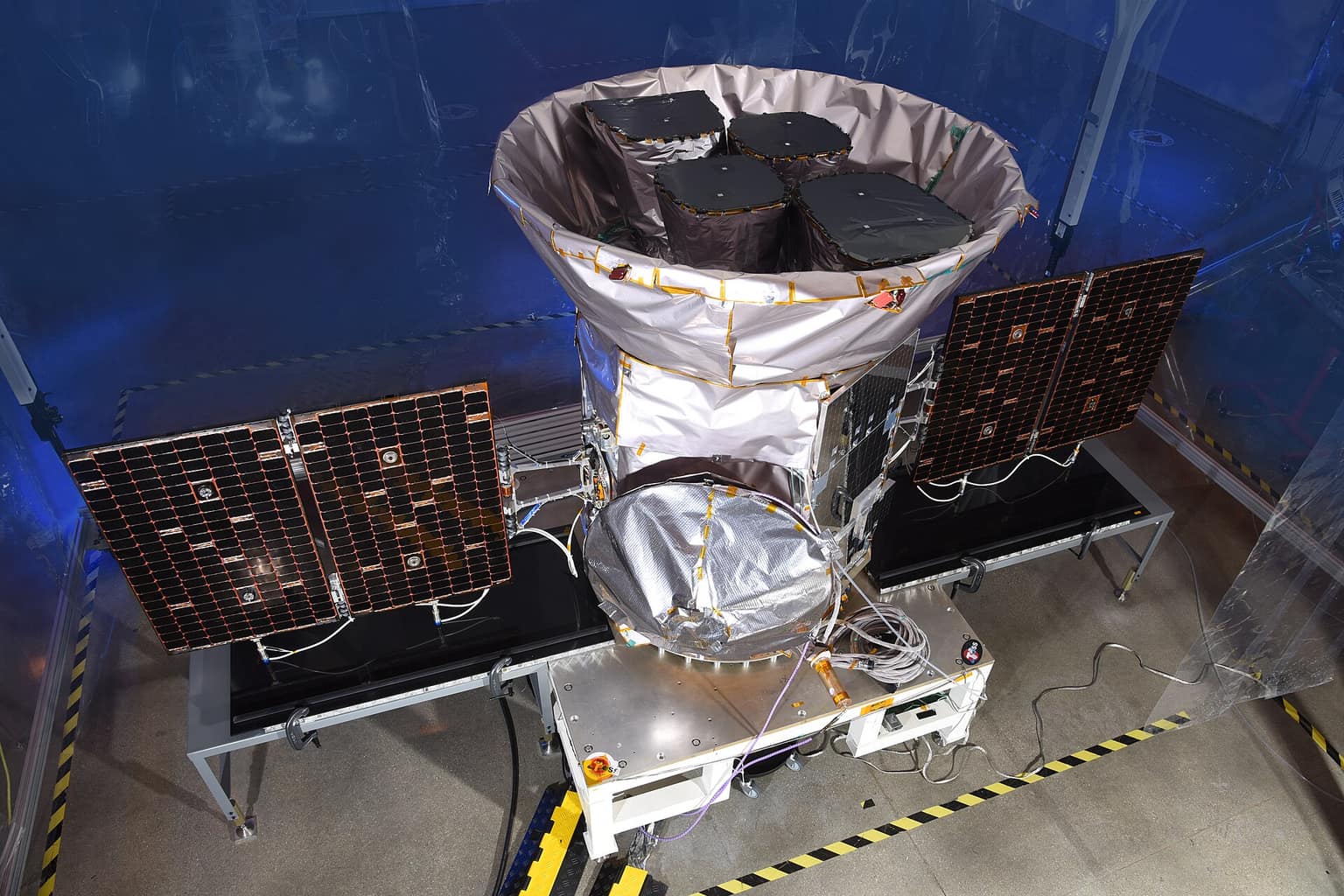
Byrd tried several AI models before choosing Astra, and built two programs from published astronomical methods: one searching broadly for candidates, the other focusing on stars with potentially habitable zones. One of his strongest candidates has been sent to researchers working on NASA's TESS mission, a satellite launched in 2018 that surveys wide swaths of sky. Two more await submission.
For astronomers, the immediate effect is a longer list of targets to check. For the public, the practical change is that the checking happens in the open, one candidate at a time. OpenAI's account puts it plainly: each candidate is a question that can be tested. The next step is follow-up observations that separate real planets from other causes, along with the TESS team's analysis of Byrd's strongest candidate. No timetable for either has been announced.
Sources — read the originals(Paris time)
Pages consulted while writing
Read next
Comments
Loading the thread…
Sign in to leave a comment. Sign in