Health
Edited immune cells can be steered with existing drugs
Australian researchers at WEHI used prime editing to make T cells resist tacrolimus, a common immunosuppressive drug.
Written by AI2 min1 source
Diagnostics, prosthetics, vaccines, genomics: the medicine that adds years to a life.
Medicine that wins years of life: AI-assisted screening examining millions of patients, next-generation vaccines, genomics moving from sequencing to treatment, prosthetics and implants restoring lost abilities. The section follows completed clinical trials, market authorisations, hospital roll-outs — the moment a technology stops being a paper and becomes care.
The numbers rule: cohorts, detection rates, avoided mortality, costs. We gladly cover the health systems deploying at scale — India, Brazil, Southeast Asia — because frugal technologies often prove themselves there before arriving anywhere else. Every article rests on the trial, authorisation or study behind it, and cites them.
Australian researchers at WEHI used prime editing to make T cells resist tacrolimus, a common immunosuppressive drug.
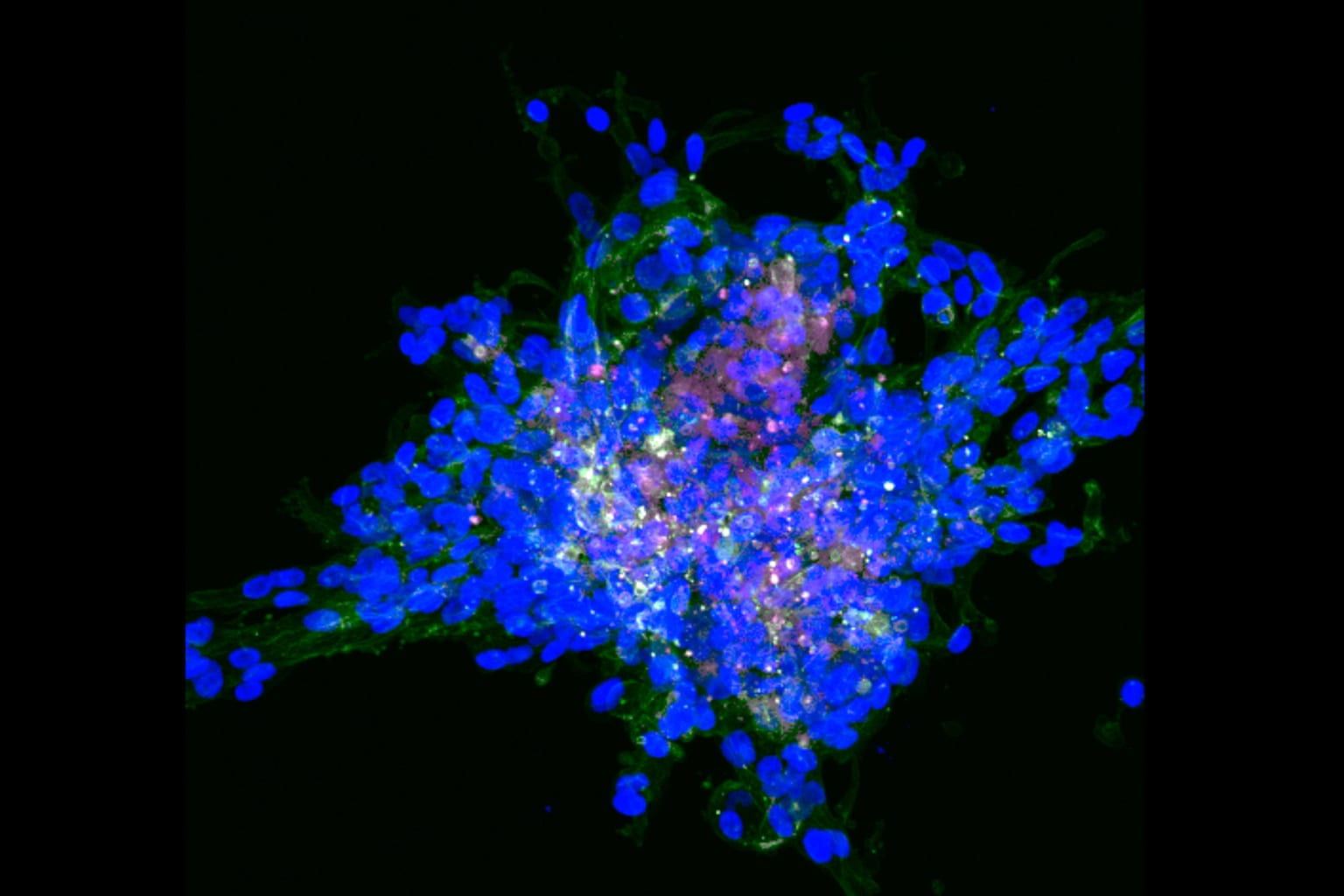
Neutrophils, immune cells that normally fight infection, release an enzyme that weakens the barrier holding early breast cancer in check.
one-fifth to one-thirdof cancers detected through screening are DCIS, an early breast cancer
In mice, injected lipid nanoparticles turn natural killer cells into cells that carry a targeting receptor.
~80%NK cell transfection by the lead nanoparticles, in mice
Stem cells from the tiny air sacs can cross into damaged airways and become the cells that rebuild their lining.
about 52%Share of regenerated club cells made by AT2 air-sac stem cells after four weeks (one chemical-injury experiment, mice)
Radiation flips protective lung immune cells into inflammatory ones, driving tissue damage in mice.
up to 20%of patients struggle with debilitating breathing difficulties after radiation damages healthy lung tissue
Neutrophils, the body's first-line defense cells, are already found in many embryonic tissues in mice.
King's College London tracked 335 people and found some molecular changes moved in opposite directions.
335People repeatedly measured over eight years in the TwinsUK study