First cranberry harvests grown alongside solar in Massachusetts
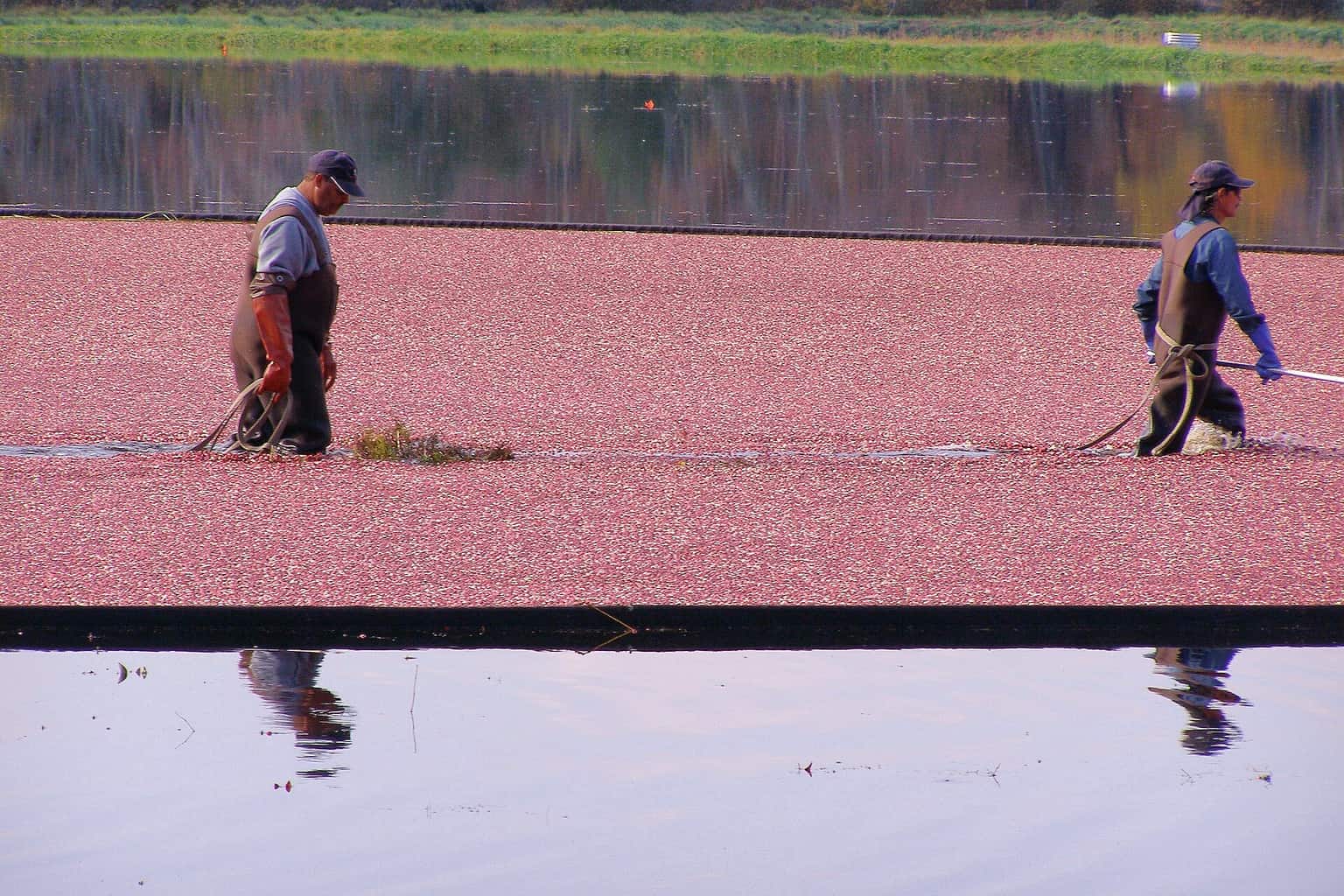
For years, the Black Cat and Ring Road cranberry bogs in Massachusetts sat out of service, because growing cranberries there no longer paid. Today, they have produced their harvests, on land that also carries solar arrays and battery storage. In Plymouth and Kingston, the developer says, these are the first agrivoltaic cranberry harvests ever recorded.
The difficulty was technical as much as financial. Cranberries are perennial crops grown in wetlands, and a solar installation has to be built over active bogs without damaging them. Distributed Energy Infrastructure (DEI) built both projects, while cranberry farmer Iain Ward, who manages the bogs, took part in the design and construction to keep the sensitive wetland intact. “Building solar projects over active perennial wetland crops was an exciting challenge,” says Prateek Tare, the company's executive vice president and co-founder.
The Black Cat project has 1 MW of power capacity and 2.7 MWh of battery storage. Ring Road is larger, with 4.4 MW of capacity and 13.5 MWh of storage. Both projects were finalists for the North American Agrivoltaics Awards. DEI and Ward are also founding members of the Solar & Farming Association (SAFA), a coalition that brings together developers, crop and livestock producers and related organizations.
For the landowner, the change is now a steady income: the solar projects pay lease income, which the developer says makes the bogs economically viable again. Ward is paid for agricultural management in addition to what he earns from selling the cranberries. The projects are owned by Greenbacker Renewables. The source does not give lease amounts, cranberry yields, prices or costs, so how much the arrangement is worth to each party is not yet public.
The account rests on the developer's own announcement, and no independent harvest data has been published. What the case shows is a working model: a solar installation shares a wetland crop field and returns the land to production. The next step the sources point to is not announced, but the model now has a documented example on cranberry bogs.
Sources — read the originals(Paris time)
Read next
Comments
Loading the thread…
Sign in to leave a comment. Sign in