In lab, rainforest tree compound shields MND motor neurons
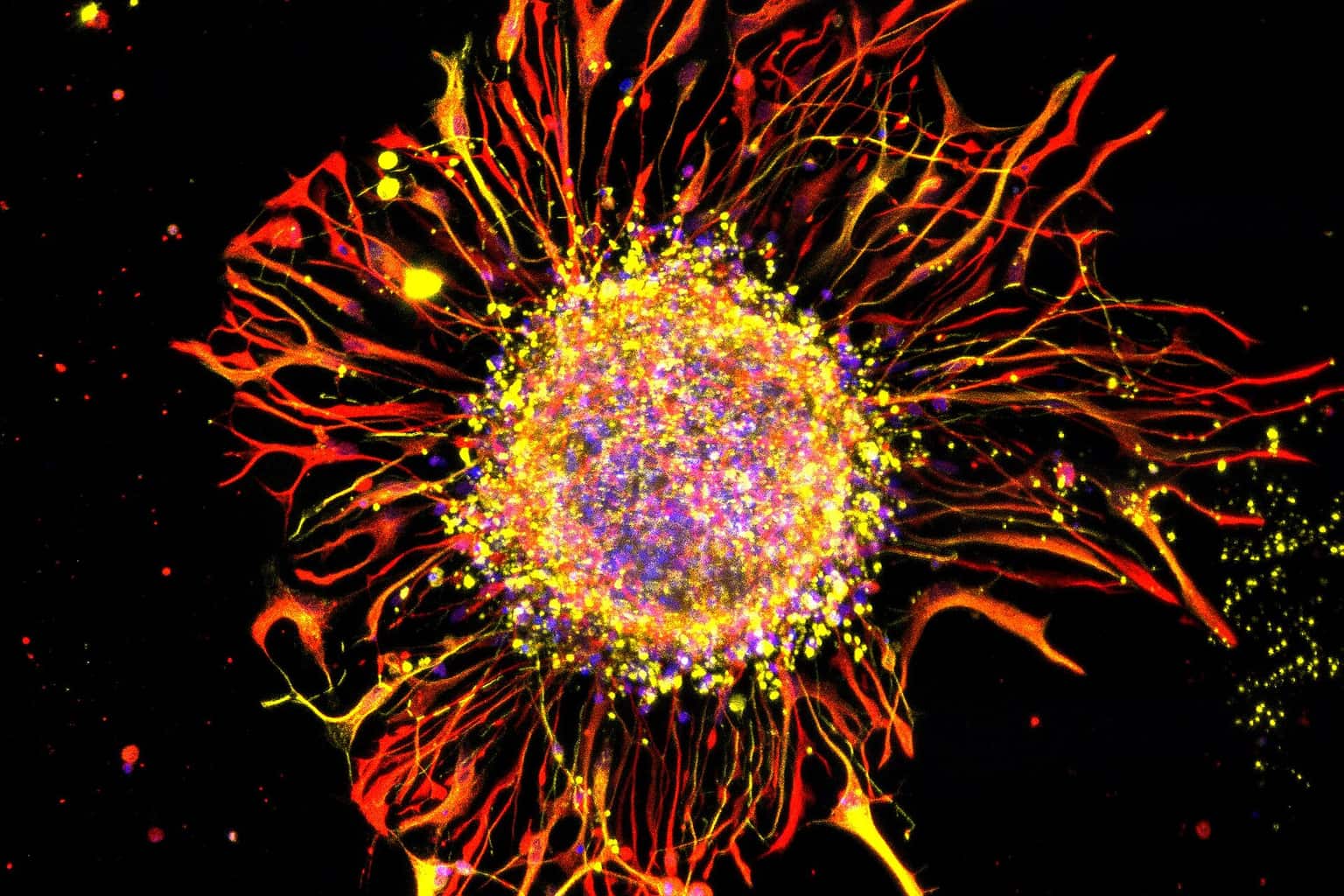
At the University of Wollongong, researchers in Professor Lezanne Ooi's lab went looking for a treatment for motor neuron disease (MND), the condition in which the nerve cells called motor neurons degenerate. They turned to nature, screening more than 500 compounds from the flora, fungi and marine vertebrates of Australia and Oceania. Their test bed was motor neurons grown from stem cells donated by people with sporadic MND, which has no known genetic cause, and with familial MND, which is linked to inherited gene mutations.
Two compounds from the rainforest canopy tree Anisoptera thurifera, native to Papua New Guinea, the Philippines and Indonesia, stood out. The more effective one, hopeaphenol, protected motor neurons from degeneration and helped preserve their long, branching fibres, which carry signals throughout the body. Tested on motor neurons from 14 donors, spanning sporadic MND and several genetic forms of the disease, it protected cells from 12 of them. It also outperformed resveratrol, the compound found in grapes that has been widely studied for its protective effects. Hopeaphenol also reduced the overexcitable electrical activity seen in MND motor neurons, though only in some sporadic samples.
Hopeaphenol works, in part, by activating SIRT1, a protein that helps cells cope with stress and damage. The compound is predicted to have difficulty crossing the blood-brain barrier, the barrier that shields the brain from substances in the blood, and it is hard to produce. The team therefore also tested SRT2104, a small-molecule drug that activates the same protein. In the lab it protected motor neurons from degenerating at about a third of the concentration needed for hopeaphenol.
Hopeaphenol is not new to laboratory work. Separate studies have examined it against HIV transcription and against type III secretion in the bacteria Yersinia pseudotuberculosis and Pseudomonas aeruginosa. Those studies have nothing to do with MND. The MND results, for their part, come from cells in a dish. Maksour describes the work as early-stage, and the outlet that relayed it notes that these laboratory findings do not establish clinical efficacy.
For the many people with MND, the gap is stark: there are still no effective drugs for most cases. What the team highlights is that the compound worked across sporadic and genetic forms of the disease, which Ooi calls one of the biggest challenges in finding treatments, since MND varies enormously from person to person. The library was curated by Associate Professor Rohan Davis, with collaborators from the University of Papua New Guinea and Macquarie University. No date for the next steps has been announced. Ooi sees in the work 'a real possibility for drug development', and that possibility is what the lab results have opened.
Sources — read the originals(Paris time)
Pages consulted while writing
Read next
Comments
Loading the thread…
Sign in to leave a comment. Sign in