In the lab, crystal direction changes how magnesium oxide melts
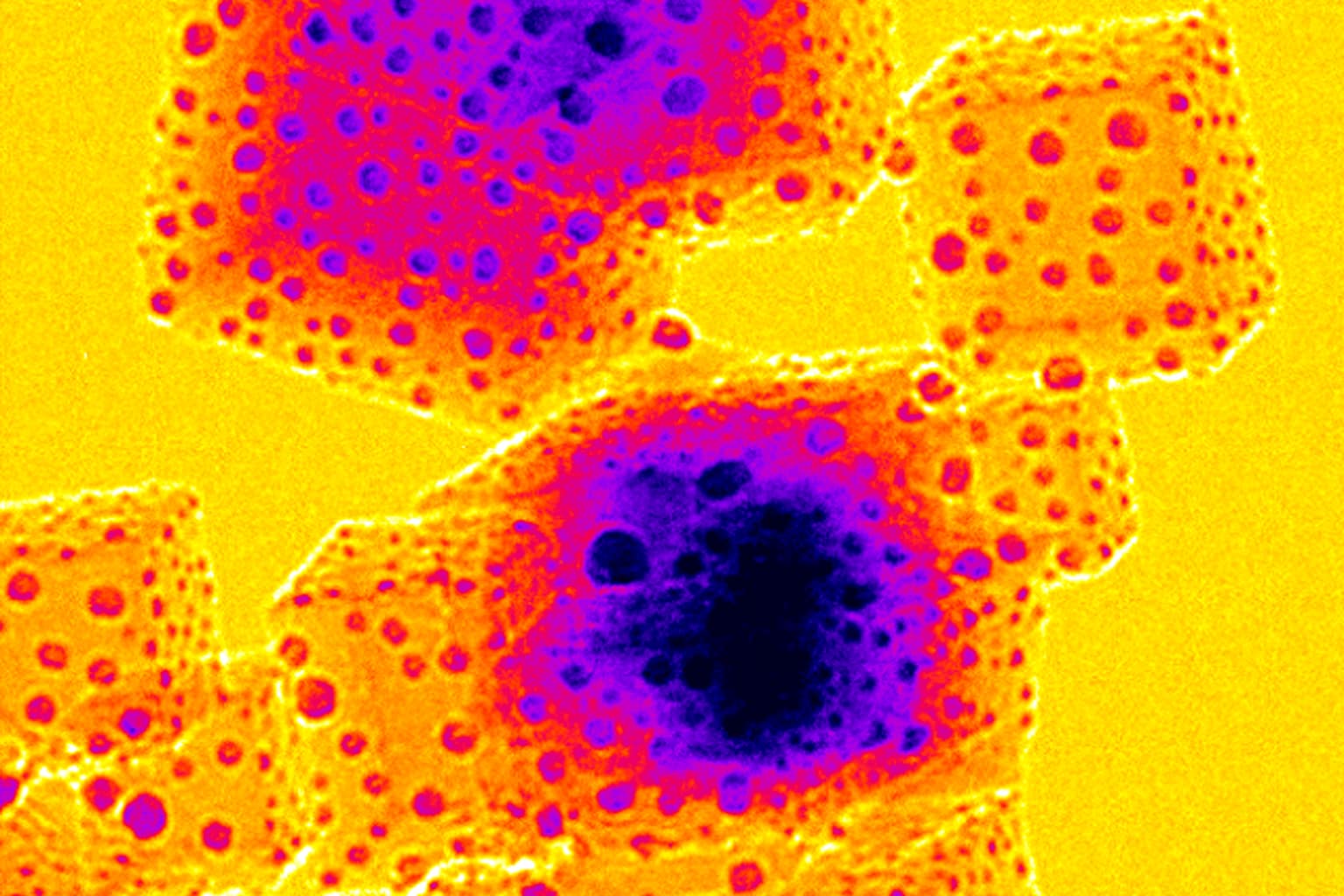
A laser pulse hits a crystal of magnesium oxide and sends a shock wave through it. For years, the results from that kind of test refused to match what theory predicted for the material. Researchers at Lawrence Livermore National Laboratory (LLNL) and Johns Hopkins University have now found the reason, after nearly 12 years of investigation. The problem was an assumption the field had taken for granted: that at pressures approaching twice those at Earth's center and temperatures above 10,000 Kelvin, the direction in which a crystal is compressed no longer matters.
To test it, the team fired shocks at the crystal along three directions at the University of Rochester's Laboratory for Laser Energetics, using the Omega EP laser facility. Their optical measurements of shock speed and temperature were paired with X-ray diffraction, which reveals how atoms are arranged. Along one diagonal of the cube, the material changed as expected. Along the other two directions, a thin, short-lived disordered or liquid layer formed at the front of the shock wave, followed by irregular crystal growth behind it. "What we observed baffled us," said Raymond Smith, the LLNL physicist who led the study. "None of us expected such a complex response from changing the direction of compression."
This is the part that explains the old puzzle. The team reports that the thin front layer and the larger region probed by X-rays behind it, read together, account for the earlier discrepancies. Despite these different transformation paths, magnesium oxide melted at approximately 572 gigapascals and 13,200 Kelvin in every orientation, which the authors describe as the highest experimentally recorded melting temperature among known materials.
What changes, and for whom? For planetary scientists, the value is a benchmark: a measured melting point that models of planetary interiors can be checked against. Smith suggests that such high melting conditions could affect how the early Earth's magma oceans crystallized, and how much material a giant impact vaporizes. Extrapolating to higher pressures, the authors suggest crystalline magnesium oxide could persist in parts of Jupiter's and Saturn's cores, while hotter giant planets could hold it as a liquid. June Wicks of Johns Hopkins notes that this determines "where it can remain solid and where it becomes liquid, which matters for how planets transport heat and evolve." The team also says the findings can be extended to other materials relevant to stockpile modernization and LLNL's national security mission. These are laboratory results and model extrapolations, not a timeline for any application: the planetary conclusions still await tests against real planetary data.
Sources — read the originals(Paris time)
Read next
Comments
Loading the thread…
Sign in to leave a comment. Sign in