Lab hamster cells still carry alga DNA after 155 generations
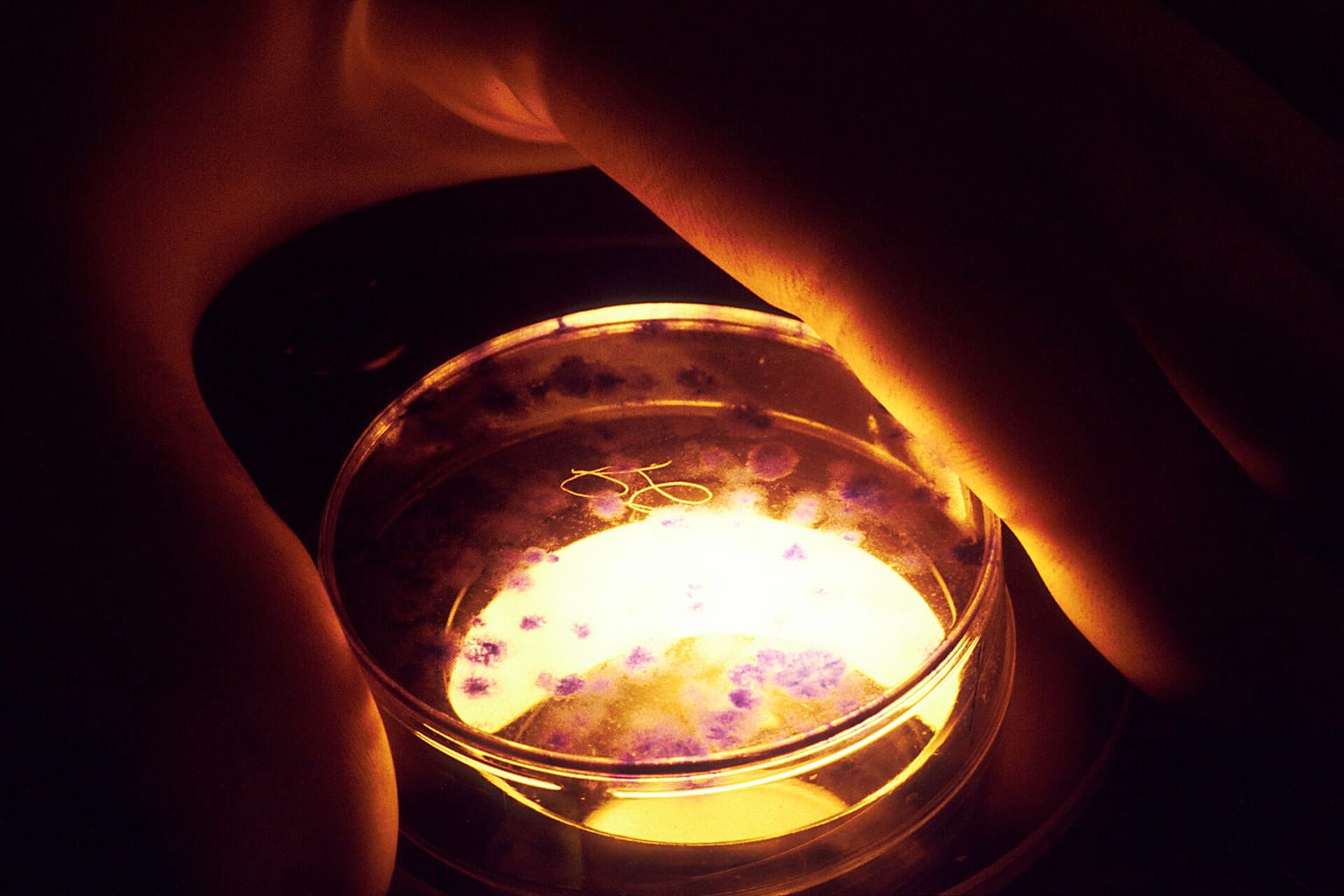
Under the microscope, a small red alga sits fused to a far larger animal cell. The team at the University of Tokyo, led by Sachihiro Matsunaga, went further than the picture: it followed what happened to the alga's DNA over many cell divisions. In one line of hamster-derived cells, 16.3 million base pairs (the units that make up DNA) of algal nuclear DNA were kept, including intact chromosomes and sequences from all 20 algal chromosomes. The foreign DNA stayed detectable through 155 cell generations, and substantial portions persisted for 95 generations with no antibiotic selection to keep them.
Gene transfer between species is well known in bacteria, which can pick up loose DNA or exchange it through tubes between cells; that is how antibiotic resistance spreads. In complex cells with a nucleus, transfers of whole genomes between distant species are rarely documented. The most famous case is the oldest: more than 1.5 billion years ago, an ancestral cell engulfed a cyanobacterium, which became the chloroplast, the structure that turns sunlight into energy in today's algae and plants. The team says that ancient event inspired its experiments.
The researchers tried two routes: fusing algal cells with hamster cells, or letting the animal cells engulf the algae. Cell fusion produced stable hybrid cells much more efficiently. Using live-cell imaging and genome sequencing, the team followed how the host handled the foreign DNA. The main finding is a kind of silencing: most transferred algal genes were inactive, while the foreign DNA acquired methylation and repressive histone marks, chemical tags associated with gene silencing. The animal cells kept the alga's chromosomes without losing their ability to survive and divide.
The results vary from line to line. In CHO-K1 cells, a Chinese hamster ovary line, the paper reports a maximum of 100.0% of the algal genome retained in one fusion line, but an average of 55.8% and a median of 66.3%. One account of the study puts the share of transferred genes that were not detectably active at about 96%. Some headlines call the hybrids solar-powered, but the study does not show that: the hamster cells did not gain photosynthesis.
For now the work is basic research, aimed at how genes cross species lines and how evolution builds new cell functions, as the team puts it. The cells used are the same hamster ovary cells that are used to produce drugs, according to The Japan Times. What changes is the picture of what a cell can carry: a complex animal cell can hold an alga's chromosomes for generations, something that was rarely documented before.
Sources — read the originals(Paris time)
Pages consulted while writing
Read next
Comments
Loading the thread…
Sign in to leave a comment. Sign in