Lion-ER robot model beats its base on all ten benchmarks
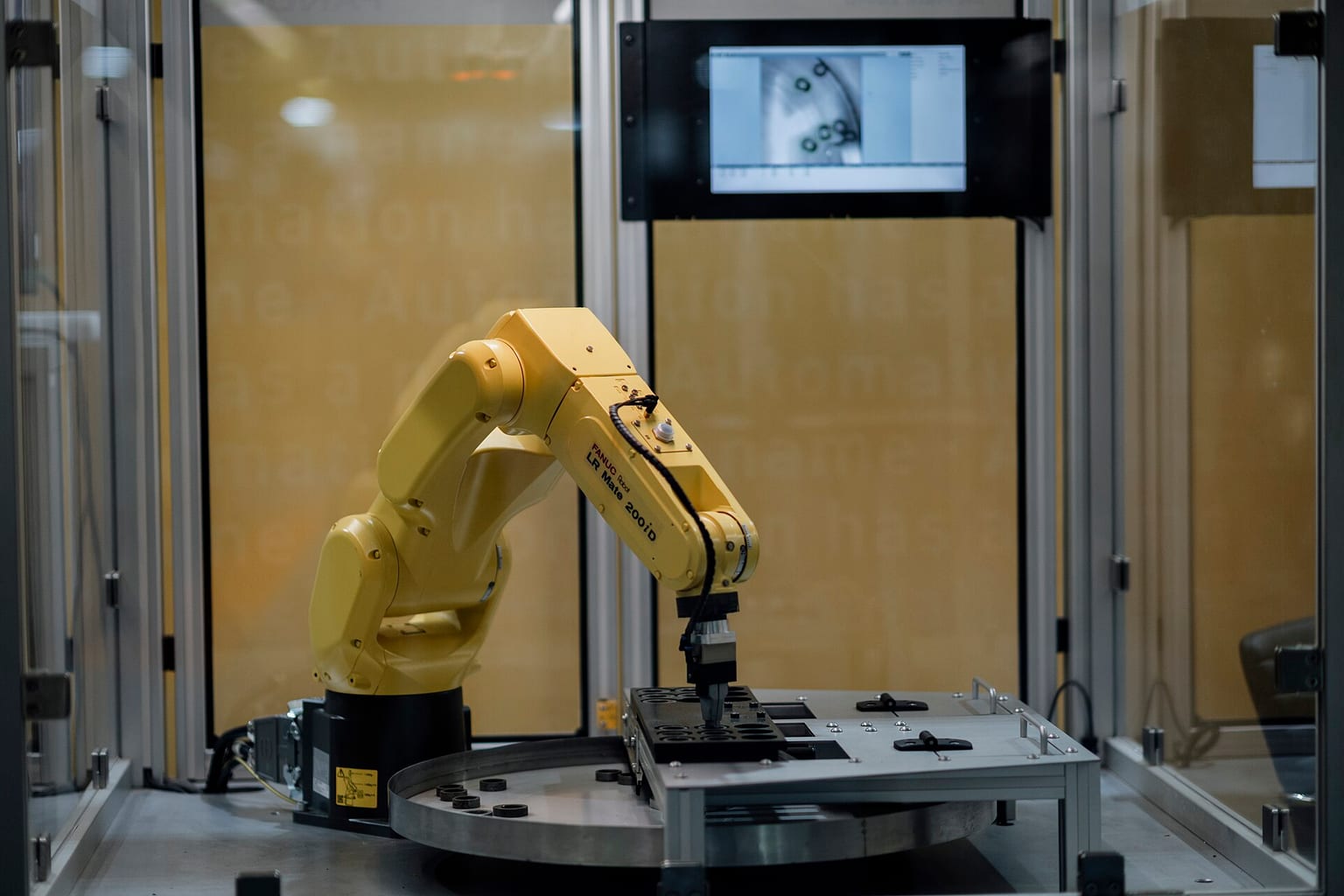
On November 4, the LionRock AI Lab of China Merchants Group's Advanced Technology Research Institute released Lion-ER-35B-A3B, a model built to help robots make sense of a scene: where objects sit in three-dimensional space, what state they are in, and how far a task has progressed. The weights are on Hugging Face under the Apache 2.0 license. Lion-ER is a vision-language model, meaning it reads images and text together.
Lion-ER, short for LionRock Embodied Reasoner, is a mixture-of-experts model with about 35 billion parameters in total, of which about 3 billion are active for each token it processes. It is fine-tuned from Qwen3.6-35B-A3B. The lab says it improved on that base across all ten public embodied and visual reasoning benchmarks it tested, reaching an equal-weight average of 65.29, with each score averaged over four sampled answers per question. Among the individual results, the spatial placement score on Where2Place reached 64.28, up 9.30 points on the base model, and the trajectory understanding subcategory of ERQA rose 12.12 points to 68.18. The model scored 89.33 on the SAT spatial reasoning benchmark.
The lab's central argument is that more robot data does not automatically produce more capability. Rather than collect data at scale, the team first mapped embodied reasoning into eight top-level domains, including entities, space, time, physics, affordances, tasks, social context and evidence, then broke them into 39 finer skills. Each skill became training questions specifying the scene, observations and evidence needed for a verifiable answer. Questions were dropped when the visual evidence was insufficient, and human reviewers checked the hard samples the models kept getting wrong. The supervised training set holds 312,380 examples, weighted by capability need rather than source volume. When the model fails, the team first rules out labeling or scoring errors, then draws new material with the same reasoning pattern from a pool of about 4.3 million records across 31 data sources. One failure shows the logic: the model confused being higher in an image with being higher in 3D space, so the team added scenes with multi-level surfaces.
These are the lab's own results, reported on its own benchmarks, and the model card is explicit about the limits. Lion-ER is intended for research. It has not been validated for safety-critical decisions or autonomous robot control, and its benchmark results may not transfer to new environments. Putting these scores into a real robot is a further step, one the model card does not claim to have taken.
For robotics researchers, the change is immediate: the model and its weights can be downloaded now, and the lab has described its data method in detail. The next step is already visible in the release. The lab has applied the same recipe to smaller 4B and 9B backbones, which the sources describe without performance figures.
Sources — read the originals(Paris time)
Read next
Comments
Loading the thread…
Sign in to leave a comment. Sign in