Anyverse opens 7B robot model MWA-Phoenix, claims benchmark leads
On 22 October, Anyverse Dynamics put MWA-Phoenix online: the code is on GitHub, a technical report comes with it, and the pretrained model has 7 billion parameters. It is built to run on the robot itself. The company calls it a world action model. It watches a scene through a camera and predicts both how that scene will change and what the robot should do next. Two internal parts make this work. A video expert and an action expert are linked through joint attention, a mechanism that lets each part weigh the other's signals as it computes. A compression step, a causal semantic VAE, squeezes the visual features into a compact form without looking at future frames. The vision backbone is DINOv3, and the model learns from two teachers: VGGT for geometry and V-JEPA for how things change over time.
The company reports first or near-top results on six evaluations, each testing a different difficulty. 94.63% on LIBERO-Plus, which adds disturbances such as camera angle, lighting and sensor noise. 66.48% on LIBERO-Pro, where objects, positions and goals change. 82.67% on RoboCasa GR1 Tabletop, up 7.5 points from the company's previous WALA model. 72.42% on the RoboTwin 2.0 dual-arm benchmark. A benchmark is a standard test suite that lets models be compared on the same tasks. Anyverse also cites the RoboDojo real-robot leaderboard, which covers three robot bodies and 18 tasks, but gives no score there. All figures are the company's own, and it says no test data was copied into training.
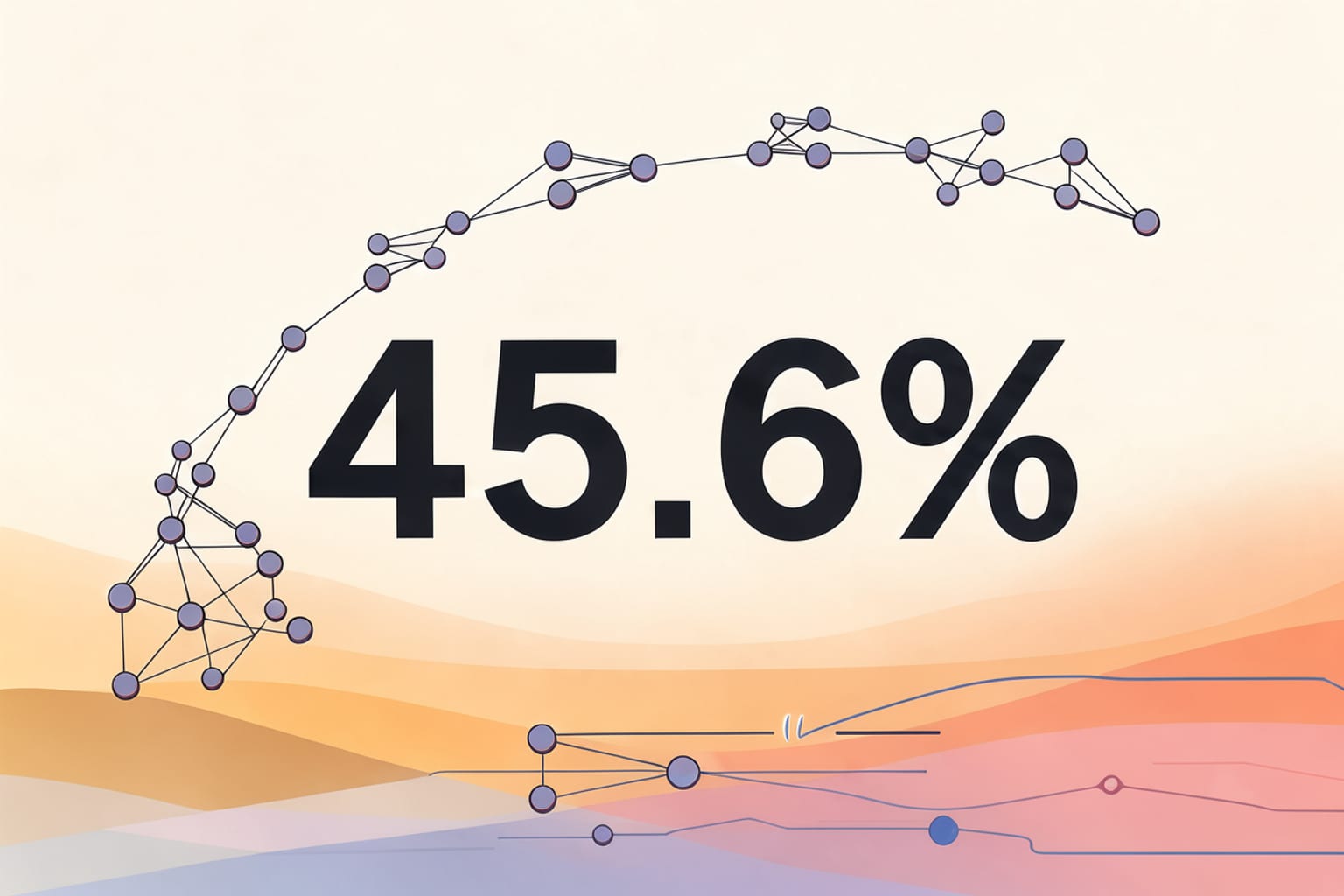
The figure the release calls most telling sits on Bench2Dex, a test across 12 combinations of robot arms and dexterous hands, meaning multi-fingered hands. MWA-Phoenix averages 45.6%, which Anyverse puts 17.3 points ahead of pi0.5, the strongest baseline in its comparison. The absolute score matters as much as the lead: at 45.6%, carrying a skill from one robot body to another is still far from solved.
Two companion releases target the gap between simulation and real hardware. Phoenix-ILA folds motion and contact into action learning, for fine manipulation. Phoenix-PhysCanvas is an interactive simulated world where policies can keep improving in the cloud before they reach a robot. On the robot itself, the team uses asynchronous execution: while the arm is still moving, the next chunk of actions is already being prepared, so the robot does not stop to think. Pretraining draws on real robot operation, egocentric human video, meaning footage shot from the person's own point of view, and handheld UMI capture. Anyverse says it holds more than 200,000 hours of multimodal data.
For research teams and developers, the immediate change is access: the code and report are public, so a lab with a compatible robot can run MWA-Phoenix itself rather than rely on the company's demonstrations. For robot makers, the open question is the one the Bench2Dex score points to. A skill learned on one body does not yet carry reliably to another. The release gives no timeline for the larger models the company says it is training, and no date for results on the real-robot leaderboard.
Sources — read the originals(Paris time)
Read next
Comments
Loading the thread…
Sign in to leave a comment. Sign in