Lumina simulation maps early universe over 100 times larger in volume
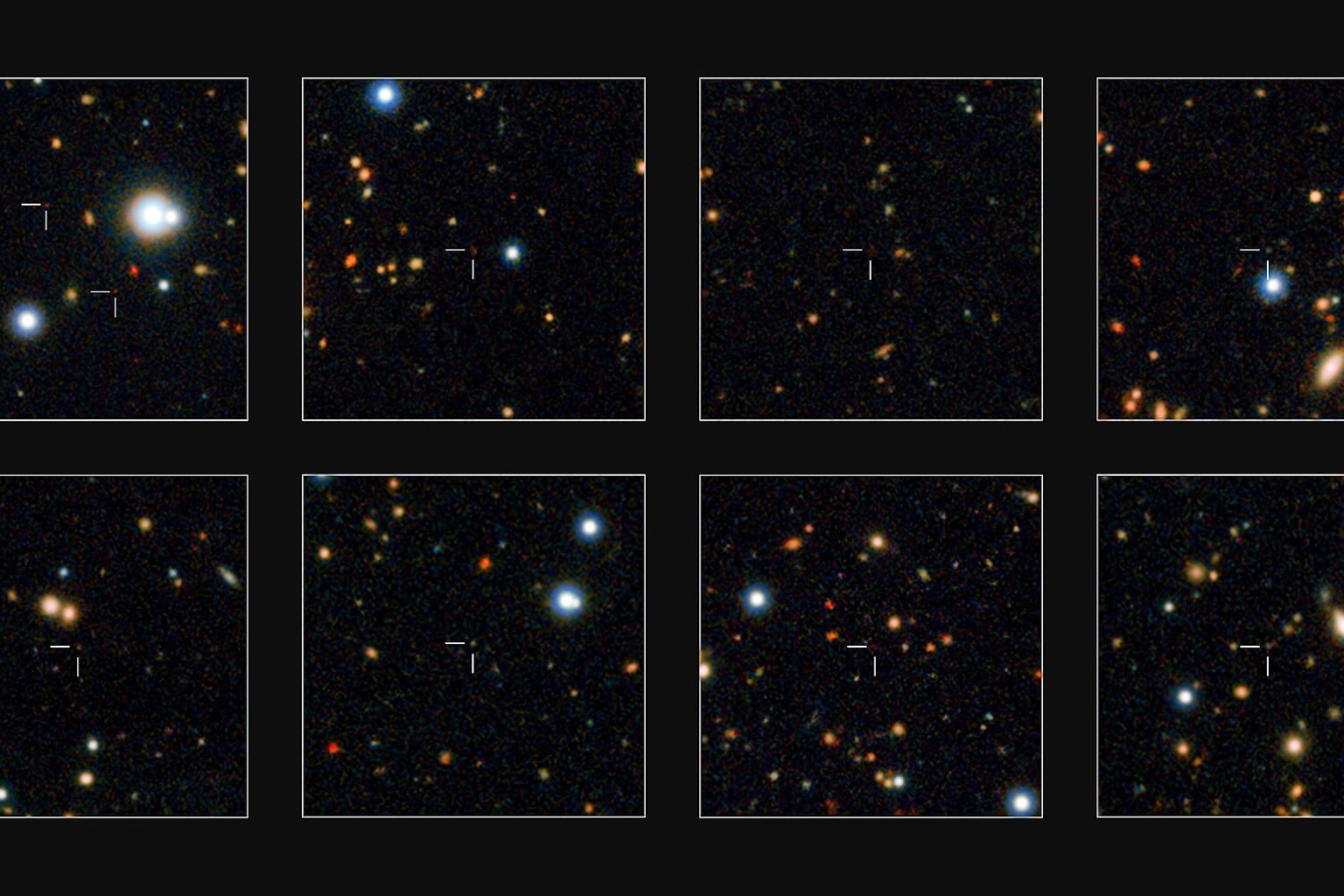
Harvard & Smithsonian scientists have built a simulation that rewinds the universe to its first 2 billion years and covers a volume more than 100 times larger than earlier comparable models. Lumina, as the team calls it, traces how gas, dark matter and light interacted to form the first galaxies, and it does so on a scale that lets astronomers compare theory with what the James Webb Space Telescope and the Nancy Roman Space Telescope now see.
The simulation covers a region equivalent to a cube roughly 1.5 billion light-years on each side. It is the first to capture helium reionization as it occurred, the period when helium changed into its modern form, while letting its effects immediately influence the evolving universe within the model. Aaron Smith, an assistant professor of physics at the University of Texas at Dallas and an author on the paper, said that for the first time researchers can follow how both hydrogen and helium changed across such a large volume, while still resolving the galaxies driving that change.
Building Lumina took more than 15,000 graphics processing units running on Frontier, one of the world's fastest supercomputers, at Oak Ridge National Laboratory in Tennessee. That computing power made it possible to model such a large volume of the early universe while keeping the detail needed to study how galaxies, stars and black holes form. Lead author Oliver Zier, a fellow at the Center for Astrophysics, described several years of work, with plenty of ups and downs.
For astronomers, the immediate change is practical: they can set Lumina's predictions beside observations from the James Webb and Nancy Roman telescopes. If the two agree, existing theories gain confidence; if they diverge, the gap points to where those theories need rethinking.
The team has announced its next uses of the simulation: studying how gas moves between galaxies, how radiation from the big bang shaped cosmic evolution, and how regions of intense star formation developed over time. The publication does not give a date for those studies, and the predictions remain to be checked against the telescopes' data.
Sources — read the originals(Paris time)
Read next
Comments
Loading the thread…
Sign in to leave a comment. Sign in