Perovskite lasers hold steady over 400 million pulses
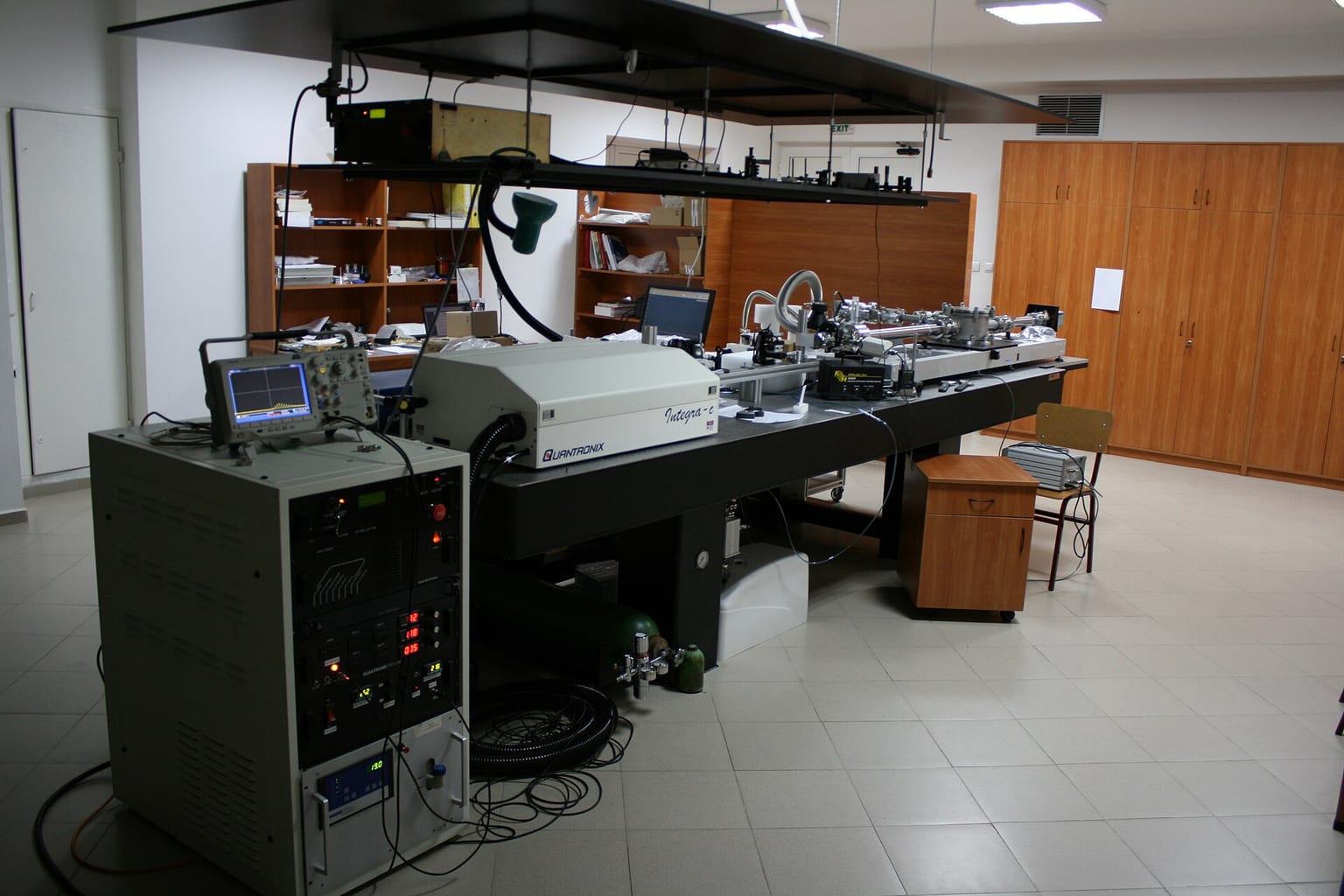
In a Vilnius University lab, a laser beam is focused into a single point on a thin film of perovskite, a spot roughly the width of a human hair. The question is simple: how long does the material keep emitting light the same way? This time, the answer was more than 400 million pulses without stable performance breaking down.
Perovskites have a reputation problem. They are easy to make using casting methods, and many papers have been published on them, but they are highly unstable and degrade quickly in the presence of moisture. Water alters their chemical properties and makes them dissolve, which is why working with them requires careful handling. A comparison can be drawn with graphene, which also spent years in labs before industry began using it in solar energy, electronics and batteries.
The Vilnius team, led by doctoral student and junior researcher Abdul Mannan Majeed and Dr. Patrik Ščajev, changed the recipe. They made their own perovskites by spin-casting in a nitrogen atmosphere, replacing part of the lead with zinc. Dr. Augustas Vaitkevičius then tested the samples with high-resolution confocal microscopy, which reads how the material emits light to show where and when degradation happens. Later, interference laser ablation carved distributed feedback gratings into the layers, a pattern that selects a narrow band of light. The resulting samples showed good stability along with that narrow emission line.
These results come from laboratory samples stored under different conditions. The researchers say research into perovskites is far from over and that a long road lies ahead before the material is used in full practical applications. The study, titled Highly Stable Solution-Processed CsZnPbI3 Perovskite Distributed Feedback Lasers, also reports no calendar for that step.
For engineers working on optical devices, the practical gain is a material whose laser performance held under repeated light pulses in these lab tests, instability being one of the main obstacles to their practical use. For now, that gain belongs to the researchers in Vilnius and to the teams who will try to reproduce these samples outside their conditions. Whether the zinc-modified recipe holds up in devices people actually use is the next thing to be tested.
Sources — read the originals(Paris time)
Read next
Comments
Loading the thread…
Sign in to leave a comment. Sign in