Prototype microfactory writes digital archives into DNA
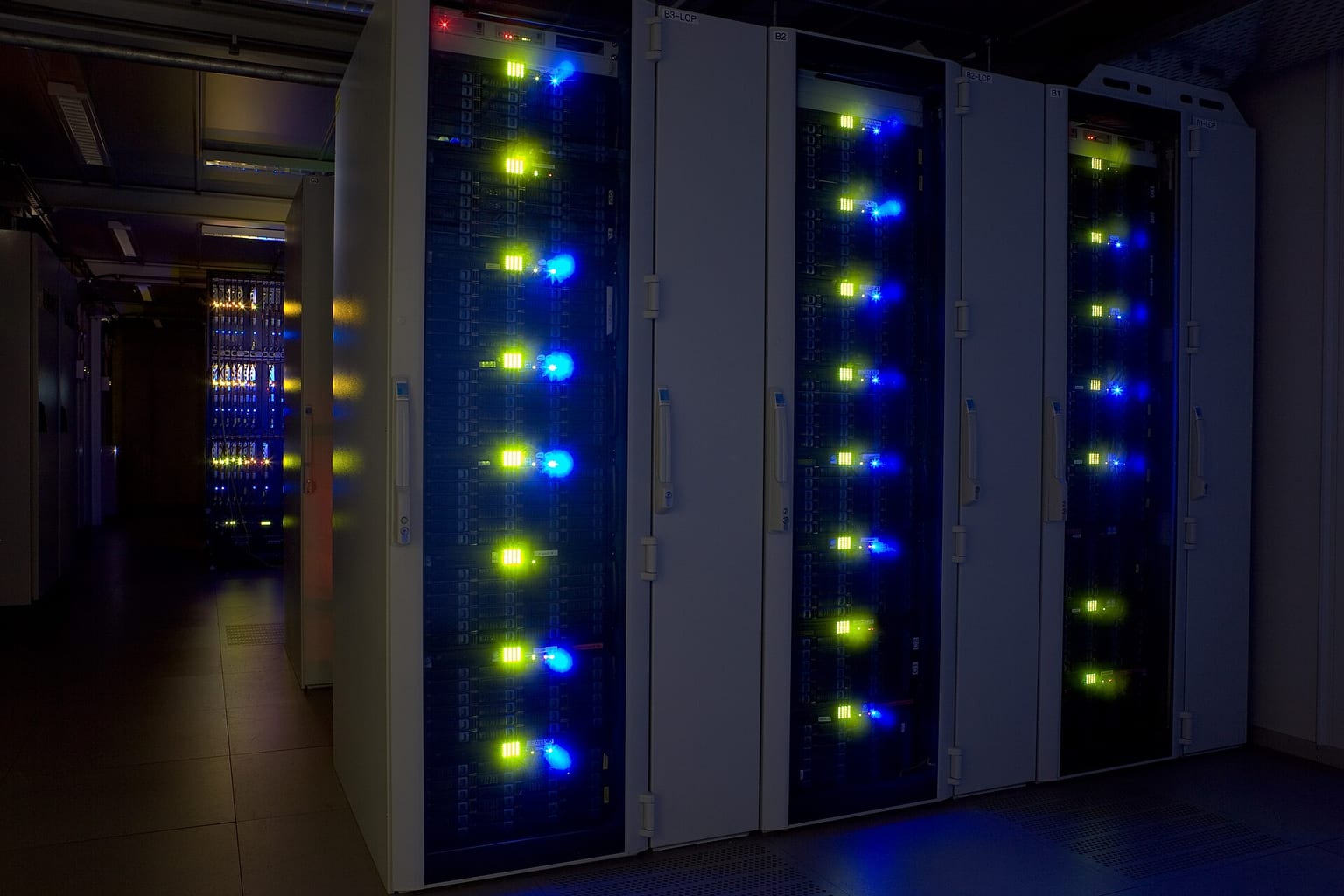
On the HE-Arc campus in Saint-Imier, in Switzerland's canton of Bern, a machine was tested by digitizing a watchmaking archive and turning it into synthetic DNA. The device, called DNAMIC, is an autonomous microfactory: it encodes digital information into DNA on its own. It was developed by a European research collaboration that brings together Kaunas University of Technology in Lithuania, the Lithuanian company Genomika, the Technical University of Munich, the Austrian biotechnology company Kilobaser, Imperial College London, UNIGE (the University of Geneva) and HE-Arc.
The stakes are a question of volume. According to projections, the data created, captured, copied and consumed worldwide will reach 175 zettabytes in 2026, the equivalent of the storage capacity of billions of hard drives, and the rise of artificial intelligence keeps that total growing at an exponential rate. Pierre-Yves Burgi, deputy director of the division of information and communication systems and technologies at UNIGE, puts the potential of DNA in one image: in theory, one gram of it could store the digital collections of the world's largest libraries for tens of thousands of years.
The principle is close to that of a computer hard drive, but with a different alphabet. Digital data is normally written in binary, with 0s and 1s. Here it is converted into a four-letter system based on the DNA bases A, T, G and C. The encoding must also respect the chemical properties of DNA, which add constraints. The file is translated into this alphabet, then synthesized as a strand of DNA, a step that can take several hours.
Once written, the archive goes into small stainless-steel capsules that protect the DNA from oxygen, light, moisture and heat. Unlike conventional storage media, this preservation needs no additional energy, which the team says significantly reduces its environmental impact. The choice of archive is also a tribute: Jérôme Charmet, professor at the HE-Arc School of Engineering, notes that the original microfactory was designed for the autonomous production of watch components.
For a heritage institution such as the Jura Center for Economic Archives and Research, the gain is that a digitized archive can be kept without power and retrieved later. The sources give no cost, no throughput and no date for use beyond this test, so the Saint-Imier archive is the only deployment described so far. What the team describes next is the return trip: the archive is meant to be accessible again in the future.
Sources — read the originals(Paris time)
Read next
Comments
Loading the thread…
Sign in to leave a comment. Sign in