Quantum computer stores 1,568 numbers, a record
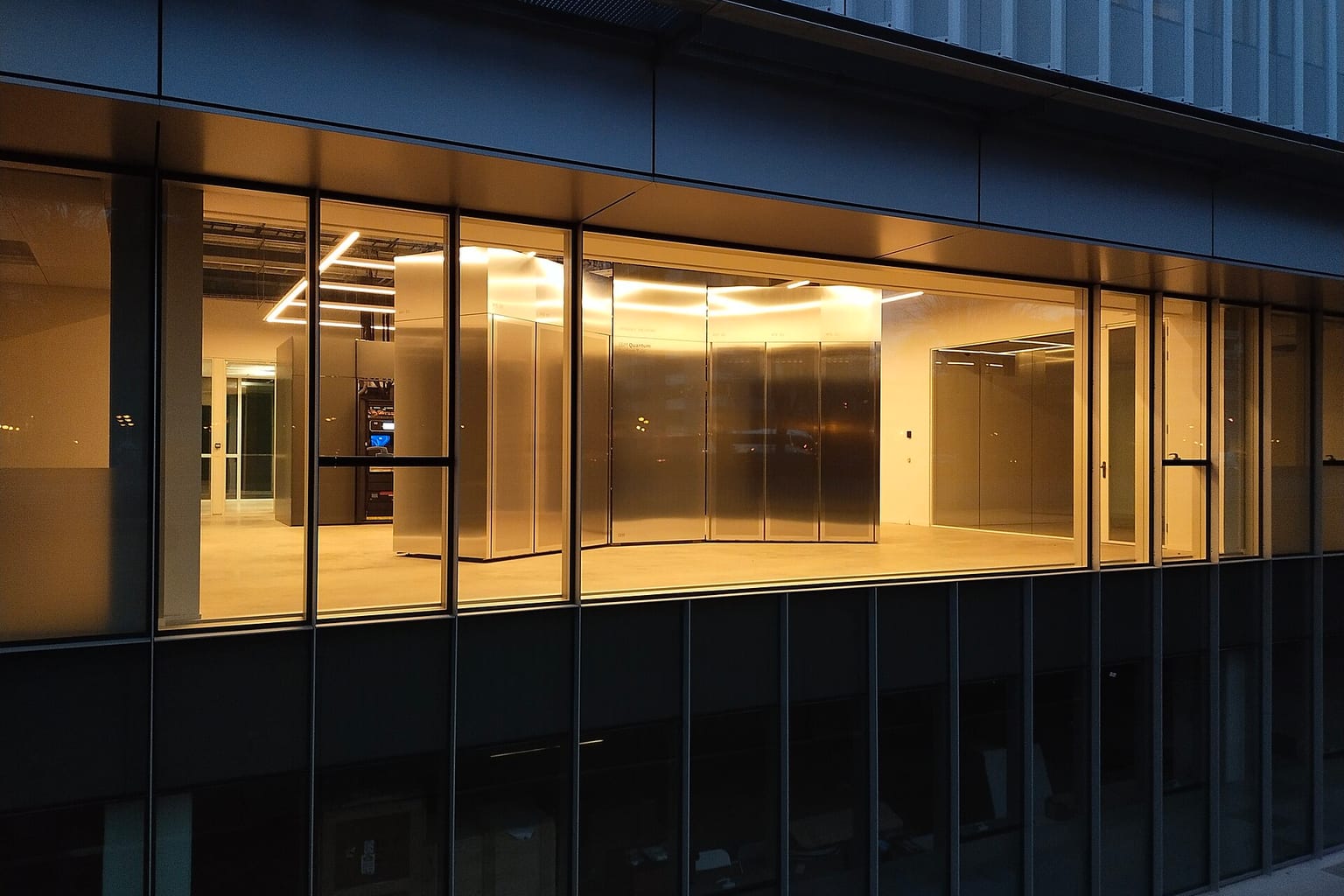
Before a quantum computer can do anything useful, data has to go in and come back out intact, and that step has long been a bottleneck. Now Moth Quantum, a UK company, says it has stored 1,568 numerical values on an IBM quantum processor and read them back well enough to rebuild a picture. The previous record for this kind of test, according to the company, was 128 values, set with 12 trapped-ion qubits, a different kind of quantum hardware.
The method, called Tessellated QPIXL and nicknamed Tessa, alternates data qubits and address qubits across the processor's physical connections. The address qubits tell the system where information sits and which qubits can share it. Each address neighbour doubles what a data qubit can hold: a qubit with four neighbours can store 16 values. The team also encoded information in the phase of the qubits, another part of their quantum state, which doubled the earlier result on the same 120-qubit processor. The tests ran on two IBM machines, Phoenix and Fez, whose different designs gave the team a way to see how the method behaves on each.
The results are uneven, and the company does not hide it. On Phoenix, a 28-by-28-pixel image fills 784 of the 792 available slots; on Fez, a 21-by-21 image fills 441 of 448. The most complex coloured image reached a correlation of 0.69 with the original, while simpler images reached up to 0.96. On audio, only 18.7% of the pitches in 347 flute notes were recovered correctly before adjustment, rising to 49.3% afterwards on Fez. On biological data, from 32,768 measurement attempts, the mitochondrial protein MT-CO3 came back at 92.3%, while p53 reached 71.5% and Sonic hedgehog 76.2%. Long DNA sequences were the hardest case, with the SUR1 gene at 22.6%.
The limits are concrete. Moth Quantum did not use error mitigation, and the study says such correction could reduce reconstruction errors significantly in future hardware tests. Hardware noise also contributed: on Phoenix, the noise error was 2.6 times greater than the model predicted. Packing more values into each qubit also means more repeated measurements to recover them. In theory, quantum encodings can store far more data than this; the constraint here is the routing between qubits.
For biology, the potential application is the one the team points to: helping make sense of how DNA and proteins interact, a process scientists still understand poorly. For computing, the work targets the step that has to succeed before any calculation begins, getting ordinary data into a quantum machine and back out. The next step the researchers name is error mitigation, which they did not use here and which could improve reconstruction errors in future tests.
Sources — read the originals(Paris time)
Pages consulted while writing
Read next
Comments
Loading the thread…
Sign in to leave a comment. Sign in