Roadside signs slowed drivers for elk in a Virginia pilot
At 9 p.m. on a mountain highway in Southwest Virginia, a 750-pound (340-kilogram) elk steps onto the road, hidden from an oncoming driver by a bend in the terrain. A roadside sign lights up: “Wildlife Detected Ahead. Slow Down.” The driver eases off the accelerator, and both travelers go on safely. The project describes this as a scenario that has become reality on a 14-mile (23-kilometer) stretch of Route 460, where a one-year pilot tested a system that detects large animals in real time and warns drivers automatically.
The chain works in three steps. Thermal cameras watch the roadway and the shoulders on either side, an AI software layer decides whether a medium or large animal is on the road, and the warning signs switch to a live message. The Virginia Tech Transportation Institute led the work with Crosstek, which supplies off-the-shelf cameras and AI software. The main difficulty was the terrain: the Appalachian Mountains called for solar power, portability and resistance to all weather, and the hills made radio links hard, so each of the eight trailers had to reach the others and send its data back to a main hub.
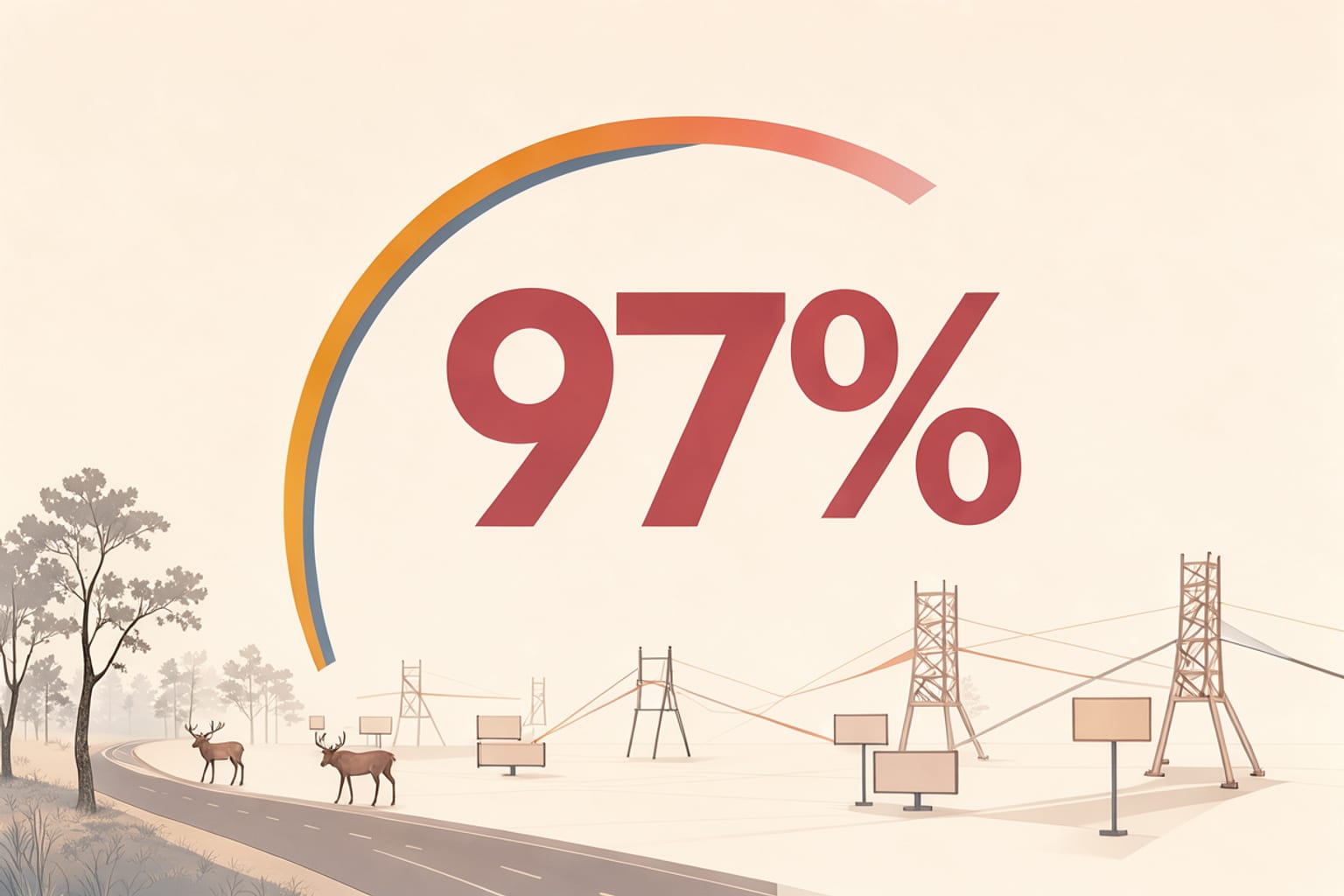
Over the pilot, the team collected data on more than 10,000 passing vehicles. The detection system reached an overall accuracy of 97% for medium and large wildlife. Initial results show drivers reduced speed by an average of 3 mph (5 km/h) when approaching activated signs. Roadside radar units measured those speeds, and the team argues that even a modest slowdown suggests drivers were paying attention to the alert. These figures come from the project itself and are still being analyzed.
The stakes explain the effort. Collisions involving elk cost more than $80,000 per crash on average, according to the project's feasibility study, and the corridor is home to about 100 elk. Elk tourism in Buchanan County is also a draw for the area, so protecting the animals and their habitat is part of the same goal as protecting drivers.
For a driver on a rural mountain road, the gain is a warning that arrives before the animal is visible around a bend. For the elk, it is a chance to avoid the collisions that make the road dangerous for them. For the county, it is a way to keep the herd that draws visitors. The researchers say a portable kit could be adopted in other places where animals frequently cross, and they see the same real-time detection serving other roadway hazards. Whether that happens depends on the analysis still underway, and no timeline for wider use has been announced.
Comments
Loading the thread…
Sign in to leave a comment. Sign in